

Personalizing an essential oil blend means crafting a natural aromatic formula that targets your specific wellness and emotional goals through deliberate oil selection, safe dilution, and aromatic note structure. This practice, known formally as custom aromatherapy formulation, gives you direct control over what goes on your skin and into your environment. The process relies on three core principles: understanding top, middle, and base notes; respecting dilution safety standards; and choosing a carrier oil that suits your skin type. Get these right, and you can build a blend that works as hard for your body as it does for your mind.
What you need before personalizing your essential oil blend
Every successful custom essential oil recipe starts with the right materials. Skipping this step leads to wasted oils, skin reactions, and blends that smell nothing like you intended.
Carrier oils and their skin benefits
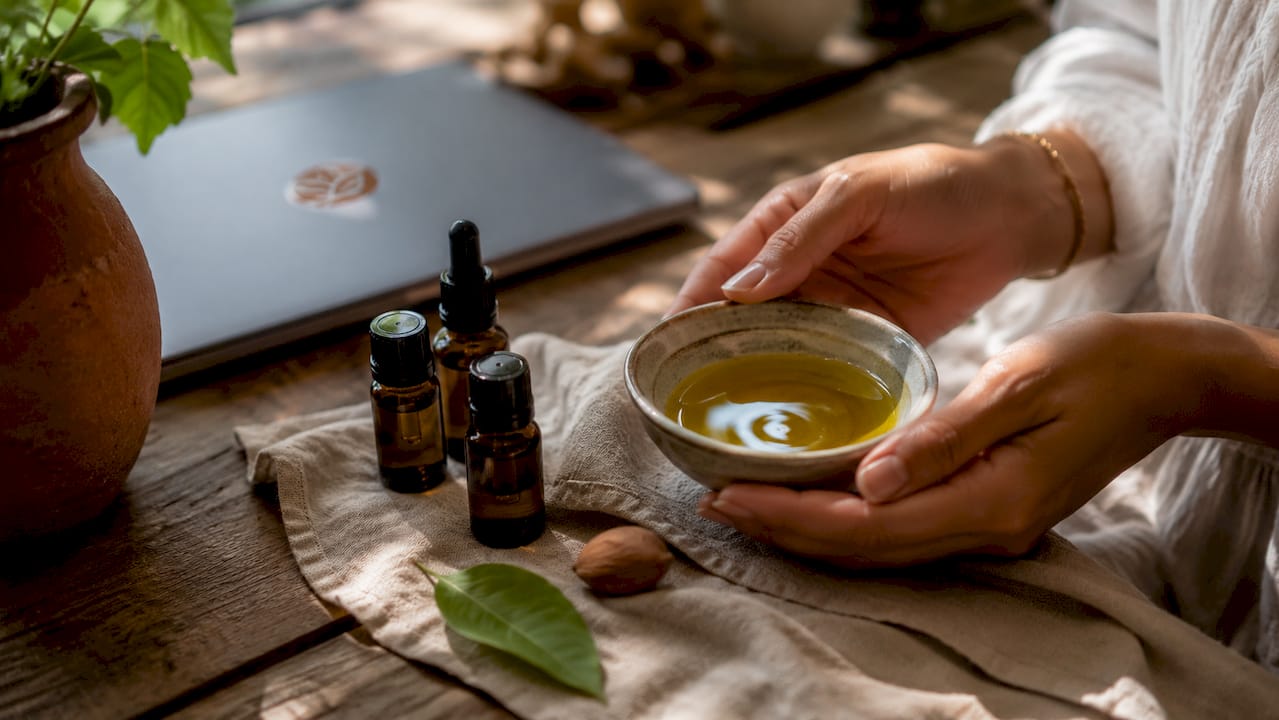
Carrier oils like jojoba, sweet almond, coconut, and grapeseed each bring different absorption rates and skin benefits to a blend. Jojoba closely mimics the skin’s natural sebum, making it ideal for facial blends and oily skin types. Sweet almond is lightweight and nourishing, suited for body blends. Grapeseed absorbs quickly and leaves almost no residue, which makes it a good choice for daytime use. Raasacred’s botanical body oils use carefully selected carrier bases that demonstrate exactly how much the right carrier changes the final feel of a blend.
Essential oils by aromatic note
Essential oils divide into three note categories that determine how a blend smells over time.
| Note | Role in blend | Examples |
|---|---|---|
| Top | First impression, fades fastest | Bergamot, lemon, peppermint |
| Middle | Heart of the blend, longest presence | Lavender, geranium, ylang-ylang |
| Base | Depth and longevity, anchors the blend | Sandalwood, frankincense, cedarwood |
Bergamot, lavender, sandalwood, frankincense, and ylang-ylang are among the most versatile oils across all three note categories. Each brings a distinct emotional effect: bergamot lifts mood, lavender calms anxiety, and frankincense deepens focus.
Tools and safety essentials
You need amber or cobalt glass bottles (10ml or 30ml), a dropper or pipette, labels, and a clean workspace away from direct sunlight. Avoid plastic containers because essential oils degrade plastic over time and contaminate the blend. Always patch test a diluted blend on the inner forearm before applying it more broadly. Never apply undiluted essential oils directly to skin.
Pro Tip: Keep a dedicated blending notebook. Record every drop count, oil combination, and your reaction after 24 hours. This turns trial and error into a repeatable process.
How do you select and balance essential oils for a custom blend?
Aromatic note structure is the framework that separates a pleasant blend from a disjointed one. The 3:2:1 top to middle to base ratio, or a 20:50:30 percentage distribution, gives a blend a clear opening, a sustained heart, and a lasting finish. That structure mirrors how professional perfumers have built fragrances for centuries.
Choosing oils based on your wellness goal
Your emotional or physical goal should drive oil selection before the note structure does. If you want to reduce stress, anchor your blend with lavender (middle) and frankincense (base), then add bergamot (top) for brightness. For an energizing morning blend, lead with peppermint or lemon as top notes, support with rosemary in the middle, and ground with cedarwood at the base. For sleep support, ylang-ylang and chamomile in the middle, combined with sandalwood or vetiver at the base, create a deeply calming profile.
Balancing scent with personal intuition
Note classifications are flexible guidelines, and personal intuition is the final judge of whether a blend works. A blend that follows the 20:50:30 rule perfectly but smells wrong to you is not a good blend for you. Trust your nose as much as the framework. Smell each oil individually before combining, and pay attention to which combinations feel harmonious versus jarring.
Pro Tip: Strip your blend down to its two most important oils first. Get that pairing right, then add a third. Building from a strong core produces far better results than mixing five oils at once.
The goal is a tailored essential oil mix that you actually want to wear or diffuse every day. That only happens when the formula reflects both good structure and genuine personal preference.
Step-by-step process to blend essential oils safely
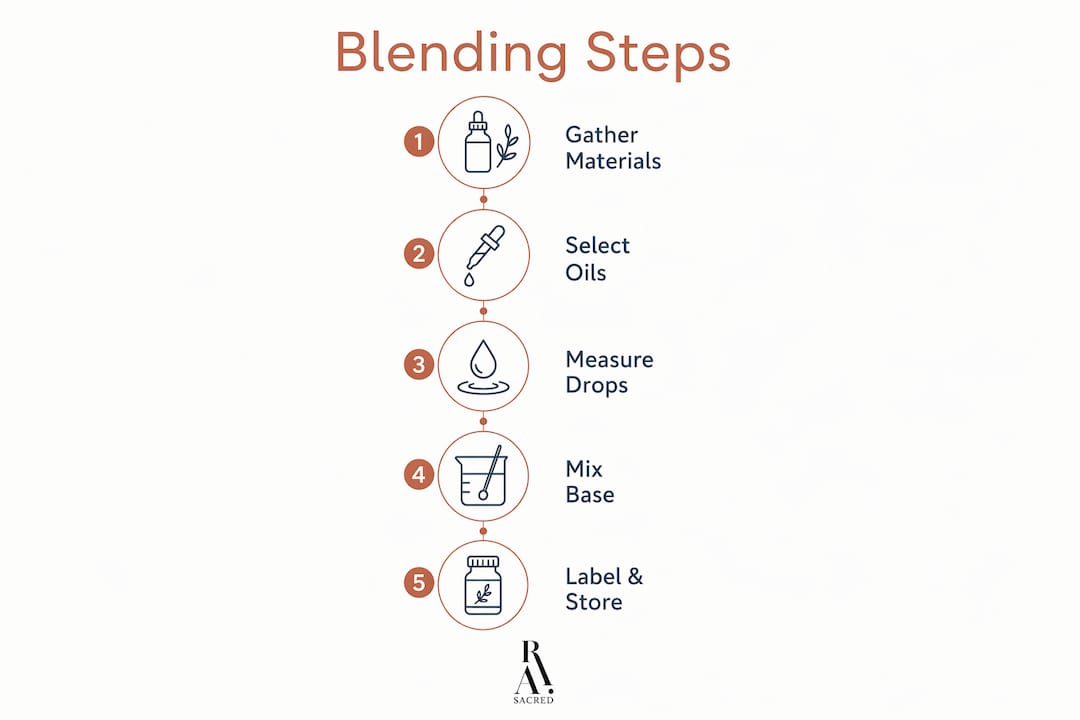
Safe blending is not complicated, but the sequence matters. Follow these steps to build a well-diluted, balanced blend from scratch.
- Choose your carrier oil. Select 10ml of your preferred carrier oil and pour it into a clean glass bottle. This is your base.
- Calculate your drops. A safe dilution for adults is 2–3%, which equals 6–9 drops per 10ml of carrier oil. For children under 10, stay at 1% or fewer (3 drops per 10ml).
- Add base notes first. Drop in your base note oils. These are the heaviest molecules and need the most time to integrate.
- Add middle notes next. These form the core of your blend. Add them directly on top of the base notes in the bottle.
- Add top notes last. Top notes are the most volatile and should go in last to preserve their brightness.
- Cap and roll gently. Do not shake the bottle. Roll it between your palms for 30 seconds to encourage the oils to combine without introducing air bubbles.
- Rest the blend for 24–48 hours. Blends improve significantly after maceration as the molecules stabilize and harmonize. What smells sharp or disjointed on day one often transforms into something cohesive by day two.
- Test on skin. Apply a small amount to the inner wrist. Assess the scent dry, then again after 15 minutes as the top notes fade.
- Adjust and record. If the blend needs more depth, add one more drop of a base note. If it needs lift, add a top note drop. Write every change in your blending journal.
Never mix essential oils directly into water. Oil and water do not combine, which means undiluted oil droplets remain on the skin surface and can cause irritation or sensitization. Always use a carrier oil as your blending medium.
Pro Tip: Label every bottle with the date, oil names, and drop counts before you close it. Memory is unreliable when you are working with multiple blends at once.
Common blending mistakes and how to fix them
Even experienced blenders run into problems. Knowing what goes wrong and why makes it far easier to course-correct.
- Using too many oils at once. Most balanced blends use 2–4 essential oils. More than four often creates a muddy, unreadable scent. Start simple and add complexity only when the core blend is solid.
- Ignoring olfactory fatigue. Olfactory fatigue reduces your ability to differentiate scents after prolonged exposure. Smell coffee beans or the back of your wrist to reset your nose between assessments.
- Judging a blend too early. A blend smelled straight from the bottle is not the same blend you will experience on skin after 30 minutes. Always test on skin and wait for the dry-down before making changes.
- Skipping the rest period. Blends that skip the 24–48 hour maceration period often smell unfinished. The rest period is not optional. It is where the blend actually comes together.
- Not keeping records. A blend you love but cannot reproduce is a wasted effort. Your blending journal is your most important tool.
Pro Tip: If a blend feels overwhelming or “too much,” it almost always has too strong a base note. Add one drop of a light top note like lemon or bergamot to lift and clarify the whole composition.
Key Takeaways
Personalizing an essential oil blend requires a carrier oil base, a 2–3% dilution ratio, a balanced note structure, and a 24–48 hour rest period before final assessment.
| Point | Details |
|---|---|
| Start with the right carrier | Choose jojoba, sweet almond, or grapeseed based on your skin type and desired absorption. |
| Follow the 2–3% dilution rule | Use 6–9 drops of essential oil per 10ml of carrier oil for safe adult application. |
| Build with note structure | Apply a 20:50:30 top to middle to base ratio for a balanced, long-lasting scent. |
| Rest before judging | Allow blends to macerate for 24–48 hours before testing to let molecules harmonize. |
| Keep it simple | Limit blends to 2–4 oils to maintain clarity and identify what is working. |
Why patience is the most underrated blending skill
Most people who try making their own essential oil blend give up after the first attempt smells wrong. What they do not realize is that the blend they smelled was not finished. The 24–48 hour rest period is not a suggestion. It is the step where everything changes.
I have watched people discard blends that, after two days, would have been genuinely beautiful. The instinct to keep adjusting and adding more oils is the single biggest mistake I see. A blend with three well-chosen oils that has been allowed to rest will outperform a complex ten-oil formula every time.
The other thing worth saying plainly: your nose is not wrong. If a blend follows every rule but you do not enjoy it, it is not the right blend for you. Aromatic preference is deeply personal, shaped by memory, emotion, and biology. The frameworks exist to give you a starting point, not a final answer. Use the note structure and dilution guidelines as guardrails, then let your instincts take over.
The blenders who get the best results are the ones who treat it like cooking. They taste as they go, they adjust in small increments, and they write everything down. They also know when to stop. A blend that is 80% right and has been rested for two days is almost always better than a blend that has been fussed over for an hour.
— Val
Raasacred’s botanical oils as a foundation for your blends
Building a personalized aromatherapy oil from scratch is deeply satisfying, and the quality of your carrier base determines how far that effort goes.
Raasacred’s Sacred Bloom skin layering oil is formulated with 100% pure botanical oils that absorb without grease, making it an excellent base for layering your own essential oil additions. For those who want a ready-made starting point, the aromatherapy roll-ons offer pre-balanced mood and wellness blends crafted with the same note structure principles covered here. Every Raasacred formula uses pure essential oils and carefully selected carriers, so you know exactly what you are working with when you choose to personalize further.
FAQ
What is the safest dilution ratio for a homemade essential oil blend?
The safe dilution ratio for adults is 2–3%, which equals 6–9 drops of essential oil per 10ml of carrier oil. For children under 10, use 1% or fewer (3 drops per 10ml).
How many essential oils should I use in a custom blend?
Most balanced blends use 2–4 essential oils. Using more than four oils often creates a confusing, muddy scent that is difficult to adjust or reproduce.
What are top, middle, and base notes in essential oil blending?
Top notes (like bergamot and lemon) are the first scents you smell and fade fastest. Middle notes (like lavender and geranium) form the heart of the blend. Base notes (like sandalwood and frankincense) provide depth and longevity.
Why does my essential oil blend smell different after a day?
Blends improve after a 24–48 hour rest period because the oil molecules stabilize and interact. A blend that smells sharp or unbalanced on day one often becomes cohesive and harmonious by day two.
How do I fix olfactory fatigue when blending?
Take a break from smelling your oils and inhale coffee beans or the back of your clean wrist to reset your nose. Olfactory fatigue is common during extended blending sessions and causes you to misjudge scent balance.