

Organic body care ingredients are defined as botanically sourced compounds grown without synthetic pesticides, herbicides, or GMOs, and verified by certification bodies like COSMOS or USDA Organic. The role of organic ingredients in body care goes well beyond avoiding chemicals. These ingredients deliver vitamins, antioxidants, fatty acids, and polyphenols that actively nourish and protect skin. Certified organic agriculture also follows soil-preserving practices like crop rotation and composting, which means the ingredients you apply carry a lower environmental cost from the ground up.
One distinction matters before you buy anything: “natural” and “organic” are not the same label. Natural has no legal definition in cosmetics. Organic does, and that difference shapes everything from ingredient purity to product safety.
What certifications and standards define organic ingredients in body care?
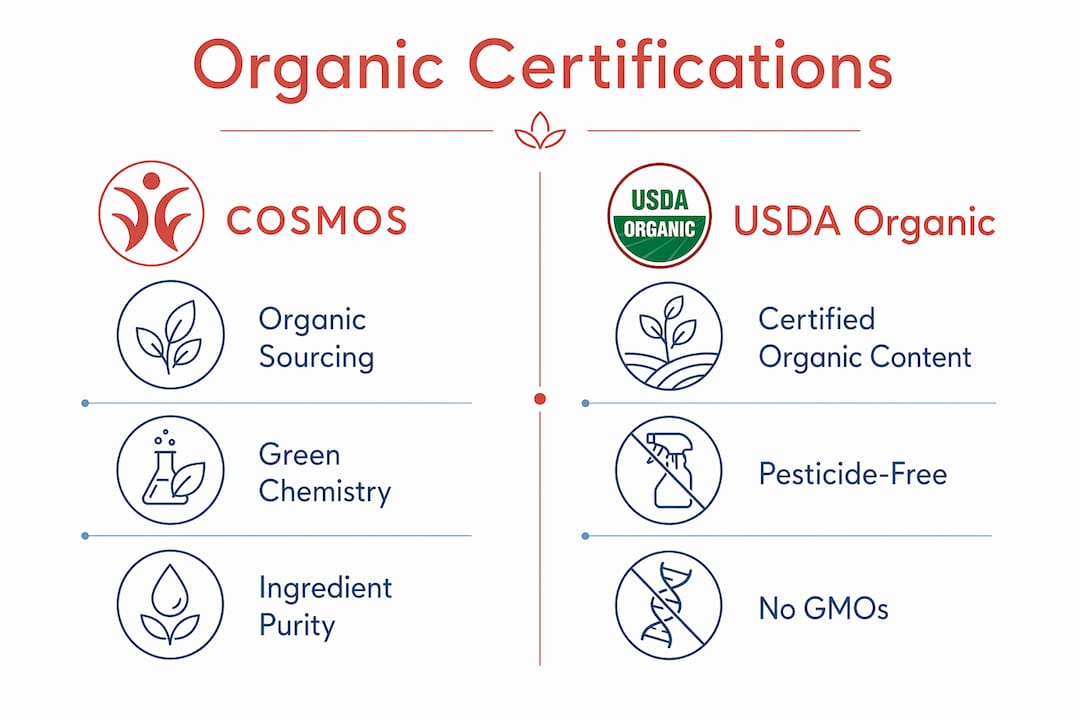
Certification is the only reliable way to confirm that an organic claim is real. COSMOS and USDA Organic are the two most recognized standards, and both require independent audits to verify compliance. They mandate the elimination of synthetic pesticides, herbicides, and GMOs at every stage of sourcing and processing. That verification process is what separates a certified product from one that simply uses the word “organic” on its label.
The table below shows what each certification covers and what it does not guarantee.
| Certification | What it covers | What it does not guarantee |
|---|---|---|
| COSMOS | Organic sourcing, green chemistry processing, eco-friendly packaging | Hypoallergenic properties or allergy safety |
| USDA Organic | Certified organic agricultural ingredients, no synthetic additives | Full-formula organic content or cosmetic efficacy |
| Ecocert | Ingredient origin, biodegradability, sustainable sourcing | Specific skin performance outcomes |
A critical point: certification confirms ingredient purity and production standards. It does not mean a product is free from allergens. Botanical ingredients like lavender, citrus oils, and nut-derived butters can still trigger reactions in sensitive skin. Certification and allergy safety are separate conversations.
Pro Tip: Look for the COSMOS or USDA Organic seal on the front of the packaging, then read the full ingredient list on the back. The seal tells you the standard was met; the ingredient list tells you what is actually in the formula.
How do organic ingredients benefit skin health?
Shea butter, jojoba oil, coconut oil, and botanical extracts are among the most studied organic ingredients in body care. Each one delivers a distinct set of compounds that support skin at a structural level. Shea butter is rich in oleic and stearic fatty acids, which reinforce the skin’s lipid barrier and reduce transepidermal water loss. Jojoba oil closely mimics the skin’s natural sebum, making it one of the most compatible carrier oils for all skin types.

The role of plant-based ingredients in body care extends to antioxidant protection as well. Polyphenols found in green tea extract, rosehip, and pomegranate seed oil neutralize free radicals that accelerate skin aging. Vitamins C and E, present in many cold-pressed botanical oils, support collagen synthesis and reduce oxidative stress. These are not passive moisturizers. They are bioactive compounds with measurable effects on skin health.
Cleansing is another area where organic ingredients perform well. Plant-based saponins from Acacia concinna (Shikakai) provide gentle cleansing equivalent to synthetic sulfates without irritating the skin or disrupting its microbiome. That finding matters because most conventional body washes strip the skin’s acid mantle, leaving it dry and reactive. Saponin-based cleansers maintain the skin’s natural pH while still removing dirt and excess oil.
Here are the top organic ingredients and what they do for your skin:
-
Shea butter: Reinforces the lipid barrier, reduces moisture loss, and soothes inflammation
-
Jojoba oil: Balances sebum production, absorbs without residue, and suits all skin types
-
Coconut oil: Provides antimicrobial lauric acid and deep hydration for dry skin
-
Rosehip seed oil: Delivers vitamin A (retinol precursor) and essential fatty acids for cell renewal
-
Shikakai (Acacia concinna): Offers sulfate-free cleansing with zero irritation
-
Dragon fruit extract: Contributes antioxidants and moisturizing compounds in polyherbal formulations
-
Green tea extract: Provides polyphenol antioxidants that protect against UV-induced oxidative damage
Pro Tip: Pair a fatty acid-rich oil like rosehip with a lighter carrier like jojoba for layering. The lighter oil absorbs first and creates a base; the denser oil seals moisture on top. This is the core logic behind plant-based body care layering.
What formulation challenges exist in organic body care science?
Organic ingredients are effective, but formulating them into stable, safe products is genuinely difficult. Organic skincare requires scientific formulation expertise to maintain product stability and deliver active compounds effectively. Without synthetic emulsifiers and preservatives, formulators must work harder to keep oil and water phases from separating and to prevent microbial contamination.
The four core challenges in organic body care formulation are:
-
Emulsion stability: Natural emulsifiers like lecithin and beeswax are less predictable than synthetic alternatives. Formulators must control temperature, pH, and mixing speed carefully to achieve a stable texture.
-
Preservation without synthetics: Parabens and phenoxyethanol are off the table in certified organic formulas. Alternatives like rosemary extract, vitamin E, and fermented plant extracts require precise concentrations to be effective.
-
Ingredient variability: A batch of cold-pressed argan oil from one harvest will differ chemically from the next. Formulators must test each batch and adjust formulas accordingly to maintain consistent performance.
-
Bioavailability: Many plant actives have large molecular structures that do not penetrate the skin easily. Getting them to the dermal layer where they can act requires delivery system engineering.
That last challenge is where the field is advancing fastest. Lipid-based nanocarriers and plant stem cell lysates now improve skin penetration and stability of botanical actives significantly. A nanocarrier wraps an active compound in a lipid shell sized to pass through the skin’s outer layer. Plant stem cell lysates, derived from undifferentiated plant cells, carry concentrated bioactives with high stability and potency. These are not marketing terms. They are delivery technologies that make organic ingredients work harder.
| Formulation challenge | Conventional solution | Organic alternative |
|---|---|---|
| Preservation | Parabens, phenoxyethanol | Rosemary extract, vitamin E, fermented actives |
| Emulsification | Synthetic PEG emulsifiers | Lecithin, beeswax, plant-derived emulsifiers |
| Active delivery | Synthetic penetration enhancers | Lipid nanocarriers, plant stem cell lysates |
| Microbial safety | Broad-spectrum synthetic biocides | pH control, natural antimicrobials |
Plant-based skincare is evolving beyond marketing to focus on high-performance bioactives produced through green chemistry. That shift means the gap between organic and conventional formulas in terms of efficacy is closing fast.
How can you build an effective organic body care routine?
Choosing organic body care products well starts with reading beyond the front label. Experts emphasize seeking formulas with verified certifications and clear ingredient origins rather than relying on “natural” or “organic” marketing language alone. A product with a COSMOS seal and a transparent ingredient list is a more reliable choice than one with green packaging and no certification.
Layering is the most effective technique for getting the most from plant-based ingredients. Apply products from lightest to heaviest texture. A water-based botanical toner or mist goes first, followed by a lightweight serum or oil, then a richer body butter or cream to seal everything in. This sequence respects how each ingredient absorbs and prevents heavier products from blocking lighter actives from reaching the skin.
Here are practical tips for building a natural body care routine that works:
-
Match ingredients to your skin type. Oily skin benefits from jojoba and squalane. Dry skin needs shea butter and coconut oil. Sensitive skin does better with fragrance-free formulas using chamomile or oat extract.
-
Check for synergies. Vitamin C and vitamin E work better together than either does alone. Rosehip oil and a niacinamide serum complement each other for uneven skin tone.
-
Apply body oils to damp skin. Oils seal in moisture more effectively when applied within two minutes of showering. Dry skin absorbs oil less efficiently.
-
Rotate products seasonally. Skin needs heavier occlusive ingredients in winter and lighter, antioxidant-rich oils in summer.
-
Prioritize certified products. The benefits of natural body care are real, but only when the ingredients are what the label claims. Certification is your verification.
Choosing botanical body oils with clear sourcing information also supports sustainable agriculture. Certified organic farming preserves soil biodiversity and avoids synthetic fertilizers that harm soil microbes. Every certified purchase reinforces that supply chain.
Key Takeaways
Organic body care ingredients deliver real skin benefits when they are certified, correctly formulated, and applied using layering techniques that respect how each compound absorbs.
| Point | Details |
|---|---|
| Certification matters most | COSMOS and USDA Organic seals verify ingredient purity; marketing labels do not. |
| Organic ingredients are bioactive | Shea butter, jojoba oil, and botanical extracts deliver fatty acids, vitamins, and antioxidants that support skin barrier function. |
| Formulation science is non-negotiable | Stable, safe organic products require controlled pH, natural preservation, and advanced delivery systems like nanocarriers. |
| Layering amplifies results | Apply lightest to heaviest texture to maximize absorption and ingredient synergy in a plant-based routine. |
| Sustainability is built in | Certified organic sourcing protects soil biodiversity and reduces the environmental cost of your body care routine. |
Why the “organic” label still misleads most shoppers
The organic body care category has a credibility problem that certification alone does not fully solve. I have spent years reading formulas, and the pattern is consistent: a product earns a COSMOS seal on three or four certified ingredients, then fills the rest of the formula with uncertified fillers. The seal is technically accurate. The product is not meaningfully organic.
The more useful question is not “Is this certified?” but “What percentage of the formula is certified organic, and what are the remaining ingredients?” A formula that is 5% certified shea butter and 95% uncertified base is not delivering the benefits of natural body care in any meaningful way. Transparency in ingredient sourcing is the real differentiator, and most brands do not volunteer that information.
The other misconception I see constantly is that organic automatically means gentle. Organic essential oils are among the most potent irritants in cosmetic chemistry. Undiluted citrus oils, cinnamon bark, and clove bud are all organic and all capable of causing serious skin reactions. The organic origin of an ingredient says nothing about its concentration or suitability for your skin type.
What I find genuinely exciting in 2026 is the convergence of green chemistry and organic sourcing. Formulators are now using fermentation, cold-process extraction, and lipid nanocarriers to make organic actives more stable and more bioavailable than they were five years ago. That is where the real performance gains are coming from. Not from the label. From the science behind it.
Raasacred’s botanical body care collection
Raasacred builds every formula around 100% pure essential oils and carefully selected carrier oils, with full transparency on ingredient sourcing. The brand’s approach reflects exactly what this article describes: certified botanical ingredients, formulated with cosmetic chemistry precision, designed for a non-greasy daily ritual.

The botanical body oils collection includes skin-nourishing oils designed for layering, with formulas that work across skin types. For wellness-focused routines, the essential oil roll-ons blend mood-supporting aromatherapy with skin-compatible carrier oils. Each product reflects Raasacred’s commitment to the balance between natural origin and modern formulation standards.
FAQ
What does “certified organic” mean in body care?
Certified organic body care products meet standards set by bodies like COSMOS or USDA Organic, which require ingredients to be grown without synthetic pesticides, herbicides, or GMOs and verified through independent audits.
Are organic body care products safe for sensitive skin?
Certification confirms ingredient purity but does not guarantee hypoallergenic properties. Botanical ingredients like citrus oils and nut-derived butters can still cause reactions, so patch testing remains necessary for sensitive skin.
How do plant-based saponins compare to synthetic surfactants?
Natural saponins from plants like Shikakai provide cleansing equivalent to synthetic sulfates without irritating the skin or disrupting its microbiome, making them a well-supported alternative in gentle body wash formulas.
What is plant-based body care layering?
Layering means applying body care products from lightest to heaviest texture, starting with water-based formulas and finishing with richer oils or butters, so each ingredient absorbs fully before the next is applied.
Why do organic body care formulas sometimes perform inconsistently?
Organic ingredients vary batch to batch due to harvest conditions and extraction methods. Formulators must test each batch and adjust concentrations to maintain consistent performance across production runs.