

The holistic beauty approach is defined as a philosophy that treats skin health as a direct reflection of nutrition, sleep quality, stress levels, and emotional well-being. Rather than targeting individual symptoms with isolated products, this method addresses the root causes behind skin issues. Your skin signals what is happening inside your body. Skin functions as a systemic mirror of internal health, meaning a breakout or dull complexion often points to disrupted sleep, poor nutrition, or elevated cortisol. The standard industry term for this practice is integrative skincare, though “holistic beauty” has become the widely used phrase across wellness and esthetic communities. Understanding what is holistic beauty approach means recognizing that lasting results come from treating the whole person, not just the surface.
What are the key components of a holistic beauty routine?
A complete beauty routine built on this philosophy rests on five interconnected pillars: nutrition, sleep, stress management, mindful rituals, and biocompatible topical care. Each pillar reinforces the others. Skipping one weakens the entire system.
Nutrition and hydration
What you eat shows up on your skin within days. Diets rich in antioxidants, omega-3 fatty acids, and fermented foods support the skin microbiome and reduce systemic inflammation. Hydration keeps the skin barrier intact and supports cellular repair. Processed foods and excess sugar, by contrast, trigger glycation, which breaks down collagen and accelerates visible aging.

Sleep and recovery
Quality sleep of 7–9 hours nightly is the single most underrated skin treatment available. During deep sleep, the body produces growth hormone and repairs damaged skin cells. Chronic sleep deprivation raises cortisol, which breaks down the skin barrier and impairs cellular recovery. No serum compensates for consistent sleep loss.
Stress reduction and nervous system support
Cortisol spikes cause skin barrier breakdown and impaired cellular repair. Practices like breathwork, meditation, and yoga lower cortisol and reduce systemic inflammation. The nervous system and skin share a direct communication pathway, so calming one calms the other. Stress management is not a soft add-on. It is a clinical necessity in any skin health plan.
Mindful rituals: facial massage and aromatherapy
Facial massage improves lymphatic drainage, reduces puffiness, and increases circulation to skin tissue. Aromatherapy and wellness rituals address root causes linked to cortisol and nervous system dysregulation, making them functional tools rather than indulgences. Raasacred’s aromatherapy roll-ons blend 100% pure essential oils specifically to support this kind of nervous system reset during daily rituals.
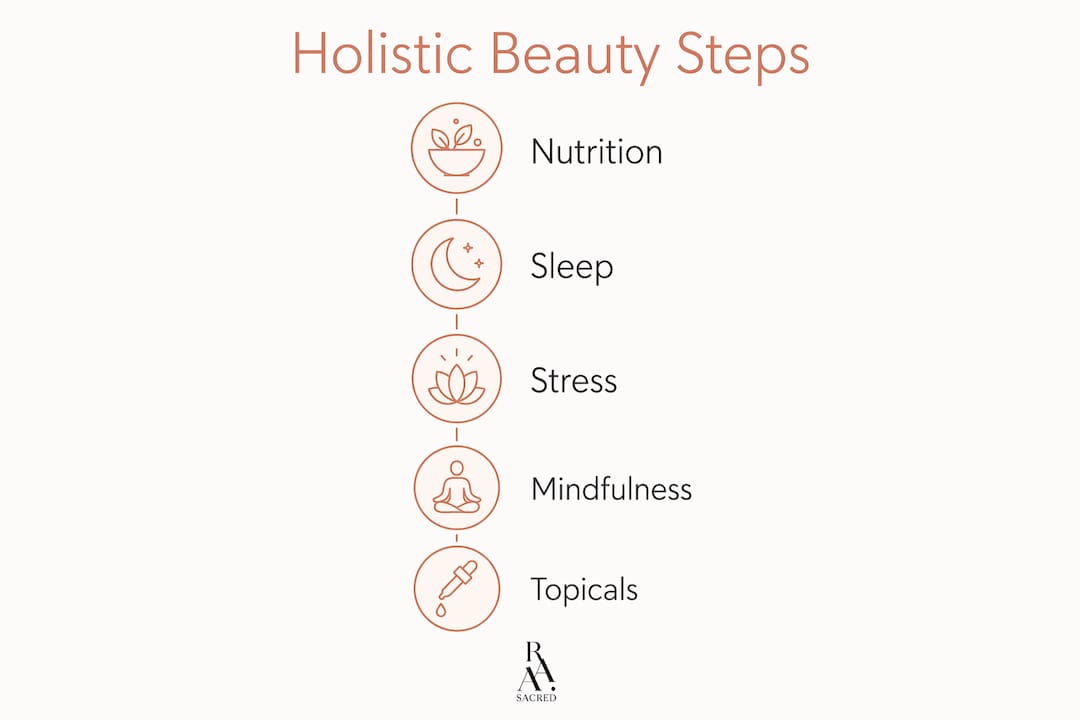
Natural and biocompatible topical products
Topical products in a whole-person beauty plan should work with the skin’s biology, not against it. Natural carrier oils, botanical extracts, and plant-based actives tend to be better tolerated by sensitive or reactive skin. Raasacred’s botanical body oils combine pure essential oils with carefully selected carrier oils to nourish without disrupting the skin barrier.
Pro Tip: Pair your topical oil application with two minutes of slow, intentional massage. The physical stimulation amplifies product absorption and activates the parasympathetic nervous system, giving you a stress-reduction benefit alongside the skincare benefit.
How does holistic beauty differ from traditional skincare approaches?
Traditional skincare focuses on correcting visible symptoms with targeted active ingredients. A breakout gets a spot treatment. Hyperpigmentation gets a brightening serum. The logic is direct and the results can be fast, but they are rarely permanent because the underlying cause goes unaddressed.
The whole-person approach works differently. It asks why the breakout appeared in the first place. Was it hormonal? Gut-related? Stress-triggered? Practitioners spend 60–90 minutes per client assessing systemic and lifestyle root causes before recommending any product or treatment. That depth of assessment is simply not part of a standard skincare consultation.
A critical distinction: holistic skincare does not abandon clinical actives. The best practice integrates them with wellness support. A practitioner might recommend retinoids for cell turnover while simultaneously addressing gut inflammation and sleep quality. The two approaches work together, not in opposition.
| Dimension | Traditional skincare | Whole-person approach |
|---|---|---|
| Primary focus | Symptom correction | Root cause resolution |
| Consultation length | 15–30 minutes | 60–90 minutes |
| Tools used | Topical actives, clinical treatments | Actives plus nutrition, sleep, stress protocols |
| Time to results | Fast, often temporary | Slower, more durable |
| Emotional factors | Rarely addressed | Central to the assessment |
Pro Tip: If you are already using clinical actives like retinoids or AHAs, do not drop them when adopting a whole-person approach. Add the lifestyle layer on top. The combination produces better results than either method alone.
What scientific advances support the holistic beauty approach?
The science behind this philosophy has moved well beyond general wellness advice. Researchers now study specific biological mechanisms that connect internal health to skin function.
The skin-brain axis is one of the most significant findings in recent dermatology. The skin and the central nervous system develop from the same embryonic tissue, which means they share signaling pathways throughout life. Stress signals travel this axis in both directions. Psychological stress triggers skin inflammation, and skin inflammation can worsen mood and anxiety.
Neurocosmetics research in 2025 highlighted how commensal-derived postbiotics and short-chain fatty acids modulate neuroinflammation and psychological stress through the skin microbiome. This is a significant finding. It means that what lives on your skin surface actively communicates with your nervous system, not just your immune system.
Key research findings shaping the field:
- The skin microbiome produces postbiotics that reduce neuroinflammation, linking topical care directly to mood regulation.
- Short-chain fatty acids from gut and skin bacteria influence both barrier function and systemic inflammation.
- Cortisol disrupts tight junction proteins in the skin barrier, creating permeability that worsens conditions like eczema and acne.
- Sleep deprivation measurably reduces skin hydration and elasticity within 48 hours.
- Mindfulness practices lower inflammatory cytokines, which directly reduces skin redness and reactivity.
| Research area | Key finding | Practical implication |
|---|---|---|
| Skin-brain axis | Shared signaling between skin and nervous system | Stress management is a direct skin treatment |
| Neurocosmetics | Postbiotics modulate neuroinflammation | Microbiome-friendly products support mood and skin |
| Cortisol and barrier function | Cortisol breaks down tight junction proteins | Stress spikes worsen eczema, acne, and sensitivity |
| Sleep and skin repair | Sleep loss reduces hydration and elasticity | 7–9 hours is a non-negotiable skin health input |
This body of research validates what practitioners of integrative skincare have observed clinically for years. The science is now catching up to the practice.
How can you start adopting a holistic beauty approach today?
Starting does not require a complete lifestyle overhaul. Small, consistent changes compound into meaningful results over weeks and months.
- Anchor your routine in sleep. Commit to 7–9 hours nightly before adding any new product or treatment. Sleep is the foundation everything else builds on.
- Hydrate deliberately. Drink water consistently throughout the day, not just when thirsty. Skin hydration begins from the inside.
- Add one stress-reduction practice. A five-minute breathwork session or a short walk outdoors lowers cortisol measurably. Start small and build the habit.
- Incorporate facial massage. Two to three minutes of upward strokes along the jawline and cheekbones improves circulation and lymphatic drainage. Use a fragrance layering body oil or a dedicated facial oil to reduce friction.
- Audit your topical products. Replace harsh, stripping cleansers and synthetic fragrance-heavy formulas with gentle, plant-based alternatives. Your skin barrier will respond within two weeks.
- Treat beauty as a social and lifestyle practice. Beauty routines are no longer solitary. Group fitness, shared wellness rituals, and community-based practices are now recognized as integral to intentional skin health.
The shift from symptom-chasing to root-cause thinking takes patience. Most people notice meaningful skin changes after four to six weeks of consistent lifestyle adjustments, not four to six days.
Pro Tip: Track your sleep, stress, and skin condition in a simple daily journal for 30 days. Patterns emerge quickly. You will identify your personal triggers faster than any elimination diet or patch test.
Key Takeaways
The whole-person beauty approach produces durable skin results because it addresses the biological root causes that topical products alone cannot reach.
| Point | Details |
|---|---|
| Sleep is a skin treatment | Consistent 7–9 hours nightly supports cellular repair and maintains skin barrier function. |
| Cortisol damages skin directly | Stress spikes break down tight junction proteins, worsening acne, eczema, and sensitivity. |
| Science validates the approach | Neurocosmetics research links the skin microbiome to nervous system regulation and inflammation. |
| Clinical actives still belong | Integrating retinoids or AHAs with lifestyle changes produces better results than either alone. |
| Small habits compound | Sleep, hydration, and a daily stress practice create visible skin changes within four to six weeks. |
Why I think most people misunderstand what holistic beauty actually demands
The most common mistake I see is treating this approach as a product swap. People replace their synthetic moisturizer with a botanical oil, call it “going holistic,” and wonder why their skin hasn’t changed. The product is the smallest variable in the equation.
What actually moves the needle is the lifestyle work. Sleep, stress management, and nutrition are not supporting characters. They are the lead. Holistic philosophy demands ongoing education and deeper client relationships for sustained results, which is why it is genuinely harder than traditional skincare. It asks more of you.
The other misunderstanding is that this approach rejects science. It does not. Holistic skincare is not “natural-only.” Blending biocompatible actives with lifestyle understanding is the actual best practice. Abandoning effective clinical modalities in favor of pure naturalism is the pitfall, not the goal.
What I find most compelling is how beauty and wellness have merged by 2026. Social habits, physical movement, and shared rituals are now viewed as beauty practices in their own right. That is a genuine cultural shift, and it reflects what the science has been showing for years. The people who get the best results are not the ones with the most expensive products. They are the ones who sleep well, manage stress consistently, and treat their daily rituals as meaningful rather than mechanical.
— Val
Raasacred and the whole-person beauty ritual
Raasacred was built around exactly this philosophy. Every formula combines 100% pure essential oils with carefully selected carrier oils to nourish the body and calm the mind within a single daily ritual.
The Sacred Bloom skin layering oil is designed to complement the inside-out approach. It absorbs without greasiness and works best applied with intentional massage, turning a 60-second step into a genuine nervous system reset. The essential aromatherapy roll-ons support mood and stress regulation throughout the day, addressing the cortisol variable that no topical treatment alone can fix. For those building a complete botanical ritual, the full product collection covers skin, body, and hair with the same commitment to purity and function.
FAQ
What is the holistic beauty approach in simple terms?
The whole-person beauty approach treats skin health as a reflection of internal factors including nutrition, sleep, stress, and emotional well-being. It addresses root causes rather than correcting visible symptoms with isolated products.
How long does it take to see results from a whole-person beauty routine?
Most people notice meaningful skin changes after four to six weeks of consistent lifestyle adjustments, including improved sleep, stress reduction, and dietary changes alongside topical care.
Is holistic skincare the same as natural skincare?
No. Whole-person skincare integrates clinical actives like retinoids with lifestyle and wellness practices. Holistic skincare is not “natural-only”. The goal is biocompatibility and root-cause resolution, not the exclusion of science-backed ingredients.
What role does stress play in skin health?
Cortisol from chronic stress breaks down tight junction proteins in the skin barrier, which worsens conditions like acne, eczema, and sensitivity. Stress management is a direct and measurable skin treatment, not a lifestyle bonus.
Can aromatherapy genuinely support skin health?
Yes. Aromatherapy works through the skin-brain axis by lowering cortisol and activating the parasympathetic nervous system. Reduced cortisol directly improves skin barrier function and reduces inflammation, making aromatherapy a functional tool in any integrative skincare routine.