

Seed oils are defined as lipid-rich extracts pressed or drawn from plant seeds, and their role in natural skincare formulas is to deliver essential fatty acids, repair the skin barrier, and stabilize finished products. The American Heart Association recommends that omega-6 fatty acids supply 5–10% of daily energy intake, a figure that reflects just how central these lipids are to human biology. That same biochemistry applies directly to skin. Seed oils like Meadowfoam and Blackcurrant bring specific fatty acid profiles that no synthetic substitute replicates with the same biocompatibility. Raasacred builds its botanical formulas around this principle, selecting seed oils for their function, not just their feel.
What biochemical properties make seed oils valuable in natural formulas?
Seed oils earn their place in natural formulas through their fatty acid composition. The three most relevant fatty acids in cosmetic seed oils are linoleic acid, gamma-linolenic acid (GLA), and stearidonic acid (SDA). Each one performs a different job on the skin.
Linoleic acid is an omega-6 fatty acid that the body cannot produce on its own. Skin deficient in linoleic acid shows a weakened barrier and increased water loss. Seed oils rich in linoleic acid, such as rosehip and hemp seed, directly replenish this deficit. The result is a measurably stronger barrier and better moisture retention.
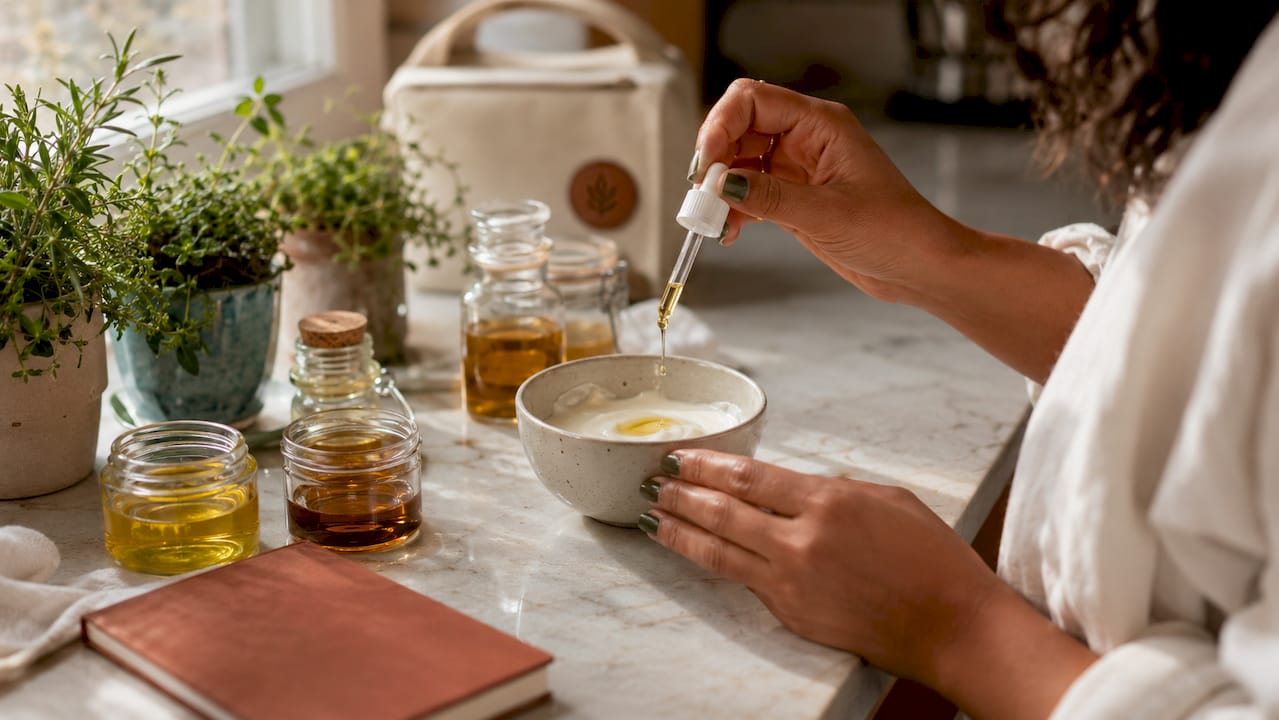
Blackcurrant Seed Oil is one of the few plant oils that contains both GLA (14–19%) and SDA (2–4%). That dual profile makes it exceptional for barrier repair and anti-inflammatory applications. No other common carrier oil delivers both fatty acids in meaningful concentrations.
Meadowfoam Seed Oil works differently. Its long-chain fatty acids give it superior oxidative stability compared to most vegetable oils. That stability matters in formulation because oils that oxidize quickly turn rancid, irritate skin, and shorten product shelf life. Meadowfoam’s resistance to oxidation makes it a reliable base in complex blends.
Beyond fatty acids, seed oils carry phytosterols and tocopherols. These bioactive compounds activate skin repair pathways including NF-κB and Nrf2, which govern inflammation response and antioxidant defense. That mechanism explains why seed oils do more than moisturize. They signal the skin to repair itself.
Key fatty acids and their primary skin functions:
- Linoleic acid (omega-6): Barrier repair, moisture retention, acne-prone skin support
- GLA (omega-6): Anti-inflammatory, eczema and redness reduction
- SDA (omega-3): Complementary anti-inflammatory, found in Blackcurrant Seed Oil
- Oleic acid (omega-9): Deep penetration, softening, suited to dry and mature skin
- Long-chain fatty acids (Meadowfoam): Oxidative stability, formula longevity
Pro Tip: If your skin tends toward redness or sensitivity, look for formulas that list Blackcurrant Seed Oil in the first five ingredients. Its GLA content works at low concentrations, so a 5% inclusion is enough to produce a visible anti-inflammatory effect.
How have extraction methods evolved to improve seed oil quality?
The way a seed oil is extracted determines its purity, potency, and shelf stability. Traditional solvent extraction uses hexane and heat, which strips bioactive compounds and leaves residue concerns. Modern methods have changed that equation significantly.
Supercritical CO2 extraction uses pressurized carbon dioxide as a solvent. It operates at low temperatures, which preserves heat-sensitive fatty acids and phytosterols. The finished oil is purer, more concentrated, and free of solvent residue. Ultrasound-assisted extraction works by sending sound waves through the seed material, breaking cell walls and releasing oil without excessive heat.
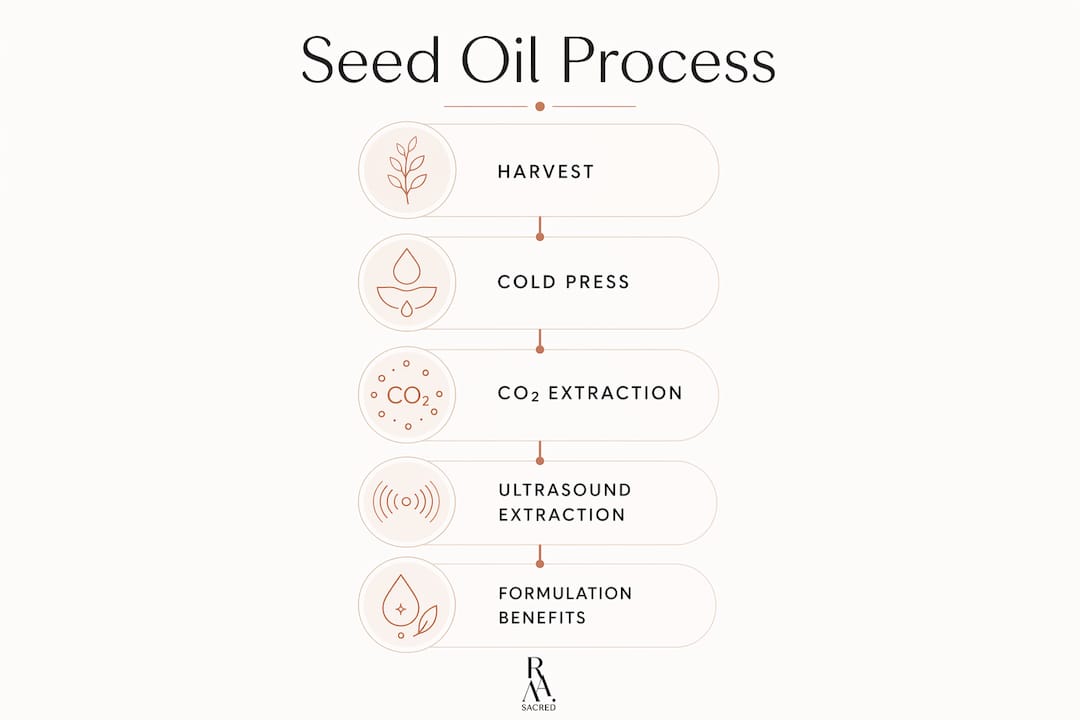
These technologies are not just cleaner. They are faster. Emerging extraction methods reduce processing time by up to 99% and cut solvent use by 20–60% compared to conventional approaches. That reduction in processing time means less heat exposure, which directly protects the oil’s fatty acid profile.
The sustainability benefit is equally significant. Lower solvent consumption means less chemical waste and a smaller environmental footprint per liter of oil produced. For brands committed to natural formulation, the extraction method is as important as the seed source itself.
- Cold pressing: Mechanical extraction with no heat or solvents. Preserves most bioactives. Best for stable oils like Jojoba and Meadowfoam.
- Supercritical CO2: High-purity output, no solvent residue, ideal for delicate oils like Blackcurrant and Sea Buckthorn.
- Ultrasound-assisted extraction: Fast, low-temperature, reduces processing time dramatically while retaining fatty acid integrity.
- Solvent extraction (hexane): Lowest cost but strips bioactives and raises residue concerns. Incompatible with clean-label formulas.
The shift toward CO2 and ultrasound methods is not a trend. It reflects a real improvement in oil quality that shows up in finished product performance.
How do formulators optimize seed oil usage in natural skincare blends?
Formulation is where seed oil science becomes practical. The most important distinction a formulator makes is between carrier oils and active oils. Carrier oils form the bulk of a formula, providing texture, slip, and a delivery base. Active oils contribute specific bioactivity at lower concentrations.
Misusing active oils as carriers is one of the most common and costly formulation errors. Blackcurrant Seed Oil, for example, is an active oil used at 5–20%. Pushing it to 50% or 60% of a formula does not double the benefit. It destabilizes the blend, wastes an expensive ingredient, and can overwhelm the skin’s absorption capacity.
Meadowfoam Seed Oil supports skin barrier function at concentrations of 1–20%. At those levels, it reduces transepidermal water loss without leaving a greasy residue. That non-greasy finish is why it appears in lightweight face oils and serums designed for daily wear.
Oxidation is the primary enemy of seed oil formulas. Oils rich in polyunsaturated fatty acids, like Blackcurrant and Rosehip, oxidize quickly when exposed to air and light. Vitamin E at 0.5–1% is the standard antioxidant addition to prevent this. It extends shelf life and protects the oil’s bioactive compounds from degrading before they reach the skin.
Formulation guidelines by skin type:
- Oily and acne-prone skin: Prioritize linoleic-acid-rich oils (rosehip, hemp seed) at 10–20%. Avoid heavy oleic-acid oils like avocado as the primary carrier.
- Dry and mature skin: Combine oleic-rich carriers (argan, marula) with active oils like Blackcurrant at 5–10% for anti-aging support. Pair with botanical oils for aging skin to maximize results.
- Sensitive skin: Use Meadowfoam as a base for its stability and low irritation profile. Keep active oils at the lower end of their recommended range.
- Normal and combination skin: Blend Meadowfoam with a linoleic-rich active oil. A 70/30 ratio of carrier to active oil works well for daily use.
Pro Tip: Always add Vitamin E (tocopherol) at 0.5–1% to any formula containing Blackcurrant or Rosehip Seed Oil. These oils oxidize within weeks without an antioxidant stabilizer, and rancid oil does more harm than good on skin.
What skin conditions and benefits can seed oils address?
Seed oils address a wider range of skin concerns than most people realize. Their benefits go well beyond basic moisturization. The body oil skincare benefits of seed-oil-rich formulas include barrier strengthening, inflammation reduction, and antioxidant protection, each supported by the fatty acid and phytosterol content discussed earlier.
Barrier strengthening and moisture retention are the most immediate benefits. Linoleic acid replenishes the ceramide-like lipids that hold skin cells together. When that layer is intact, skin loses less water and resists environmental irritants more effectively. This is why seed oils work so well for people with dry or compromised skin.
Anti-inflammatory effects make seed oils relevant for eczema, rosacea, and acne. GLA from Blackcurrant Seed Oil reduces the production of pro-inflammatory prostaglandins. The effect is not instant, but consistent use over two to four weeks produces visible reductions in redness and irritation.
Antioxidant and cellular protection matter most for aging skin. Phytosterols and tocopherols in seed oils neutralize free radicals that break down collagen and elastin. Seed oils provide antioxidant and wound-healing properties through bioactive compounds that activate the skin’s own repair mechanisms.
“Seed oils are not passive moisturizers. They interact with the skin’s lipid matrix, signal repair pathways, and deliver bioactive compounds that synthetic emollients simply cannot replicate. The skin recognizes these molecules because it is built from the same biochemical family.”
Suitability across skin types is one of seed oils’ most underappreciated qualities. Lightweight oils like Meadowfoam absorb without clogging pores, making them suitable for oily skin. Richer blends with oleic-acid-dominant oils suit dry and mature skin. The essential oil topical application guide from Raasacred provides practical concentration guidance for layering seed oils with other botanical actives.
Concerns about seed oils causing inflammation are not supported by evidence. Oklahoma State University’s research confirms that seed oils support cardiovascular and skin health when used appropriately. The anti-inflammatory narrative around seed oils is backed by clinical data, not marketing.
Key Takeaways
Seed oils are the most biochemically active natural ingredient category in skincare formulation, and their effectiveness depends entirely on selecting the right oil, at the right concentration, with the right antioxidant support.
| Point | Details |
|---|---|
| Fatty acid profiles drive performance | Blackcurrant provides GLA and SDA; Meadowfoam provides oxidative stability. Choose based on skin need. |
| Active oils are not carriers | Use Blackcurrant at 5–20% and Meadowfoam at 1–20%. Exceeding these ranges wastes the ingredient. |
| Vitamin E is non-negotiable | Add tocopherol at 0.5–1% to any formula with polyunsaturated-rich oils to prevent rancidity. |
| Extraction method affects quality | Supercritical CO2 and ultrasound methods preserve more bioactives than solvent extraction. |
| Seed oils address multiple skin concerns | Barrier repair, inflammation reduction, and antioxidant protection are all supported by clinical evidence. |
Why I think most people underestimate seed oil formulation
Most people approach seed oils the way they approach cooking oils: pour more in and expect better results. That instinct is wrong, and it leads to greasy, unstable products that underperform.
The real skill in working with seed oils is restraint. A formula with 5% Blackcurrant Seed Oil and a well-chosen Meadowfoam base will outperform a formula with 40% Blackcurrant every time. The skin can only absorb so much. Beyond that threshold, you are just coating the surface.
What excites me about where seed oil formulation is heading is the pairing of CO2-extracted actives with traditional botanical wisdom. The extraction technology is getting precise enough that formulators can now target specific fatty acid ratios in ways that were not possible five years ago. Raasacred’s approach of combining 100% pure essential oils with carefully selected carrier oils reflects exactly this thinking. The synergy between seed oils and botanical extracts is where the most interesting results are happening right now.
— Val
Raasacred’s seed oil formulas for everyday skin rituals
Raasacred’s Sacred Bloom Skin Layering Oil applies the formulation principles covered here directly to a daily-use product. It combines carefully selected seed oils with pure botanical extracts to support barrier function and deliver a non-greasy finish suited to Singapore’s humid climate. The formula is built for layering, which means it works under moisturizer or on its own without pilling or residue. For those who want to explore the full range, the botanical body oil collection brings the same seed oil philosophy to body care, with blends designed for both nourishment and sensory ritual.
FAQ
What is the role of seed oils in natural skincare formulas?
Seed oils supply essential fatty acids, phytosterols, and antioxidants that repair the skin barrier, reduce inflammation, and protect against oxidative damage. They function as both delivery vehicles and active ingredients depending on their fatty acid profile.
Which seed oil is best for sensitive or inflamed skin?
Blackcurrant Seed Oil is the strongest choice for inflamed or sensitive skin because it contains both GLA and SDA, two fatty acids with documented anti-inflammatory effects. Use it at 5–10% in a stable carrier like Meadowfoam.
How do I prevent seed oil formulas from going rancid?
Add Vitamin E (tocopherol) at 0.5–1% to any formula containing polyunsaturated-rich oils like Blackcurrant or Rosehip. Store finished products away from heat and direct light to extend shelf life further.
Are seed oils safe for oily or acne-prone skin?
Linoleic-acid-rich seed oils, including rosehip and hemp seed, are well-suited to oily and acne-prone skin. They replenish the linoleic acid deficit common in acne-prone skin without clogging pores.
What makes Meadowfoam Seed Oil different from other carrier oils?
Meadowfoam Seed Oil has exceptional oxidative stability due to its long-chain fatty acid structure, making it more resistant to rancidity than most vegetable oils. That stability makes it a reliable base in complex natural formulas.