

Botanical oils are plant-derived fixed oils rich in essential fatty acids, vitamins, and antioxidants that directly support the structure, hydration, and resilience of aging skin. The role of botanical oils in aging skin care goes well beyond surface moisturizing. These oils replenish the lipids your skin loses with age, reinforce the barrier that keeps moisture in, and deliver fat-soluble antioxidants that slow visible deterioration. If you are between 30 and 60 and watching fine lines deepen or your skin feel persistently dry, understanding how these oils work at a biological level changes how you shop, layer, and apply them. Raasacred formulates with this science in mind, combining carrier oils and pure botanicals to support exactly these skin needs.
What is the role of botanical oils in aging skin?
Aging skin loses its ability to hold moisture and repair itself because its lipid matrix breaks down. The stratum corneum, the outermost skin layer, is built from ceramides, cholesterol, and fatty acids arranged in a precise structure. With age, this lipid composition shifts, impairing barrier integrity and leaving skin dry, thin, and vulnerable to irritants. Botanical oils step in by supplying the exact lipid types the skin needs to rebuild that matrix.
Transepidermal water loss, or TEWL, is the technical term for moisture escaping through the skin surface. A compromised barrier accelerates TEWL, which is why mature skin feels tight and dehydrated even after applying water-based products. Botanical oils act as occlusives. They form a thin film over the skin surface that physically slows TEWL and keeps moisture where it belongs.
One distinction worth knowing: botanical oils moisturize but do not hydrate on their own. Hydration means increasing the water content of skin cells, which requires humectants like hyaluronic acid or glycerin. Oils seal in that water after it is delivered. This is why layering matters. Apply a water-based serum or moisturizer first, then follow with a botanical oil to lock everything in.
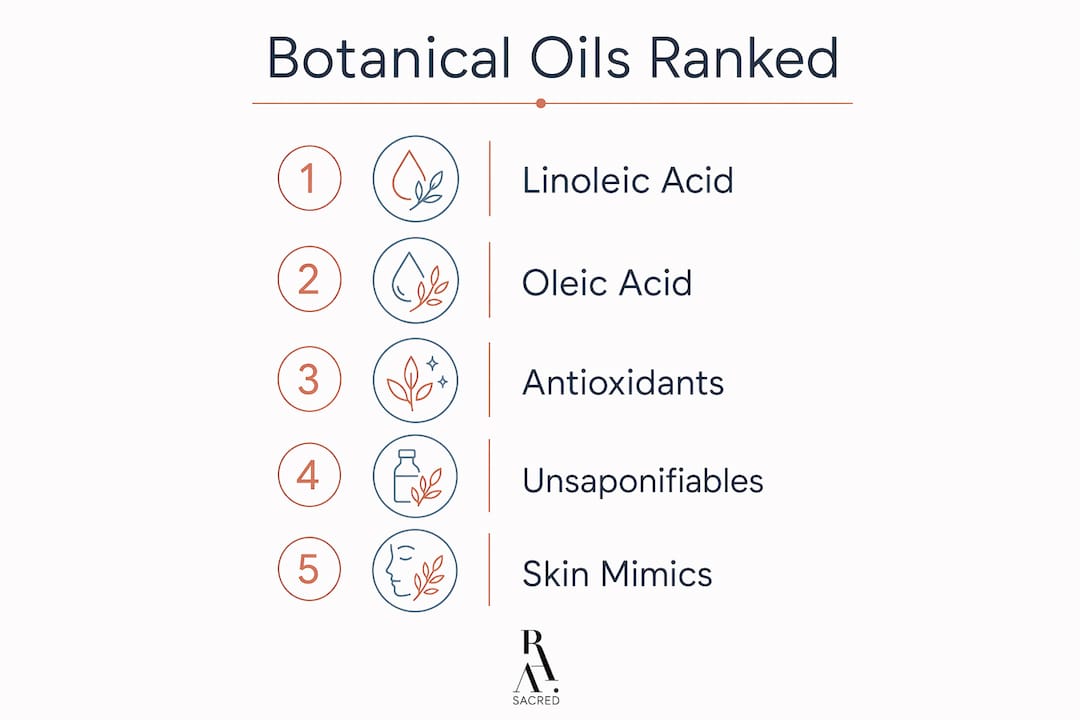
The fatty acid profile of an oil determines how well it supports barrier repair. Linoleic acid, an omega-6 fatty acid, is a structural component of ceramides. Oils high in linoleic acid, such as rosehip and grapeseed, directly contribute to rebuilding the lipid matrix. Oleic acid, an omega-9, penetrates deeply and nourishes, but oleic acid can loosen barrier integrity if used in excess on already compromised skin. Knowing this distinction prevents a common mistake: reaching for the richest-feeling oil when your barrier actually needs repair first.
Pro Tip: If your skin feels tight, flaky, or reactive, start with a linoleic acid-rich oil like rosehip or grapeseed before adding richer oleic oils like argan or avocado. Repair the barrier first, then nourish.
Which botanical oils work best for mature skin?
Not all botanical oils perform the same way on aging skin. Their fatty acid ratios, antioxidant content, and what formulators call the unsaponifiable fraction all determine their specific benefits.
Linoleic acid-rich oils
These oils prioritize barrier repair and are ideal for sensitive, reactive, or barrier-compromised mature skin.
- Rosehip oil contains omega-3 and omega-6 fatty acids plus pro-vitamin A. Cold-pressed rosehip oil replenishes lipids, promotes mild resurfacing, and improves skin texture and hydration overnight. It is one of the most studied oils for aging skin.
- Grapeseed oil is lightweight, absorbs quickly, and suits oily or combination mature skin that still shows fine lines.
- Sea buckthorn oil is exceptionally rich in carotenoids and tocopherols. A small amount blended into a carrier oil delivers concentrated antioxidant support without heaviness.
Oleic acid-rich oils
These oils penetrate deeply and deliver intense nourishment. They work best on dry, non-reactive mature skin or as a night treatment after barrier repair is established.
- Argan oil supplies tocopherols (vitamin E) and phytosterols alongside oleic acid. It softens texture and improves suppleness with consistent use.
- Avocado oil is dense with oleic acid and unsaponifiables including phytosterols. It suits very dry, mature skin and works well as a night oil.
- Marula oil absorbs faster than many oleic-dominant oils and carries a favorable antioxidant profile, making it a practical daily option for drier skin types.
The unsaponifiable fraction
This is the part of an oil that does not convert to soap during processing, and it often contains the most therapeutically active compounds. Phytosterols and triterpenes in this fraction deliver anti-inflammatory and barrier-repair benefits that go beyond what the fatty acid content alone provides. Two oils with similar linoleic acid levels can perform very differently because of their unsaponifiable content. This is why cold-pressed, minimally processed oils matter. Cold-pressed oils retain more fatty acids and antioxidants than those extracted with heat or solvents, which degrade the most delicate compounds.
Oils that mimic skin’s own sebum
Jojoba is technically a liquid wax, not an oil, but it behaves like one and closely mimics the skin’s natural sebum. Jojoba and squalane are non-comedogenic and well tolerated by sensitive or mature skin without clogging pores. Squalane, derived from sugarcane or olives, is particularly stable and unlikely to oxidize, making it a reliable daily option.
Common misconceptions about botanical oils for mature skin
The biggest misconception is that botanical oils can replace retinoids or active treatments for aging skin. They cannot. Botanical oils help soften fine lines by plumping and moisturizing skin, not by directly stimulating collagen the way retinoids do. Their role is supportive, not corrective. Expecting an oil to erase deep wrinkles leads to disappointment. Expecting it to keep skin supple, calm, and resilient is entirely reasonable.
A second misconception is that all oils clog pores. Comedogenicity depends on the specific oil and the individual’s skin. Linoleic acid-rich oils like rosehip and grapeseed are generally low on the comedogenic scale. The real risk comes from using oleic-dominant oils on oily or acne-prone skin. Matching the oil to your skin type solves this problem.
Oxidation is a less-discussed but real concern. Oils exposed to air, light, or heat degrade and can generate free radicals that irritate skin rather than protect it. This is the opposite of what you want from an anti-aging product. Store oils in dark glass bottles away from heat, and replace them within six to twelve months of opening.
Here is a practical layering sequence for mature skin:
- Cleanse with a gentle, non-stripping formula.
- Apply a humectant serum (hyaluronic acid or glycerin-based) to damp skin.
- Follow with any active treatments (vitamin C, niacinamide, or retinoids at night).
- Press two to four drops of your chosen botanical oil over the top to seal everything in.
- At night, choose a richer oleic oil like argan or avocado. In the morning, use a lighter linoleic or squalane-based oil under SPF.
Pro Tip: Never apply a botanical oil to completely dry skin. A damp surface gives the oil something to seal in. Apply within sixty seconds of your serum while skin is still slightly moist.
How to choose and apply botanical oils effectively
Selecting the right oil starts with your skin’s current condition, not just your skin type. If your barrier is compromised, reactive, or flaking, linoleic acid-rich oils are the priority. Once the barrier stabilizes, you can layer in richer oleic oils for deeper nourishment.
- For dry, mature skin: Avocado, marula, or argan oil at night. Rosehip or jojoba during the day.
- For sensitive or reactive mature skin: Rosehip, jojoba, or squalane. Avoid heavy oleic oils until reactivity calms.
- For oily or combination mature skin: Grapeseed or squalane. Both absorb quickly and do not leave a greasy finish.
- For all skin types: A balanced blend covering both barrier repair and antioxidant support outperforms a single oil. Combining linoleic-rich oils with those supplying tocopherols and carotenoids addresses aging skin’s multiple needs at once.
Amount matters more than people realize. Two to four drops is enough for the full face. More oil does not mean more benefit. Excess oil sits on the surface, feels heavy, and can interfere with SPF or makeup adhesion in the morning.
When integrating botanical oils with active ingredients, timing is the key factor. Retinoids and vitamin C serums go on before the oil. The oil layer then acts as a buffer that reduces irritation from actives while locking in their benefits. This is particularly useful for people who find retinoids drying or sensitizing.
For personalizing your botanical blend, consider your climate as well. Humid environments call for lighter oils like squalane or grapeseed. Dry or cold climates benefit from richer oils like avocado or a blended formula that combines both barrier repair and occlusive protection.
Key Takeaways
Botanical oils support aging skin most effectively when selected by fatty acid profile, applied over humectants, and used as part of a layered routine rather than as standalone treatments.
| Point | Details |
|---|---|
| Barrier repair comes first | Use linoleic acid-rich oils like rosehip or grapeseed before adding richer oleic oils. |
| Oils moisturize, not hydrate | Apply a humectant serum first; the oil seals in moisture rather than adding water. |
| Cold-pressed quality matters | Cold-pressed oils retain more fatty acids and antioxidants than heat-extracted versions. |
| Unsaponifiables add depth | Phytosterols and triterpenes in oils deliver anti-inflammatory benefits beyond fatty acids alone. |
| Blends outperform single oils | Combining linoleic and antioxidant-rich oils addresses aging skin’s multiple needs simultaneously. |
What I have learned from years of working with botanical oils
The most common mistake I see is treating botanical oils as the hero of a skincare routine when they are actually the supporting cast. The real work of addressing aging skin happens with actives: vitamin C for oxidative protection, niacinamide for barrier support, retinoids for cell turnover. Botanical oils make those actives work better by keeping the barrier intact and reducing the irritation that causes people to abandon effective treatments.
What surprised me most when I started paying attention to oil composition was how dramatically fatty acid ratios change the experience. Two oils that look similar on a label, both described as “nourishing” or “anti-aging,” can behave completely differently on skin. An oleic-dominant oil on a compromised barrier makes things worse before they get better. A linoleic-dominant oil on the same skin starts calming it within days. That specificity is not marketing. It is chemistry.
I am also skeptical of single-oil routines for mature skin. Aging skin has layered needs: barrier repair, antioxidant protection, deep nourishment, and TEWL reduction. No single oil covers all of these equally well. Precision blending, selecting oils with complementary fatty acid profiles and antioxidant content, is where the real results come from. Raasacred’s approach to botanical blends for skin rituals reflects exactly this thinking. The goal is not the most exotic ingredient. It is the right combination of ingredients working together.
— Val
Sacred Bloom: botanical oil formulated for mature skin
Raasacred’s Sacred Bloom Skin Layering Oil is built around the principles covered in this article. It combines cold-pressed oils selected for complementary fatty acid profiles, pairing linoleic-rich botanicals for barrier repair with antioxidant-dense oils that protect against oxidative stress. The formula absorbs without greasiness, making it practical for both morning and evening use. It layers cleanly over serums and actives, sealing in moisture and supporting skin resilience over time. If you are looking for a botanical oil designed specifically for mature skin’s complex needs, Sacred Bloom is worth adding to your routine. Explore the full botanical body oils collection for additional options.
FAQ
What do botanical oils actually do for aging skin?
Botanical oils replenish the lipids that aging skin loses, reinforce the skin barrier, reduce transepidermal water loss, and deliver fat-soluble antioxidants. They work best as supportive elements layered over active serums and humectants.
Which oil is best for mature, dry skin?
Rosehip oil is an excellent starting point for most mature skin types because of its linoleic acid and pro-vitamin A content. Avocado or marula oil suits very dry skin as a richer night treatment.
Can botanical oils replace anti-aging serums?
Botanical oils cannot replace active treatments like retinoids or vitamin C serums. They soften fine lines by improving hydration and barrier function, not by stimulating collagen production the way retinoids do.
Do botanical oils clog pores on mature skin?
Low-comedogenic oils like jojoba, squalane, rosehip, and grapeseed do not clog pores for most people. Oleic-dominant oils like avocado carry a higher comedogenic risk and suit dry rather than oily or combination skin.
How should botanical oils be stored to stay effective?
Store botanical oils in dark glass bottles away from heat and direct light. Replace them within six to twelve months of opening, since oxidized oils can generate free radicals that irritate rather than protect skin.