

The correct order is lotion or serum first, body oil last. Lotion and serum deliver water-based hydration into the skin; oil seals that moisture in so it cannot evaporate. Flip the order and the oil creates a barrier that blocks everything applied after it.
TL;DR routine: Pat skin damp after your shower → apply lotion → wait a short time → press a small amount per limb of body oil into skin → wait 60–90 seconds before dressing.
- Lotion or serum → oil (standard, most hydrating)
- Serum → oil → cream (dryer finish alternative)
- Total oil needed: a modest amount for the whole body, or a few drops per limb
- Dressing window: allow some time after oil for absorption before putting on clothes
Table of Contents
- Why does layering order actually improve hydration?
- How to layer body oils step by step
- How do you avoid a greasy finish with body oil?
- How do you layer scented body products without clashing?
- Which oils and lotions work best for your skin type?
- Three ready-to-use routines you can follow today
- Key Takeaways
- Why a measured routine changes everything
- Sacred Bloom fits perfectly as your sealing step
- Useful sources
Why does layering order actually improve hydration?
Skin products fall into three functional categories, and each one does a different job. Humectants (glycerin, hyaluronic acid) attract water molecules and pull them toward the skin’s surface. Emollients (ceramides, fatty acids) smooth the texture and fill gaps in the skin barrier. Occlusives (plant oils, squalane, shea) sit on top and physically prevent water from escaping.
When you apply them in the right sequence, each layer amplifies the one before it. Lotion hydrates and penetrates; oil seals and protects. Put oil on first and you have built a seal with nothing underneath it.
The timing matters just as much as the order. Surface water on slightly damp skin evaporates fast, so applying within roughly 3 minutes of leaving the shower gives humectants something to bind to. Waiting until skin is bone-dry means you are starting from a deficit. Think of it like wrapping a sponge: the sponge needs to be damp before you wrap it, not dry.
Pro Tip: If you apply oil first and then lotion, the lotion cannot penetrate the oil layer effectively. You end up with product sitting on the surface rather than absorbing, which is exactly what creates that heavy, greasy feeling people blame on the oil itself.
- Humectants work best on damp skin
- Emollients need to absorb before occlusives go on top
- Oils are the final seal, not the first step
- The 3-minute post-shower window is when absorption peaks
How to layer body oils step by step
This is the routine. Follow the amounts and timing and you will not end up greasy.
-
Step 1 — Timing. Step out of the shower and pat your skin gently with a towel. Leave it slightly damp, not dripping. You have about 3 minutes before the surface moisture evaporates, so move with purpose.
-
Step 2 — Targeted serum (optional). If you use a body serum, apply a small amount to specific areas (rough elbows, knees, very dry patches). Wait 30–60 seconds for it to set before moving on. Rushing this step causes pilling.
-
Step 3 — Body lotion or cream. Squeeze a modest amount into your palms — less than you think you need. Spread it in long, smooth strokes across each area rather than rubbing in circles. Pay extra attention to dry zones. Wait a short time. The lotion should feel absorbed, not tacky, before you add oil.
-
Step 4 — Body oil. Warm a few drops per limb between your palms for a few seconds. Press your flat hands into the skin rather than rubbing. Long, sweeping strokes work; aggressive friction does not. For the whole body, a modest amount is enough. Wait a short time before dressing.
-
Step 5 — Drier finish swap (optional). If you find the standard order leaves too much surface slip, try serum → oil → cream instead. A fast-absorbing cream placed on top acts as a sealant that reduces tack without sacrificing sealed hydration.
Pro Tip: Missed the post-shower window and your skin is completely dry? Mist your skin lightly with water or a body mist, wait 20 seconds, then apply lotion. It recreates the damp-skin advantage without needing another shower.
Exfoliating 1–2 times per week also helps here. Dead skin buildup creates a surface barrier that blocks product penetration, so even a perfect layering routine underperforms on skin that has not been exfoliated recently.
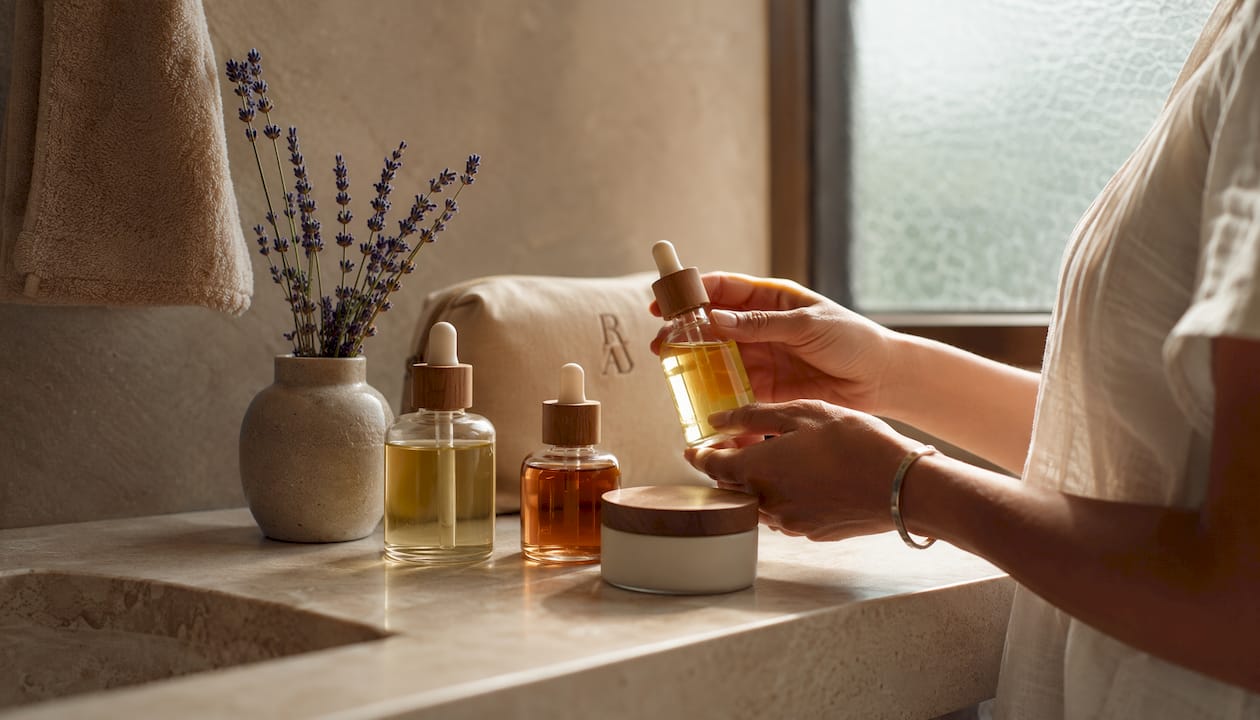
How do you avoid a greasy finish with body oil?
Greasiness is almost always a technique problem, not a product problem. Here are the five most common causes and the fix for each.
- Too much product. The single most common mistake. 1–2 teaspoons total is genuinely enough for the whole body. Start with less; you can always add a drop more.
- Applying to completely dry skin. Oil on dry skin sits on the surface because there is no moisture for it to help seal. Pat skin damp and apply within 3 minutes of showering.
- Aggressive rubbing. Rubbing spreads product unevenly and generates friction that keeps it on the surface. Use flat-hand pressing and long strokes instead.
- Wrong oil for your skin type. A heavy oil on oily or combination skin will not absorb well. Lighter options like squalane or jojoba absorb faster and leave less residue.
- Layering too quickly. Applying oil before lotion has set causes both products to lift and pill. Allow 60–120 seconds between lotion and oil.
Pilling, those tiny balls of product that form on the skin, happens when a second layer goes on before the first has set, or when rubbing lifts still-mobile product. The fix is straightforward: allow 30–60 seconds for serums and 1–2 minutes for creams, then use flat-hand pressing rather than rubbing.
To test absorption before dressing, press the back of your hand lightly against your forearm. If product transfers, wait another 30 seconds. If it feels dry to the touch, you are good to go.
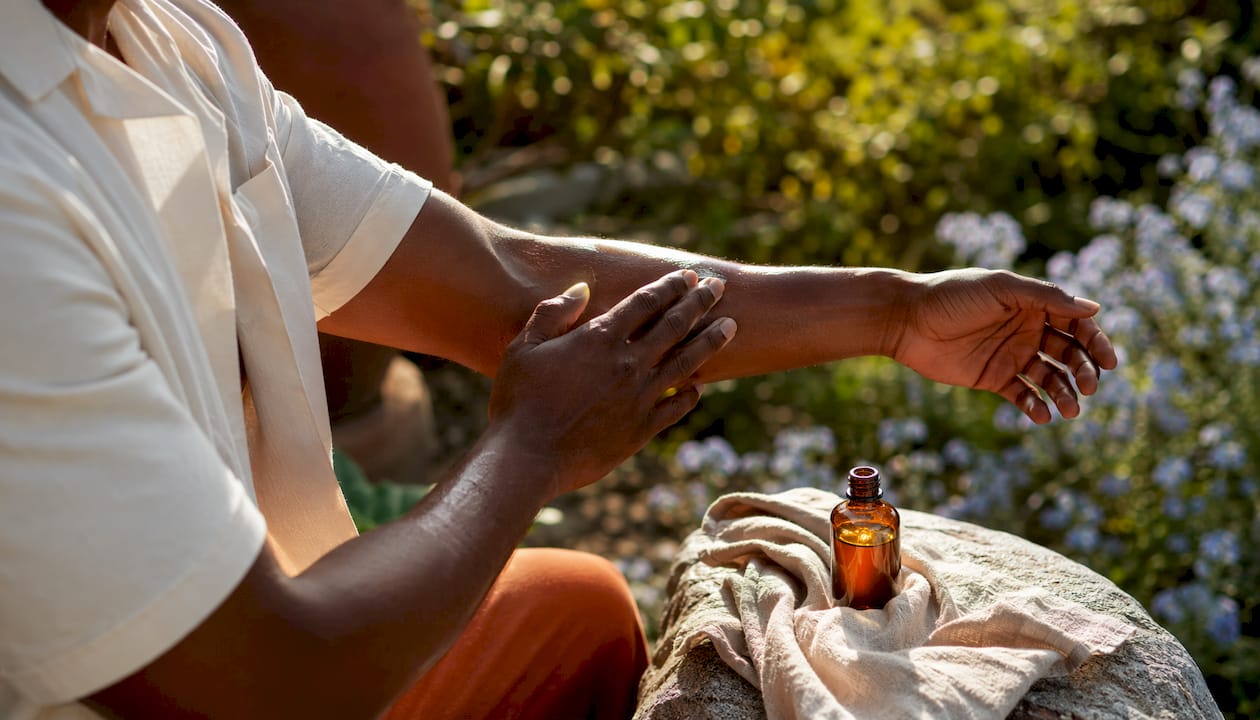
How do you layer scented body products without clashing?
The professional technique is called lift-and-anchor, and it does two things at once: it extends how long your fragrance lasts and prevents individual scents from competing with each other.
The sequence works like this: a lightly scented lotion or cream acts as the lift, giving perfume molecules a hydrated surface to cling to. Perfume goes in the middle, applied to pulse points. A thin body oil goes on last as the anchor, trapping volatile base notes so they release slowly instead of burning off within an hour.
- Limit scented steps to 2–3 maximum to avoid olfactory overload
- Match or complement note families (florals with florals, woods with woods)
- Control intensity with volume, not more products; a pea-sized amount of lotion or a single drop of oil at pulse points has outsized scent impact
- Wait a short time between scented layers for the best dry-down
Pro Tip: Rather than coating your whole body with a scented oil, spot-treat pulse points (wrists, inner elbows, behind the knees) with a single drop. The warmth of those areas amplifies the scent naturally, and you use far less product.
Raasacred’s fragrance-layering body oils are formulated specifically for this technique, with botanical blends that complement rather than compete with most perfume families. For oud-forward or Arabic fragrance pairings, niche Emirati perfume lines layer particularly well with warm, resinous body oils.
Which oils and lotions work best for your skin type?
The layering method stays the same regardless of skin type. What changes is the specific products you reach for.
Oily or acne-prone skin: Choose lightweight, non-comedogenic oils like squalane or jojoba. These absorb quickly and will not clog pores. Pair with a gel-based or oil-free lotion. Use the minimum amount of oil and focus on genuinely dry zones rather than coating the whole body.
Normal or combination skin: Lighter plant oils work well applied selectively. Grapeseed and sunflower seed oil are good options. A standard lotion with glycerin or ceramides as the base layer gives you enough hydration without heaviness.
Dry skin: Richer oils and butters are your friends here. Argan, coconut, and olive oil provide deeper nourishment for very dry zones. Look for lotions with ceramides, glycerin, and hyaluronic acid. These humectant-rich formulas give the oil something substantial to seal in.
For lotion ingredients, prioritize glycerin (draws water in), hyaluronic acid (holds moisture at the surface), and ceramides (repairs the barrier). For the oil layer, squalane is the most universally tolerated occlusive across all skin types because it is lightweight and closely mimics the skin’s own sebum.
Raasacred’s Sacred Bloom fits the sealing step for all three skin types. It is formulated with 100% pure essential oils and plant-based carriers for lightweight, non-greasy absorption, which makes it particularly practical in humid climates where heavier oils tend to sit on the skin rather than absorb.
For sensitive skin, always patch test fragranced blends on a small area before full-body use. Introduce one new product at a time so you can identify anything that causes irritation. If you have a known sensitivity to essential oils, opt for unfragranced carrier oils first and add scent gradually.
For more on carrier oil selection by skin type, Raasacred’s guide covers the functional differences between common plant oils in detail.
Three ready-to-use routines you can follow today
Routine 1: Morning quick glow (2–3 minutes)
- Pat skin damp after shower
- Apply a thin layer of lightweight lotion to arms, legs, and torso — long strokes, 60 seconds
- Warm a few drops of a light body oil in palms, press into skin
- Wait a short time, then dress
Best for: normal to combination skin, warm or humid mornings, days when you need to move fast.
Routine 2: Evening rich repair (8–10 minutes)
- Exfoliate 1–2x per week before this routine to maximize absorption
- Pat skin damp, apply a richer cream or body butter to rough zones (shins, elbows, heels) first
- Spread a standard lotion over the rest of the body, wait a short time
- Warm a few drops of a nourishing body oil in palms, press into skin with flat hands
- Wait a short time before putting on pajamas
Best for: dry skin, cooler months, or anyone who wakes up with tight, flaky skin.
Routine 3: On-the-go spot treatment (under 60 seconds)
- Apply a pea-sized amount of lotion to dry elbows, shins, or knuckles
- Follow with a small amount of body oil pressed directly into those spots
- Wait a short time
Best for: midday touch-ups, pulse points for fragrance anchoring, or travel when you cannot do a full routine.
Key Takeaways
Layering body oils correctly means applying water-based hydrators first and sealing with oil last, using 1–2 teaspoons total, on slightly damp skin within 3 minutes of showering.
| Point | Details |
|---|---|
| Correct layering order | Apply lotion or serum first, body oil last; oil seals in moisture, not delivers it. |
| Damp-skin timing | Apply within 3 minutes of showering to slightly damp skin for peak absorption. |
| Measured amounts | Use a modest amount or a few drops per limb; less product means less greasiness. |
| Wait times | Allow some time after lotion and oil before dressing. |
| Raasacred Sacred Bloom | A lightweight plant-based sealing oil designed for the final step; a few drops per limb, pressed in flat. |
Why a measured routine changes everything
Most people who complain that body oil “never absorbs” are using three times too much of it. The shift that actually makes a difference is not finding a better oil. It is committing to a measured amount and a consistent sequence.
What the research consistently shows is that skin responds to routine more than to any single product. The 3-minute post-shower window, the flat-hand pressing technique, the 60-second wait between layers — these are not fussy extra steps. They are the difference between a routine that works and one that leaves you blotting oil off your clothes.
Raasacred’s formulas are built around this reality. The plant-based carriers in products like Sacred Bloom are chosen specifically for their absorption profile in humid conditions, where heavier oils tend to stall on the surface. The goal was never a product that smells good in the bottle. It was one that actually disappears into the skin and leaves something behind worth keeping.
The ritual framing matters too. When you treat your layering routine as a deliberate, measured practice rather than a rushed afterthought, you apply less product, you give each layer time to work, and you actually notice what your skin needs. That attention is what produces consistent results over weeks and months, not any single ingredient.
Sacred Bloom fits perfectly as your sealing step
Most body oil routines fall apart at the last step: people either skip the oil entirely or drown their skin in it. Sacred Bloom is designed to make that final step precise and effortless.
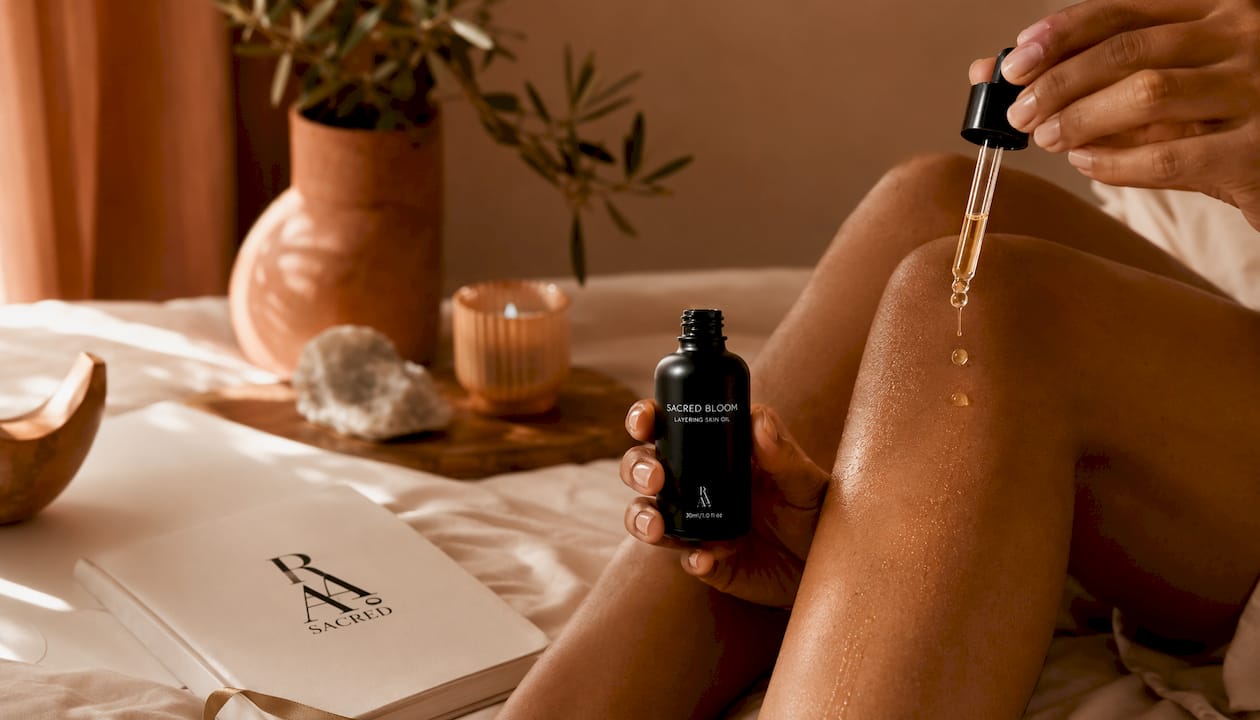
Warm 3–5 drops of Sacred Bloom between your palms after your lotion has absorbed, then press it into skin using flat hands. That is it. The 30ml bottle is sized for daily use without waste, and the plant-based formula absorbs in under 90 seconds even in humid conditions. It works as a sealing oil in the standard lotion-first routine and as a fragrance anchor at pulse points when you want scent to last longer.
If you have been using body oil and still ending up greasy, the issue is almost certainly amount and technique, not the oil itself. Sacred Bloom is formulated for exactly the measured, press-in method this article describes. Try it as your daily skin layering oil and start with 3–5 drops per limb or 1–2 teaspoons for full-body use, adjusting until you find your skin’s sweet spot.
Useful sources
- How to Use Body Oil: Pro Techniques and Common Mistakes — TrulyBeauty — supports the 3-minute rule, measured amounts (1–2 teaspoons / a few drops per limb), 60–90 second absorption window, and non-comedogenic oil recommendations
- How to Layer Body Cream with Body Oils and Serums — GlamGeek — source for the dryer-finish alternative sequence (serum → oil → cream) and pilling prevention technique
- Glow-Locking 101: How to Layer Body Lotion and Oil — Palmer’s — supports the core lotion-first, oil-second order and the hydration-plus-seal mechanism
- Layering 101: Pair Body Care and Perfume for Depth — PerfumerOnline — source for the lift-and-anchor fragrance technique and the 2–3 scented steps rule
- How to Layer Body Lotion, Oil, and Mist for Soft, Scented Skin — Zalora — supports damp-skin timing and lotion application guidance
- Layering Body Lotion and Body Oil for Maximum Hydration — BoracaySkin — skin-type matrix and step-by-step layering reference
- American Academy of Dermatology — Dermatologist Tips to Relieve Dry Skin — authoritative clinical guidance on moisturizer application timing and barrier repair
- Mayo Clinic — Dry Skin: Diagnosis and Treatment — clinical context for moisturizer layering and skin barrier function
This article is general skincare information, not medical or dermatological advice. For persistent skin concerns, consult a board-certified dermatologist.