

Carrier oils for essential oil blending are plant-based, non-volatile lipids that dilute essential oils for safe topical use while actively delivering fatty acids, vitamins, and antioxidants into the skin. Unlike essential oils, carrier oils don’t evaporate, which means they slow the release of aromatic compounds and improve absorption. The right carrier oil does far more than prevent irritation. It shapes the texture, shelf life, and therapeutic outcome of every blend you make. Whether you’re crafting a facial serum, a massage oil, or a roll-on, your carrier oil choice is as important as the essential oil itself.
1. Jojoba oil: the gold standard carrier oil for essential oil blending
Jojoba is chemically a liquid wax, not a triglyceride oil. That distinction matters because jojoba mimics skin’s natural sebum, absorbs without greasiness, and carries a shelf life measured in years rather than months. It suits every skin type, including oily and acne-prone skin, because it helps balance sebum production rather than adding to it. Jojoba also has mild anti-inflammatory properties, making it a reliable base for sensitive skin blends. If you only buy one carrier oil, this is it.
- Texture: Lightweight, silky, non-greasy
- Best for: Face oils, roll-ons, all skin types
- Scent: Faint, neutral
- Shelf life: 2–5 years
2. Fractionated coconut oil: the beginner’s best friend
Fractionated coconut oil is odorless, stable, and liquid at room temperature, which makes it the top pick for roller blends and anyone new to DIY aromatherapy. Unlike regular coconut oil, the fractionated version won’t solidify in cool weather or interfere with the scent of your essential oils. It absorbs quickly and leaves no residue. Its neutral profile means it works with virtually any essential oil without altering the final fragrance.
- Texture: Ultra-light, dry-feeling
- Best for: Roll-ons, body sprays, massage blends
- Scent: Odorless
- Shelf life: 2+ years
3. Sweet almond oil: the classic massage carrier
Sweet almond oil is one of the most widely used carrier oils in professional massage therapy. It spreads easily, provides good slip, and absorbs at a moderate pace. That combination gives you enough working time during a massage without leaving skin feeling coated. It contains oleic and linoleic acids that soften and condition skin. Note that sweet almond oil derives from tree nuts and is not suitable for people with nut allergies.
- Texture: Medium weight, smooth
- Best for: Massage oils, body blends, normal to dry skin
- Scent: Faint, slightly nutty
- Shelf life: 12–18 months
4. Grapeseed oil: the go-to for oily skin
Grapeseed oil absorbs faster than most carrier oils and leaves a dry, matte finish. That makes it the preferred choice for oily or combination skin types who want the benefits of a carrier without any shine. It’s rich in linoleic acid, which research links to improved skin barrier function. Grapeseed oil has a shorter shelf life than jojoba, so buy it in small quantities and store it carefully.
- Texture: Very light, fast-absorbing
- Best for: Oily skin, facial serums, lightweight body blends
- Scent: Neutral to faint
- Shelf life: 6–12 months
5. Rosehip oil: the skin-renewing specialty oil
Rosehip oil is rich in trans-retinoic acid and essential fatty acids that support cell turnover and reduce the appearance of scars and fine lines. It’s a specialty oil, meaning you use it in smaller amounts within a blend rather than as a primary base. Rosehip oxidizes quickly, so it works best when combined with a stable base like jojoba. For mature or post-acne skin, rosehip is one of the most effective additions you can make to a facial oil. You can read more about how nutrient-dense oils target aging skin in dedicated formulas.
- Texture: Medium, slightly dry
- Best for: Mature skin, hyperpigmentation, facial serums
- Scent: Earthy, faint
- Shelf life: 6–12 months
6. Avocado oil: the deep nourisher for dry skin
Avocado oil is one of the heaviest carrier oils available. It’s packed with oleic acid, vitamin E, and sterols that penetrate deeply and repair a compromised skin barrier. Because of its weight, avocado works best as a secondary oil in a blend rather than a standalone base. Pair it with a lighter carrier like grapeseed or jojoba to get the nourishing benefits without the heavy feel. It’s especially effective in winter body oils and overnight treatments.
- Texture: Heavy, rich
- Best for: Dry, mature, or damaged skin; body blends
- Scent: Mild, slightly green
- Shelf life: 12 months
7. Argan oil: the luxury skin conditioner
Argan oil comes from the kernels of the Moroccan argan tree and is prized for its high vitamin E and oleic acid content. It absorbs well for a medium-weight oil and leaves skin with a subtle glow rather than a greasy film. Argan is a tree nut derivative, so people with nut allergies should avoid it. It works well in facial blends, hair oils, and cuticle treatments. Its slightly higher price point reflects its labor-intensive production.
- Texture: Medium, non-greasy
- Best for: Face oils, hair care, normal to dry skin
- Scent: Faint, slightly nutty
- Shelf life: 12–18 months
8. Apricot kernel oil: the gentle all-rounder
Apricot kernel oil closely resembles sweet almond oil in texture and fatty acid profile but is slightly lighter. It absorbs well and suits sensitive and mature skin types. Like sweet almond and argan, it comes from a tree nut source, so nut allergy caution applies. Apricot kernel is a solid everyday carrier for facial serums and body blends where you want a gentle, nourishing base without heaviness.
- Texture: Light to medium
- Best for: Sensitive skin, facial blends, mature skin
- Scent: Faint, neutral
- Shelf life: 12 months
9. Hemp seed oil: the anti-inflammatory powerhouse
Hemp seed oil contains an ideal 3:1 ratio of omega-6 to omega-3 fatty acids, which supports skin barrier repair and reduces redness. It absorbs quickly and suits oily, acne-prone, and inflamed skin. Hemp seed oil has a noticeable green color and a grassy scent that can influence the final aroma of your blend. Use it as a secondary oil in blends where its anti-inflammatory properties are the goal. Its shelf life is shorter, so small batches are the right approach.
- Texture: Light, fast-absorbing
- Best for: Acne-prone, inflamed, or oily skin
- Scent: Grassy, noticeable
- Shelf life: 6–12 months
10. Castor oil: the thick, targeted treatment oil
Castor oil contains ricinoleic acid, a unique fatty acid that delivers anti-inflammatory and antimicrobial benefits. It’s extremely thick and sticky, so you never use it as a primary carrier. A small percentage, typically 5–10%, added to a blend increases viscosity, boosts staying power, and enhances the therapeutic effect of essential oils applied to joints or scalp. It’s a specialty addition, not a base.
- Texture: Very thick, sticky
- Best for: Scalp treatments, joint blends, targeted applications
- Scent: Faint, neutral
- Shelf life: 12+ months
How to choose the best carrier oil for your skin type
No single carrier oil suits every person or purpose. Matching your carrier to your skin type and blend goal is the most important decision you make before mixing. Here’s how to approach it:
- Oily or acne-prone skin: Choose grapeseed or hemp seed oil. Both absorb fast and won’t clog pores.
- Dry or mature skin: Avocado, sweet almond, or apricot kernel oil add the richness dry skin needs.
- Sensitive skin: Jojoba and fractionated coconut oil are the safest starting points. Both are allergen-free universal options without nut proteins.
- Normal or combination skin: Jojoba, argan, or apricot kernel oil all work well.
- Massage blends: Sweet almond oil provides the slip and spread that massage requires.
- Facial serums: Jojoba or rosehip, or a blend of both, gives you stability and skin-renewing nutrients.
- Roll-ons: Fractionated coconut oil is the standard choice because it stays liquid and odorless.
Always choose cold-pressed or expeller-pressed oils over heat-processed versions. Cold-pressing preserves the fatty acids, vitamins, and antioxidants that make carrier oils therapeutically useful. Heat-processed cooking oils lack these qualities and go rancid faster. For a deeper look at matching oils to applications, the topical skincare application guide from Raasacred covers the full picture.
Pro Tip: If you or someone you’re blending for has a tree nut allergy, jojoba and fractionated coconut oil are your safest choices. Sweet almond, argan, and apricot kernel all come from tree nuts and can trigger reactions.
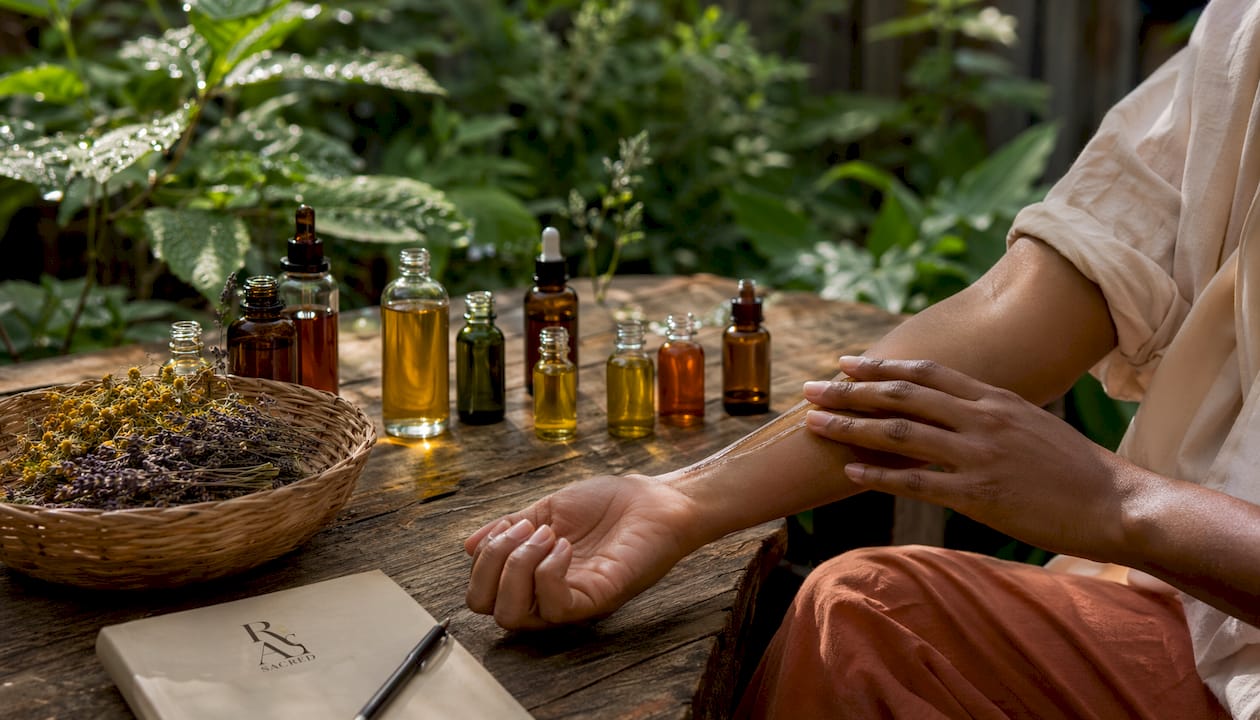
Blending carrier oils for customized results
Mixing two or three carrier oils together gives you control over texture, absorption rate, and therapeutic benefit that no single oil can provide on its own. The standard professional approach uses a 70–80% stable base oil combined with 15–20% nourishing oil and 5–10% specialty oil. That ratio manages weight, prevents heavy oils from dominating, and balances shelf life across the blend.
Follow this sequence every time you blend:
- Measure your base oil first. Pour jojoba or fractionated coconut oil into your bottle as the primary carrier.
- Add your nourishing oil. Rosehip, sweet almond, or avocado goes in next at 15–20% of the total volume.
- Add your specialty oil last. Castor, hemp seed, or another targeted oil goes in at 5–10%.
- Mix the carrier oils thoroughly before adding any essential oils. This ensures even distribution.
- Add essential oils to the finished carrier blend. Follow safe dilution ratios for skin blends before applying to skin.
Strong starting combinations include jojoba plus rosehip for facial serums, fractionated coconut plus sweet almond for massage oils, and grapeseed plus avocado for a balanced body oil. Each pairing brings complementary strengths. The body oil skincare benefits guide explains how these fatty acid combinations work on skin at a deeper level.
Pro Tip: Always test a new carrier blend on a small patch of skin before using it in a full formula. Carrier oils are active ingredients, not neutral bases, and individual skin responses vary.
Shelf life and storage best practices
Carrier oils oxidize over time, and rancid oil ruins a blend. Oxidation rate varies significantly by oil type, with jojoba being the most stable and grapeseed or rosehip being among the fastest to turn. Storing oils away from light and heat is the single most effective way to extend their usable life.
Follow these storage rules to protect your oils:
- Store in a cool, dark place. A cabinet away from the stove or window works well. A refrigerator is even better for oils like rosehip and hemp seed.
- Use dark glass bottles. Amber or cobalt glass blocks UV light that accelerates oxidation.
- Keep lids tight. Oxygen exposure speeds rancidity. Minimize air contact after each use.
- Label with the purchase date. Knowing when you opened an oil helps you track its usable window.
- Test before use. Rancid oil smells sour, crayon-like, or musty. If it smells off, discard it.
For blends you plan to keep for more than a few weeks, build your formula around jojoba or fractionated coconut oil as the primary carrier. Both resist oxidation far longer than most alternatives. For blends containing rosehip or grapeseed, mix small batches and use them within 4–6 weeks.
Key Takeaways
The most effective carrier oils for essential oil blending combine skin compatibility, appropriate texture, and stability to deliver safe, therapeutic results every time.
| Point | Details |
|---|---|
| Jojoba leads in stability | Jojoba’s wax-like structure resists oxidation and suits every skin type, making it the most versatile base. |
| Match oil to skin type | Oily skin needs grapeseed or hemp seed; dry skin needs avocado or sweet almond for real results. |
| Blend for better outcomes | A 70–80% base plus 15–20% nourishing oil plus 5–10% specialty oil balances texture, absorption, and shelf life. |
| Cold-pressed is non-negotiable | Heat-processed oils lack the fatty acids and vitamins that make carrier oils therapeutically effective. |
| Storage extends shelf life | Dark glass, cool temperatures, and tight lids protect carrier oils from oxidation and rancidity. |
What years of blending actually taught me
The most common mistake I see beginners make is treating carrier oils as neutral fillers. They spend time selecting the perfect essential oil, then grab whatever vegetable oil is nearby. That approach wastes the essential oil and can irritate skin. Carrier oils are active partners in every blend, contributing as much to the final result as the aromatic compounds themselves.
My personal starting point is always jojoba. It’s the one oil I trust with any skin type, any essential oil, and any application. When I want more from a blend, I add rosehip for a facial serum or avocado for a winter body oil. That two-oil approach covers most situations without overcomplicating things.
The other lesson that took me time to learn: quality matters more than variety. A small collection of cold-pressed, properly stored oils outperforms a large collection of cheap, heat-processed alternatives every time. Start with jojoba, fractionated coconut, and one specialty oil like rosehip. Master those three before expanding. You’ll produce better blends with fewer ingredients than most people achieve with a full shelf of oils.
— Val
Raasacred botanical oils for your next blend
Raasacred formulates every product with the same principles covered here: cold-pressed carriers, pure essential oils, and ratios designed for real skin results. The Sacred Bloom Skin Layering Oil is a ready-made carrier blend built for layering with your own essential oils, giving you a premium base without the guesswork of sourcing and mixing individual oils.
The full botanical body oils collection includes options suited to body, face, and aromatherapy blending, each formulated to complement essential oil additions. For those who prefer a finished blend, the aromatherapy roll-ons use quality carrier oils as the base for mood and wellness formulas. Every product reflects the same standard: thoughtfully selected ingredients, non-greasy textures, and results you can feel.
FAQ
What are carrier oils and why do you need them?
Carrier oils are non-volatile plant-based lipids that dilute essential oils for safe topical use while delivering fatty acids, vitamins, and antioxidants to the skin. Without a carrier, undiluted essential oils can cause sensitization, burns, or irritation.
What is the best carrier oil for sensitive skin?
Jojoba and fractionated coconut oil are the safest choices for sensitive skin because neither contains nut proteins and both absorb without clogging pores or causing reactions.
How do you blend carrier oils with essential oils?
Mix your carrier oils together first, then add essential oils at a safe dilution rate, typically 1–3% for facial use and up to 5% for body blends. Always combine carriers before adding essential oils to get even distribution.
How long do carrier oils last before going rancid?
Shelf life varies by oil type. Jojoba lasts 2–5 years, sweet almond and argan last 12–18 months, and fast-oxidizing oils like grapeseed and rosehip last 6–12 months. Store all oils in dark glass away from heat and light to maximize their usable life.
Can you mix multiple carrier oils together?
Blending carrier oils is standard practice in professional aromatherapy. A ratio of 70–80% stable base oil, 15–20% nourishing oil, and 5–10% specialty oil gives you control over texture, absorption, and therapeutic benefit in a single formula.