

Floral essential oils are concentrated plant extracts drawn from flower petals, resins, and blossoms, and they deliver measurable benefits for mood, skin health, and stress relief. This floral essential oils benefits list covers the top oils used in aromatherapy, from lavender and rose to neroli and ylang ylang, along with how each one works and why it belongs in your wellness routine. Clinical research confirms that lavender reduces cortisol by 69.6% after just 20 minutes of inhalation. That single finding explains why floral aromatherapy has moved from spa luxury to everyday practice. Raasacred builds its botanical formulas around these same evidence-backed oils.
1. Lavender: the gold standard for relaxation
Lavender is the most studied floral oil in aromatherapy, and its results are consistent across clinical settings. Multiple clinical trials show it reduces blood cortisol levels significantly after short inhalation sessions. That cortisol drop translates directly into lower anxiety, slower heart rate, and better sleep.
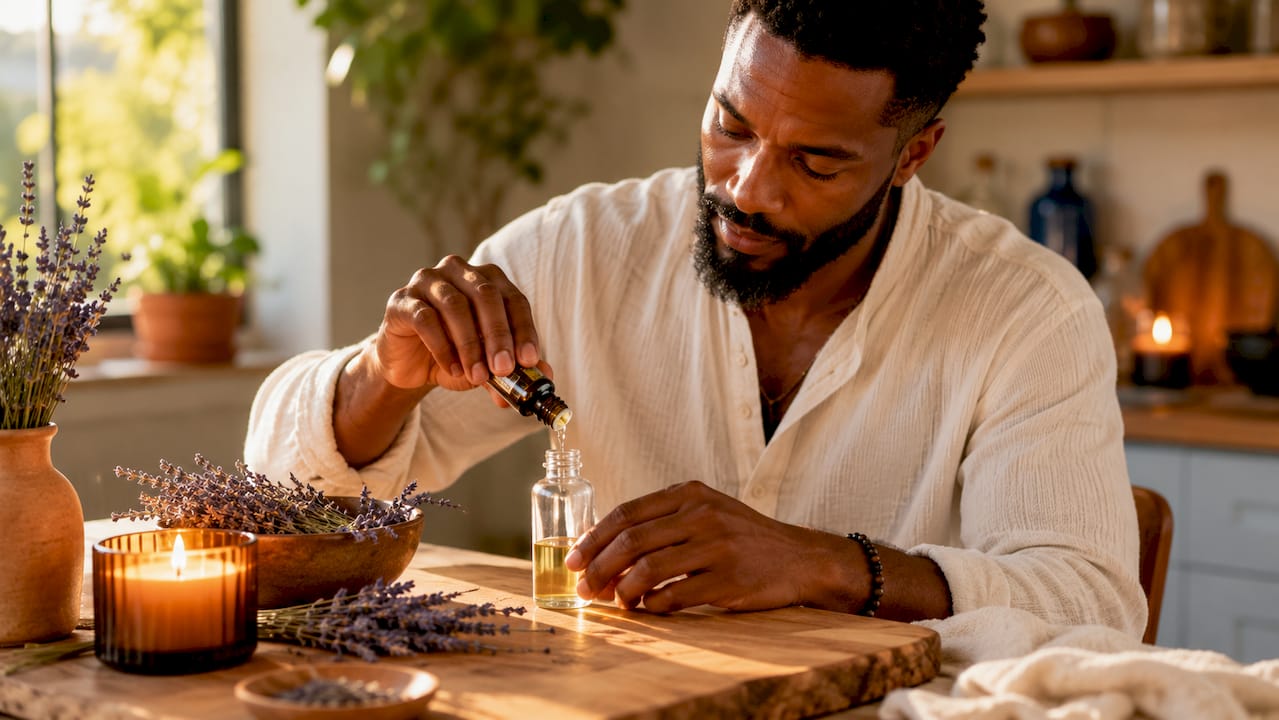
Lavender works well in a diffuser before bed, applied diluted to the wrists, or added to a warm bath. It pairs naturally with Roman chamomile for a deeper calming effect. For sleep specifically, lavender and chamomile in pillow sprays or diffuser blends are among the most reliable evening rituals in aromatherapy practice.
Pro Tip: Dilute lavender in a carrier oil at 2% concentration (about 12 drops per ounce) before applying to skin. This preserves the therapeutic benefit while preventing sensitivity.
2. Roman chamomile: gentle calm for sensitive systems
Roman chamomile delivers a soft, apple-like floral scent with a calming effect that suits people who find stronger oils overwhelming. Clinical protocols group it alongside lavender, rose, and neroli for its sedative properties and ability to reduce sympathetic nervous system activation. That means it physically slows the body’s stress response.
Roman chamomile works especially well for people dealing with tension headaches, irritability, or disrupted sleep. It blends cleanly with lavender and bergamot, making it a flexible addition to any calming blend. Its gentleness also makes it a preferred choice for children’s aromatherapy applications when properly diluted.
3. Neroli: anxiety relief with a bright, uplifting edge
Neroli comes from bitter orange blossoms and carries a honey-citrus-floral scent that sets it apart from heavier florals. Research confirms neroli relieves anxiety and has even been used to reduce pain sensations in clinical settings. Its uplifting quality makes it useful for anxiety that comes with low energy or low mood, not just overstimulation.
Neroli is one of the few floral oils that bridges relaxation and brightness simultaneously. Add it to a personal inhaler or roll-on for moments when stress hits during the day. Its scent also layers beautifully with rose and sandalwood for a more complex aromatic profile.
4. Ylang ylang: deep sensory relaxation
Ylang ylang has an exotic, intensely floral scent that functions as a powerful base note in blends. Studies show it reduces anxiety symptoms and creates a deeply immersive relaxation experience. The scent is rich enough that a small amount goes a long way.
Use ylang ylang sparingly. One or two drops in a blend is usually enough because its sweetness can become overpowering at higher concentrations. It pairs well with bergamot and jasmine for a balanced floral blend that supports both mood and relaxation.
Pro Tip: When blending ylang ylang, add it last and in small amounts. Start with one drop, diffuse for five minutes, and adjust before committing to a full blend.
5. Bergamot: the calming oil that also lifts your mood
Bergamot sits at the intersection of floral and citrus, making it one of the most versatile oils for emotional support. Its unique profile calms the nervous system while simultaneously lifting mood, which is rare among essential oils for relaxation. Aromatherapists use it for anxiety, mild depression, and emotional fatigue.
Bergamot blends with nearly every floral oil, including lavender, neroli, and rose. It works well in a morning diffuser blend when you need calm focus rather than sedation. Note that bergamot is photosensitive, so avoid applying it to skin that will be exposed to direct sunlight within 12 hours.
6. Frankincense: grounding and meditative support
Frankincense is technically a resin oil, but its role in floral aromatherapy blends is well established. It encourages slower, deeper breathing and a grounded sense of presence, making it the preferred oil for meditation and restorative sleep rituals. Its calming resinous aroma has been used in meditative traditions for centuries.
Diffuse frankincense during meditation or yoga practice to anchor attention and reduce mental chatter. It pairs well with rose and sandalwood for a warm, grounding blend. Portable roll-ons that combine frankincense with citrus and wood notes provide on-the-go emotional support beyond home diffusion.
7. Rose: skin renewal and emotional depth
Rose oil is among the most prized and expensive floral extracts in both skincare and perfumery. Rose absolute delivers a dense, honeyed floral warmth that slows and calms the senses while offering genuine skincare benefits. It supports skin renewal, hydration, and a sense of emotional comfort that few other oils match.
For skin, rose oil works best diluted in a carrier oil and applied as a facial serum or body oil. Its molecular profile supports cell regeneration and helps soothe redness. Learn more about beauty rituals with botanicals to see how rose integrates into a full skincare routine.
8. Floral oils for skin care and beauty rituals
Floral oils deliver real results for skin when used correctly. Rose, lavender, and neroli each address different skin concerns, from dryness and sensitivity to uneven tone. The key is matching the oil to your skin type and applying it in the right format.
- Rose oil: Best for dry and mature skin. Dilute at 1–2% in a jojoba or rosehip carrier oil.
- Lavender: Suited for sensitive and acne-prone skin. Its antibacterial properties help calm breakouts.
- Neroli: Works well for combination skin. It supports cell regeneration and balances oil production.
- Roman chamomile: Ideal for reactive or inflamed skin. Use in a facial toner or compress.
Pro Tip: Match your floral oil to your skin type before layering. Oily skin responds better to lighter carriers like jojoba, while dry skin benefits from richer options like rosehip or argan oil.
For a deeper look at application techniques, the guide to personalizing your essential oil blend covers how to build a formula around your specific skin goals.
9. Emotional and mental health benefits of floral oils
Floral oils influence mood through the limbic system, the brain region that processes emotion and memory. When you inhale a floral scent, the aromatic molecules travel through the olfactory nerve directly to this emotional center. That pathway is why scent triggers mood changes faster than almost any other sensory input.
Clinical evidence supports several specific oils for emotional well-being:
- Lavender and rose: Both reduce cortisol and sympathetic nervous system activity in clinical settings.
- Neroli: Relieves acute anxiety and supports emotional resilience during stressful events.
- Ylang ylang: Reduces anxiety symptoms and promotes a sense of calm presence.
- Roman chamomile: Supports emotional steadiness and reduces irritability.
For daily mood support, apply a diluted floral blend to pulse points before stressful situations. During meditation, diffuse rose or frankincense to deepen focus. Aromatherapy application methods vary by goal, so choosing the right delivery method matters as much as the oil itself.
10. Essential oils vs. absolutes vs. floral hydrosols
These three product types come from the same flowers but behave very differently. Knowing which one to use prevents wasted money and poor results.
| Product Type | Extraction Method | Scent Intensity | Best Use |
|---|---|---|---|
| Essential oil | Steam distillation | Moderate, volatile | Diffusion, diluted skin application |
| Absolute | Solvent extraction | Intense, dense | Perfumery, small-dose blending |
| Floral hydrosol | Steam distillation byproduct | Mild, water-based | Facial toner, sensitive skin mist |
Absolutes use solvent extraction to capture delicate floral scents that steam distillation would destroy. They are denser, costlier, and standard in fine perfumery. Essential oils are lighter and more volatile, making them better suited to diffusion and topical blends.
Floral hydrosols are the water-based byproduct of steam distillation. They have a pH close to human skin, which makes them naturally compatible with sensitive skin as toners or mists. They carry antioxidant properties and a milder aroma than their essential oil counterparts.
Pro Tip: If your skin reacts to essential oils, try the hydrosol version of the same flower first. Rose hydrosol and chamomile hydrosol are widely available and far gentler than their concentrated oil forms.
Key takeaways
The most effective approach to floral essential oils is matching each oil’s specific properties to your wellness goal, whether that is stress relief, skin care, or emotional support.
| Point | Details |
|---|---|
| Lavender leads for relaxation | Clinical trials confirm a 69.6% cortisol reduction after 20 minutes of lavender inhalation. |
| Match oil to skin type | Rose suits dry skin, lavender suits sensitive skin, and neroli suits combination skin. |
| Scent reaches the brain fast | Floral molecules act on the limbic system directly, making aromatherapy one of the fastest mood tools. |
| Know your product type | Essential oils, absolutes, and hydrosols differ in intensity, cost, and best application. |
| Portable formats extend benefits | Roll-ons and personal inhalers bring floral aromatherapy into stressful moments outside the home. |
What I’ve learned from years of working with floral oils
Most people start with lavender and stop there. That is understandable. Lavender is well-researched, widely available, and genuinely effective. But stopping there means missing the full range of what floral oils can do.
The most useful shift I made was treating floral oils as tools for specific moments rather than general wellness products. Neroli before a difficult conversation. Frankincense during a morning meditation. Roman chamomile in the evening when the day has been too loud. That specificity changes the results entirely.
I also learned to respect the difference between essential oils and absolutes. Rose absolute smells nothing like rose essential oil. The absolute is richer, more complex, and far more emotionally resonant. It costs more, but a single drop in a blend does what five drops of the essential oil cannot. Knowing that distinction saves money and produces better results.
The hydrosol insight took me longest to appreciate. Sensitive skin often reacts to even well-diluted essential oils. Switching to chamomile or rose hydrosol as a daily facial mist solved that problem immediately. The aroma is gentler, the skin response is calmer, and the ritual still delivers the emotional benefit of working with floral botanicals.
My honest recommendation: start with one oil, use it consistently for two weeks, and pay attention to how your body and mood respond. Floral oils reward attention. The more you notice, the more useful they become.
— Val
Raasacred’s botanical blends for floral wellness
Raasacred formulates its products around the same evidence-backed floral oils covered here, combining them with carefully selected carrier oils for a non-greasy, skin-nourishing result.
The Sacred Bloom skin layering oil brings floral botanical blends into a daily hydration ritual, designed for both scent and skin benefit. For wellness on the go, Raasacred’s aromatherapy roll-ons deliver mood and stress support in a format you can carry anywhere. The full range of botanical body oils supports skin nourishment and natural fragrance layering for anyone building a more intentional daily routine.
FAQ
What are the top floral essential oils for relaxation?
Lavender, Roman chamomile, neroli, and ylang ylang are the most clinically supported floral oils for relaxation. Each reduces anxiety through different aromatic profiles and mechanisms.
Can floral essential oils be applied directly to skin?
Floral essential oils must be diluted in a carrier oil before skin application. A 1–2% dilution (roughly 6–12 drops per ounce of carrier oil) is standard for facial and body use.
What is the difference between a floral essential oil and a hydrosol?
A floral hydrosol is the water-based byproduct of steam distillation, with a milder scent and a skin-friendly pH. Essential oils are more concentrated and potent, requiring dilution before use.
Which floral oil is best for emotional support?
Rose and neroli are the strongest choices for emotional support, with clinical evidence showing both reduce cortisol and anxiety. Frankincense adds grounding depth when blended with either oil.
How do I use floral essential oils for sleep?
Diffuse lavender or Roman chamomile for 30 minutes before bed, or apply a diluted blend to the wrists and chest. Pillow sprays made with these oils also support a consistent sleep environment.