

Frankincense is defined as a resin-derived essential oil that serves as a cornerstone ingredient in wellness blends, delivering calming, anti-inflammatory, and mood-supporting effects through two distinct biochemical pathways. The role of frankincense in wellness blends goes far beyond its ancient reputation as a sacred incense. Its bioactive compounds, specifically incensole acetate and boswellic acids, act through separate mechanisms depending on whether you inhale the oil or apply it topically. Understanding this distinction is what separates effective use from wishful thinking. Raasacred builds its botanical formulas around exactly this kind of compound-level precision.
What is the role of frankincense in wellness blends?
Frankincense functions in wellness blends primarily through two bioactive compound groups, and they work in completely different ways. Incensole acetate and monoterpenes are the volatile aromatic compounds responsible for the psychoactive effects you get through inhalation. Boswellic acids, by contrast, are found in oral extracts and topical preparations, where they deliver systemic anti-inflammatory benefits. This is the most important distinction in frankincense science, and most wellness content ignores it entirely.
The essential oil you diffuse or inhale does not contain meaningful amounts of boswellic acids. Those larger molecules do not survive steam distillation. What the essential oil does contain is incensole acetate, which crosses into the brain and activates specific ion channels linked to mood regulation. Knowing this helps you choose the right format for the benefit you actually want.
The two compound groups at a glance
| Compound | Found in | Primary effect | Route |
|---|---|---|---|
| Incensole acetate | Essential oil | Anxiolytic, antidepressant | Inhalation |
| Monoterpenes | Essential oil | Respiratory, antimicrobial | Inhalation or topical |
| Boswellic acids | Resin extract, supplements | Anti-inflammatory | Oral or topical |
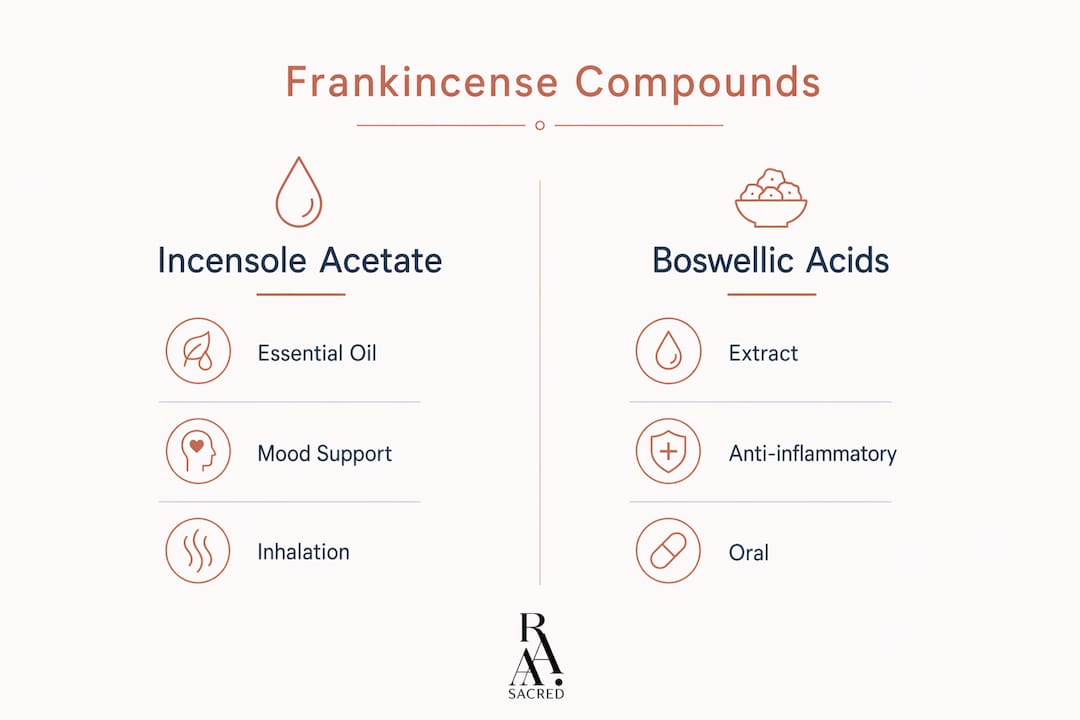
Pro Tip: If your goal is stress relief and mood support, reach for the essential oil and diffuse it. If you want joint or inflammatory support, look for a standardized boswellic acid extract, not the oil.
How does frankincense support emotional and mental well-being?
Frankincense supports emotional well-being by activating TRPV3 ion channels in the brain, a mechanism confirmed by TRPV3-knockout studies that show the effect disappears when those receptors are absent. TRPV3 activation produces measurable anxiolytic and antidepressant-like responses. This is not a placebo effect or a folk remedy claim. It is receptor-specific pharmacology.

Clinical evidence reinforces the lab findings. Hospice patients using frankincense inhalation showed significant improvements in mood and emotional well-being, along with measurable cortisol reduction. Cortisol is the body’s primary stress hormone, so a reduction in its levels signals a genuine physiological shift, not just a subjective feeling of calm.
Frankincense also holds a long history in meditation and contemplative practice across multiple cultures. That ritual context matters pharmacologically. Consistent exposure to a scent during calm, intentional moments builds a conditioned association in the brain. Over time, the scent alone can trigger a relaxation response before the incensole acetate even reaches its receptors.
“Frankincense inhalation produces anxiolytic and antidepressant-like effects through TRPV3 ion channel activation in the brain. Hospice clinical trials confirm mood improvements and cortisol reduction, making it one of the most pharmacologically grounded aromatic oils in wellness practice.”
Frankincense pairs well with lavender in calming blends because both oils target overlapping neurological pathways. Lavender’s linalool acts on GABA receptors, while incensole acetate works through TRPV3. Using both in a body aromatherapy blend creates a broader, more layered calming effect than either oil achieves alone.
Key emotional benefits of frankincense in aromatherapy blends include:
- Reduced anxiety markers through TRPV3 activation
- Lower cortisol levels with consistent inhalation practice
- Improved mood in clinical settings, including hospice care
- Deepened meditative states through conditioned scent association
- Complementary action with lavender for broader stress relief
What anti-inflammatory and physical health benefits does frankincense offer?
Boswellic acids are the compounds responsible for frankincense’s physical health benefits, and they work through a precise enzymatic mechanism. Boswellic acids regulate cytokine production and inhibit both 5-lipoxygenase and cyclooxygenase enzymes. These are the same enzymes targeted by many pharmaceutical anti-inflammatory drugs. The key active forms include β-boswellic acid, acetyl-β-boswellic acid, 11-keto-β-boswellic acid, and 3-acetyl-11-keto-β-boswellic acid.
Frankincense also supports immune function at the cellular level. Boswellic acids modulate white blood cell activity and control inflammatory signaling, which helps the immune system respond without overreacting. This makes frankincense extracts particularly relevant for people managing chronic low-grade inflammation.
For skin health, the essential oil itself plays a meaningful role. Frankincense supports fibroblast activity and collagen production, which accelerates wound healing and reduces surface inflammation. Fibroblasts are the cells that build the structural proteins in skin, so stimulating them directly improves skin repair and texture over time. This is why frankincense appears in premium skin care formulas, not just diffuser blends.
Physical benefits by application method:
- Oral extracts: Joint pain reduction, systemic inflammation control, immune modulation
- Topical application: Skin repair, collagen support, localized inflammation relief
- Inhalation: Respiratory support, mood regulation, cortisol reduction
Pro Tip: For topical skin benefits, look for formulas that combine frankincense essential oil with a nourishing carrier oil like jojoba or rosehip. The carrier oil improves absorption and reduces the risk of skin sensitivity. Always check that the essential oil is properly diluted before applying to skin.
Comparing the two main delivery methods makes the distinction clear:
| Benefit | Essential oil (inhaled or topical) | Boswellic acid extract (oral) |
|---|---|---|
| Mood and anxiety | Strong evidence | Minimal effect |
| Joint inflammation | Limited | Strong clinical evidence |
| Skin repair | Strong (topical) | Indirect benefit |
| Immune modulation | Moderate | Strong evidence |
| Cortisol reduction | Confirmed in clinical trials | Not established |
How to use frankincense effectively in daily wellness routines
Frankincense blends well with three broad oil families: citrus, floral, and woody. Common pairings include lavender, bergamot, sandalwood, rose, and cedarwood. Each pairing serves a different emotional or physical goal, so choosing your blend partner matters as much as choosing frankincense itself.
Building your blend by intention
- For calm and stress relief: Combine frankincense with lavender and bergamot. Diffuse for 30 minutes in the evening or during a wind-down ritual. This combination targets both TRPV3 and GABA pathways simultaneously.
- For grounding and focus: Pair frankincense with cedarwood and sandalwood. Both woody oils share earthy, resinous notes that deepen the meditative quality of frankincense. Use in a personal inhaler or diffuse during morning intention-setting.
- For skin nourishment: Blend frankincense essential oil at a 1–2% dilution in a carrier oil like jojoba or rosehip. Apply to clean skin after bathing. This supports collagen production and surface repair. For guidance on safe ratios, the topical application guide from Raasacred covers dilution standards in detail.
- For emotional balance in a ritual: Add 3–4 drops of frankincense to a warm bath with a dispersant like unscented bath salts. The steam carries the volatile compounds directly to your respiratory system while the warm water relaxes muscle tension.
- For an on-the-go mood reset: Use a roll-on blend with frankincense, bergamot, and a carrier oil. Apply to pulse points at the wrists or behind the ears. The warmth of your skin helps volatilize the aromatic compounds quickly.
Safety and dilution guidelines
- Never apply undiluted essential oil directly to skin.
- Standard topical dilution: 1–2% essential oil in carrier oil (roughly 6–12 drops per 30ml of carrier).
- Avoid use near eyes, mucous membranes, or broken skin.
- Pregnant people should consult a healthcare provider before using frankincense topically or in high-concentration diffusion.
- Store essential oils away from heat and direct sunlight to preserve incensole acetate content.
Personalizing your essential oil blend is a skill that builds over time. Start with simple two-oil combinations before moving to complex three-oil formulas.
Key Takeaways
Frankincense delivers its most reliable wellness benefits through consistent, method-specific use: inhalation for mood and stress, topical application for skin repair, and standardized extracts for inflammation.
| Point | Details |
|---|---|
| Two distinct pathways | Incensole acetate works through inhalation; boswellic acids work through oral or topical application. |
| Mood support is receptor-specific | TRPV3 activation by incensole acetate produces confirmed anxiolytic and antidepressant effects. |
| Skin repair is evidence-backed | Frankincense stimulates fibroblast activity and collagen production for measurable skin improvement. |
| Blending amplifies benefits | Pairing frankincense with lavender, bergamot, or cedarwood targets multiple neurological pathways at once. |
| Ritual consistency matters | Cumulative, daily use builds conditioned responses that strengthen the oil’s calming effect over time. |
What I’ve learned from years of working with frankincense blends
The biggest mistake I see wellness enthusiasts make with frankincense is expecting an immediate, dramatic shift. That is not how this oil works. The cumulative effect of consistent use is where the real benefit lives. When you diffuse frankincense during the same ritual every day, whether that is morning meditation, an evening bath, or a skincare routine, your nervous system begins to associate that scent with a state of calm. The pharmacology and the psychology reinforce each other.
The compound distinction also changed how I approach recommendations. Before understanding that boswellic acids do not survive distillation, I would have suggested the essential oil for joint support. Now I know that conversation belongs in the supplement aisle, not the diffuser. Getting that right matters for people who are making real health decisions.
What I find most compelling about frankincense is how well it sits at the intersection of ancient practice and modern pharmacology. The fact that TRPV3-knockout studies confirm receptor specificity gives thousands of years of ritual use a credible scientific foundation. That is rare. Most aromatic traditions do not hold up this well under scrutiny.
My practical advice: start with a simple diffusion blend of frankincense and lavender for two weeks. Use it at the same time each day. Notice what shifts. Then layer in a topical application if skin support is your goal. Build the practice before you build the formula.
— Val
Raasacred’s frankincense-infused botanical blends
Raasacred formulates with frankincense because the science supports it, not just the tradition. The Sacred Bloom skin layering oil combines frankincense essential oil with carefully selected carrier oils to support fibroblast activity, skin repair, and a grounded sensory experience. It is designed for daily use, absorbs without a greasy finish, and fits naturally into the kind of consistent ritual that builds real results over time.
For those who want mood and stress support in a portable format, Raasacred’s aromatherapy roll-ons feature frankincense-forward blends designed for pulse-point application throughout the day. Every formula reflects the same principle: the right compounds, in the right delivery format, for the benefit you are actually seeking.
FAQ
What does frankincense do in an essential oil blend?
Frankincense contributes anxiolytic and mood-stabilizing effects through incensole acetate, which activates TRPV3 ion channels in the brain when inhaled. It also adds a warm, resinous base note that anchors and deepens the overall scent profile of a blend.
Is frankincense essential oil the same as a frankincense supplement?
No. The essential oil contains volatile compounds like incensole acetate that work through inhalation. Supplements contain boswellic acids that act systemically through oral ingestion, targeting inflammation via different enzymatic pathways.
What oils pair best with frankincense for stress relief?
Lavender and bergamot are the strongest pairings for stress relief. Lavender targets GABA receptors while frankincense activates TRPV3, creating a complementary neurological effect that neither oil achieves alone.
How often should you use frankincense in a wellness routine?
Daily use produces the best results. Consistent ritualistic use builds both a conditioned psychological response and cumulative pharmacological benefit, which is more effective than occasional high-dose sessions.
Can frankincense essential oil be applied directly to skin?
No. Frankincense essential oil must be diluted in a carrier oil before topical application. A standard dilution of 1–2% (roughly 6–12 drops per 30ml of carrier oil) is safe for most adults and supports skin repair without causing irritation.