

The most effective organic oils for scalp health are jojoba, argan, coconut, tea tree, rosemary, peppermint, sweet almond, castor, lavender, and chamomile. Each one targets a different scalp concern, and choosing the right one matters more than using the most popular one. One rule applies to all of them: always dilute essential oils in a carrier before they touch your scalp, and patch-test before committing to a full application.
Here’s the quick-reference shortlist:
- Jojoba — mimics human sebum, making it ideal for daily scalp moisturizing without clogging pores
- Argan — rich in fatty acids; best for dry, brittle scalps that need deep moisture
- Coconut — penetrates the hair shaft and reduces protein loss; use as a pre-wash treatment on thicker hair
- Tea tree — antifungal and antibacterial; dilute and apply to dandruff or itchy scalps
- Rosemary — studied for hair count support; use weekly as a pre-shampoo scalp treatment
- Peppermint — stimulates circulation; pairs well with rosemary in a pre-wash blend
- Sweet almond — lightweight moisturizer; good for sensitive or fine-hair scalps
- Castor — thick and conditioning; best for coarse or thick hair, not oily scalps
- Lavender — calming and mildly antimicrobial; suits inflamed or stressed scalps
- Chamomile — soothing anti-inflammatory; gentle enough for reactive scalps
Safety note: Never apply essential oils (tea tree, rosemary, peppermint, lavender, chamomile) directly to the scalp. Always blend them into a carrier oil first, and avoid heavy oils entirely if your scalp is already oily or acne-prone.
Table of Contents
- Which organic oil works best for your specific scalp concern?
- How to apply organic and essential oils to your scalp safely
- Safety rules, patch testing, and when to stop
- What the research actually says about scalp oils
- How to buy authentic organic oils in the U.S.
- Practical expert guidance for getting real results
- Key Takeaways
- Why treating your scalp first changes everything
- Sacred Roots: a ready-made organic option for your scalp routine
- Useful sources and further reading
Which organic oil works best for your specific scalp concern?
Matching the oil to the problem is the whole game. Using castor oil on an already oily scalp, for example, can block follicles and make things worse. The table below maps each common concern to the oils most likely to help.

| Scalp Concern | Best Oil(s) | Why It Works | Avoid |
|---|---|---|---|
| Dry, flaky scalp | Jojoba, sweet almond, argan | Replenish lipids; mimic or supplement natural sebum | Heavy overnight castor application |
| Itchy / inflamed scalp | Lavender, chamomile, diluted tea tree | Anti-inflammatory and calming properties | Undiluted essential oils |
| Dandruff / seborrheic dermatitis | Tea tree, coconut | Antifungal and antibacterial action against Malassezia | Skipping dilution; heavy oils that trap buildup |
| Oily / buildup-prone scalp | Jojoba (light application), diluted tea tree | Jojoba regulates sebum; tea tree clarifies | Castor, coconut, argan directly on scalp |
| Thinning / weak hair | Rosemary, peppermint | Circulation support; studied for hair count | Applying undiluted peppermint |
Dos and don’ts by condition:
- Dry scalp: Do apply jojoba or sweet almond as a short pre-shampoo treatment. Don’t leave heavy oils on overnight if your scalp is sensitive.
- Dandruff: Do use diluted tea tree (a few drops in a carrier) two to three times a week. Don’t expect results in under four weeks.
- Oily scalp: Do limit oil application to the mid-lengths and ends. Scalp oiling can worsen folliculitis-prone or oily scalps by trapping bacteria.
- Thinning hair: Do use a rosemary-peppermint blend weekly. Don’t assume any oil replaces a clinician’s evaluation for significant hair loss.
Hair type notes: Castor oil is thick and best suited to coarse or thick hair types. Sweet almond is light enough for fine or color-treated hair. Argan sits in the middle and works across most hair types.
Pro Tip: Pair jojoba (sebum-mimicking base) with two drops of lavender (calming) for a dry, reactive scalp. For a stimulating pre-wash blend, combine rosemary and peppermint in a jojoba or sweet almond carrier.
How to apply organic and essential oils to your scalp safely
The safest effective routine: dilute essential oils into a carrier oil, apply to the scalp for 5–15 minutes before shampooing, then rinse thoroughly. That short pre-shampoo window is enough for most people and avoids the buildup risk of overnight treatments.
Step-by-step application:
- Choose your blend. Pick a carrier oil suited to your scalp type (jojoba for normal/oily, sweet almond for dry/fine, coconut for thick/coarse pre-wash). Add essential oils at the right ratio (see below).
- Section your hair. Part hair into four sections so you can apply directly to the scalp, not just the strands.
- Apply with fingertips or a scalp massager. Use your fingertips or a silicone scalp massager to work the oil into the scalp in small circular motions for 3–5 minutes. This supports circulation and absorption.
- Leave on for 10–15 minutes. A 15-minute pre-shampoo treatment is effective and avoids the buildup risks of overnight oiling for most people.
- Shampoo twice if needed. One shampoo may not fully remove heavier oils like castor or coconut. Two passes with a gentle sulfate-free shampoo usually does it.
- Repeat weekly or twice weekly. For most scalp concerns, occasional weekly application is sufficient. Daily application is rarely necessary and can lead to buildup.
Dilution guidance: For topical scalp use, add a few drops of essential oil per teaspoon (5 mL) of carrier oil. That concentration is enough to be effective without raising the risk of contact dermatitis. Never apply essential oils neat.
Sample blends:
- Scalp-soothing blend: 1 tsp jojoba + 2 drops lavender + 1 drop chamomile
- Clarifying blend: 1 tsp sweet almond + 2 drops tea tree + 1 drop peppermint
- Stimulating pre-wash blend: 1 tsp jojoba + 2 drops rosemary + 1 drop peppermint
How much to use: For a full scalp treatment, 1–2 teaspoons of blended oil is typically enough. More doesn’t mean better results; it usually just means more shampooing to remove it.
Pro Tip: Short pre-shampoo treatments are often safer than overnight oiling for most people. If you have a sensitive or oily scalp, start with 10 minutes and see how your scalp responds before extending the time.

Safety rules, patch testing, and when to stop
Safety summary: Dilute all essential oils before scalp contact. Patch-test every new oil. Stop immediately if you notice redness, burning, or increased flaking. Consult a dermatologist or trichologist for persistent inflammation, significant hair loss, or any active scalp infection.
How to patch-test:
- Mix your blend at the intended dilution.
- Apply a small amount to the inside of your forearm or behind your ear.
- Leave it on for 24 hours without washing.
- Check for redness, itching, swelling, or blistering.
- If no reaction appears after 24 hours, the blend is likely safe for scalp use. If any reaction occurs, discontinue and identify the offending ingredient by testing oils individually.
For application guidance that covers dilution and patch-test steps in more detail, Raasacred’s topical application guide is a useful reference.
Red flags to watch for:
- Burning or stinging that doesn’t subside within a few minutes of application
- New or worsened flaking after starting an oil routine
- Increased scalp oiliness or follicle-level bumps (a sign of pore blockage)
- Redness or swelling that persists beyond 48 hours
Specific oils to use carefully:
- Castor oil: Avoid applying directly to oily or acne-prone scalps. Its thickness can trap bacteria and worsen folliculitis.
- Tea tree and peppermint: Never use undiluted. Both are potent enough to cause contact dermatitis at full concentration.
- Coconut oil: Comedogenic for some people; if you notice scalp breakouts after use, switch to jojoba or sweet almond.
Special populations: Pregnant or breastfeeding individuals should avoid rosemary, peppermint, and tea tree essential oils without first checking with their healthcare provider. These oils are generally not recommended for use on or near young children. Lavender and chamomile are among the gentler options, but a clinician’s guidance is still the right call for anyone in a sensitive health situation.
What the research actually says about scalp oils
Certain oils have clinical or laboratory support for scalp benefits. Most others have mechanistic or observational evidence but fewer high-quality trials. That gap matters when you’re deciding what to expect.
Where the evidence is strongest:
- Rosemary oil has been studied in randomized trials. One trial reported that rosemary oil improved hair count comparably to minoxidil 2% over six months in a specific patient group. That’s a meaningful finding, but it comes with caveats: the result depends on formulation, chemotype, and application protocol. A commercial blend may not replicate a clinical trial’s exact preparation.
- Tea tree oil has well-documented antifungal and antibacterial properties, supported by laboratory studies and some clinical work on seborrheic dermatitis.
- Coconut oil has published evidence showing it can penetrate the hair shaft and reduce protein loss, which is a functional difference from oils that only coat the surface.
Where the evidence is thinner:
Jojoba, argan, sweet almond, castor, lavender, and chamomile all have supportive mechanistic rationale (fatty acid profiles, anti-inflammatory compounds, sebum-mimicking properties), but the clinical trial base is smaller or less rigorous. That doesn’t mean they don’t work; it means the evidence is preliminary.
“Hair oils have been used for centuries across cultures for scalp and hair maintenance. Modern reviews confirm biological plausibility for several oils, but high-quality randomized controlled trials remain limited. Consumers should calibrate expectations accordingly and treat oils as a supportive, not curative, intervention.”
Adapted from the NIH PMC review on hair oils
Realistic timeline: Most people who respond to scalp oil treatments notice a difference in scalp comfort (reduced dryness, less itching) within two to four weeks. Changes in hair density or thickness, if they occur, typically take three to six months of consistent use. Anyone expecting overnight results will be disappointed.
How to buy authentic organic oils in the U.S.
Label reading is the most important skill you can develop when buying oils. The U.S. market has no shortage of products that use words like “natural” or “pure” without any third-party verification behind them.
What to look for on the label:
- USDA Organic certification for carrier oils grown and processed in the U.S. For imported oils, look for COSMOS or Ecocert certification.
- “Cold-pressed” on carrier oils (jojoba, sweet almond, argan, coconut). Heat extraction degrades fatty acids and antioxidants.
- “Steam-distilled” or “CO₂-extracted” on essential oils. These methods preserve the active compounds.
- Full INCI ingredient list. A single-ingredient oil should list only that oil’s botanical name (e.g., Simmondsia chinensis for jojoba). Multiple ingredients in a “pure” oil is a red flag.
- Third-party testing. Reputable brands publish GC/MS (gas chromatography/mass spectrometry) test results, which verify purity and rule out adulteration.
The organic body oil benefits guide from Raasacred covers selection criteria in more depth if you want a broader framework for evaluating certified organic formulations.
Packaging and shelf life:
| Oil | Typical Shelf Life | Best Packaging |
|---|---|---|
| Jojoba | 2+ years | Dark glass bottle, airtight cap |
| Argan | 1–2 years | Dark glass, refrigerate after opening |
| Coconut | 1–2 years | Opaque glass or dark plastic |
| Sweet almond | 1 year | Dark glass, keep away from heat |
| Castor | 1 year | Dark glass bottle |
| Rosemary essential oil | 2–3 years | Dark amber glass, tightly sealed |
| Tea tree essential oil | 1–2 years | Dark amber glass, tightly sealed |
Rancid oil smells sour, musty, or crayon-like. If an oil has changed smell or color since you opened it, discard it. Applying rancid oil to the scalp can cause irritation.
Red flags on labels:
- “Fragrance” or “parfum” listed as an ingredient in a product marketed as pure oil
- “Natural fragrance” with no further specification
- No botanical (Latin) name for the oil
- Unusually low prices for certified organic, small-batch oils (adulteration is common in the essential oil market)
Price is a rough quality signal. Certified organic, third-party-tested oils from small-batch producers cost more than mass-market alternatives. That premium usually reflects real differences in sourcing and testing. For certified organic grooming products, USDA-certified organic formulations from vetted brands give you a useful benchmark for what genuine certification looks like on a label.
Practical expert guidance for getting real results
The single most important principle: match the oil to your scalp’s specific need rather than defaulting to whichever oil is trending. Treating the scalp like skin and selecting based on its actual condition (itchiness, flaking, inflammation) is the approach trichologists consistently recommend.
Three evidence-grounded recommendations:
- Frequency: A moderate frequency of application is generally best for most scalp oil treatments. More frequent application, especially with heavier oils, increases buildup risk without proportionally increasing benefit.
- Best starting treatment: A 15-minute pre-shampoo application of a diluted rosemary-peppermint blend in a jojoba or sweet almond carrier is a low-risk, well-supported starting point for anyone dealing with thinning or weak hair.
- When to escalate: If you’ve used a consistent oil routine for eight to twelve weeks without improvement in scalp comfort or hair resilience, or if you notice worsening symptoms, see a dermatologist or trichologist. Persistent seborrheic dermatitis, significant hair loss, or scalp pain are not conditions that oils alone can address.
“Scalp care is skin care. The scalp has a microbiome, a sebaceous system, and follicles that respond to the same principles of hydration, barrier support, and targeted actives that we apply to facial skin. Treating it as an afterthought is one of the most common mistakes in hair care.”
Paraphrased from trichology guidance reviewed in International Journal of Trichology
For readers who want a pre-mixed option rather than building their own blends, Raasacred’s Sacred Roots is a ready-made organic botanical hair oil formulated with 100% pure essential oils in a carrier base. It fits directly into the pre-shampoo routine described above.
Pro Tip: The science of oil penetration matters for scalp use. Lighter oils (jojoba, sweet almond) absorb faster and suit fine or oily scalps; heavier oils (castor, coconut) work better as pre-wash treatments on coarser hair where longer contact time is practical.
Key Takeaways
Choosing the right organic oil for your scalp concern, diluting essential oils properly, and using a consistent short pre-shampoo routine will deliver better results than any single “best” oil applied randomly.
| Point | Details |
|---|---|
| Match oil to scalp concern | Jojoba for dry/normal, tea tree for dandruff, rosemary for thinning, castor for coarse hair only. |
| Dilute essential oils every time | Add a few drops of essential oil per teaspoon (5 mL) of carrier oil before any scalp application. |
| Pre-shampoo timing is safer | A 15-minute pre-wash treatment reduces buildup risk compared to overnight oiling for most people. |
| Read labels before buying | Look for USDA Organic, cold-pressed carrier oils, steam-distilled essential oils, and a full INCI list. |
| Raasacred Sacred Roots | A pre-blended organic botanical hair oil that fits the pre-shampoo routine without DIY blending. |
Why treating your scalp first changes everything
Healthy hair starts at the scalp. That sounds obvious, but most people spend money on conditioners, masks, and serums for their lengths while ignoring the skin that actually grows the hair. The scalp has follicles, a sebaceous system, and a microbiome. Neglect any of those and no amount of product applied to the strands will compensate.
The reason scalp care gets skipped is partly habit and partly marketing. The beauty industry has historically sold hair care by what you see (shine, smoothness, length) rather than what you can’t (follicle health, scalp barrier function). Organic oils shift that focus back where it belongs. They work on the scalp’s surface, its barrier, and in some cases the follicle itself, not just the visible strand.
The practical corrective is simple: before you apply anything to your hair, spend two minutes on your scalp. Section, apply, massage. That’s the whole ritual. Treating the scalp like skin, as Raasacred’s body oil skincare approach frames it, is the shift that makes the difference between a routine that looks good on paper and one that actually produces results over time.
For readers who want to skip the DIY blending and start with a tested organic option, the next section covers Sacred Roots specifically.
Sacred Roots: a ready-made organic option for your scalp routine
If building your own blends sounds like more work than you want to take on right now, Raasacred’s Sacred Roots luxury botanical hair oil is a pre-formulated organic option that fits directly into the routines covered in this article.
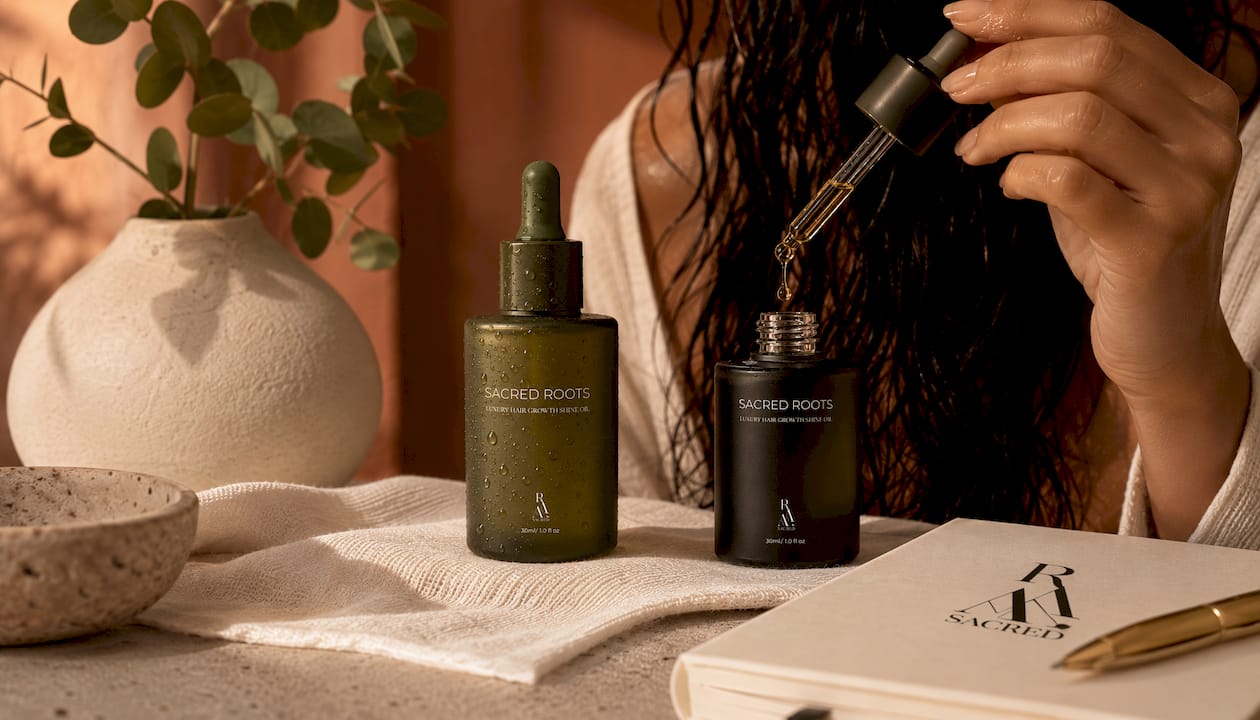
Sacred Roots combines 100% pure essential oils with carefully selected carrier oils in a non-greasy formula designed for both scalp and hair use. Apply it as a 15-minute pre-shampoo scalp treatment, or use a small amount post-wash as a light seal on the mid-lengths and ends. No measuring, no blending, no guesswork about ratios.
For U.S. readers who want a certified organic, pre-blended scalp oil that skips the DIY step entirely, Sacred Roots is worth checking out. Visit the product page to see the full ingredient list and certifications.
Useful sources and further reading
The findings in this article draw primarily from peer-reviewed research and clinical reviews, supplemented by guidance from established health and beauty publications. Peer-reviewed and NIH-indexed sources were prioritized; reputable health sites were used for consumer-facing application guidance.
- Hair Oils: Indigenous Knowledge Revisited — NIH PMC — comprehensive review of hair oil use, mechanisms, and evidence base
- International Journal of Trichology — PubMed — peer-reviewed trichology research including scalp and follicle studies
- Rosemary oil vs. minoxidil 2% trial — PubMed — randomized clinical trial on rosemary oil for hair count
- Coconut oil and hair protein loss — PubMed — study on coconut oil’s penetration and protein-loss reduction
- NIH NCCIH: Lavender — evidence summary for lavender’s topical and antimicrobial properties
- NIH NCCIH: Peppermint oil — evidence summary for peppermint oil safety and use
- Home remedies for dry scalp — Healthline — consumer-facing guidance on tea tree and coconut oil for dry scalp
- Essential oils for hair growth — Healthline — dilution guidance and safety notes for essential oil scalp use
- Dry scalp home remedies — Medical News Today — clinical review of home remedy effectiveness and variability
- Hair oil evidence-based guide — Acibadem International — practitioner-level guidance on oily scalp risks and application protocols
- Best scalp oils — Byrdie — editorial review with trichologist input on oil selection by scalp type