

Monoterpenes are organic compounds that define the scent, flavor, and therapeutic character of plant essential oils. They make up the largest chemical class found in essential oils and drive much of what makes aromatherapy and natural remedies effective. Understanding the role of monoterpenes in essential oils gives you a clearer picture of why certain oils calm the mind, fight pathogens, or lift your mood. This article covers their chemistry, biological activity, and practical uses, drawing on current research to help you make informed choices.
What is the role of monoterpenes in essential oils?
Monoterpenes are C10 hydrocarbon compounds built from two isoprene units. They are the primary aromatic and bioactive molecules in most plant essential oils, accounting for the characteristic scents of citrus, pine, mint, and lavender. Their low molecular weight and lipophilicity make them highly volatile, which is why you smell them the moment you open a bottle. That volatility also drives their ability to reach the brain quickly through inhalation.
Monoterpenes fall into three structural categories:
- Acyclic monoterpenes such as linalool, geraniol, and myrcene. These have open chain structures and tend to produce floral or herbaceous scents.
- Monocyclic monoterpenes such as limonene and menthol. These contain one ring and are responsible for citrus and minty aromas.
- Bicyclic monoterpenes such as pinene and camphene. These have two fused rings and produce woody, piney, or camphoraceous notes.
Biosynthesis happens in plant cells through the methylerythritol phosphate pathway, where isopentenyl pyrophosphate units combine and cyclize into distinct monoterpene structures. The specific compounds a plant produces depend on its species, growing region, harvest season, and extraction method. That variability is not a flaw. It is the reason why lavender from Provence smells different from lavender grown in Bulgaria, and why compositional variability impacts the pharmacological profile of any given oil.
How do monoterpenes shape the aroma of essential oils?
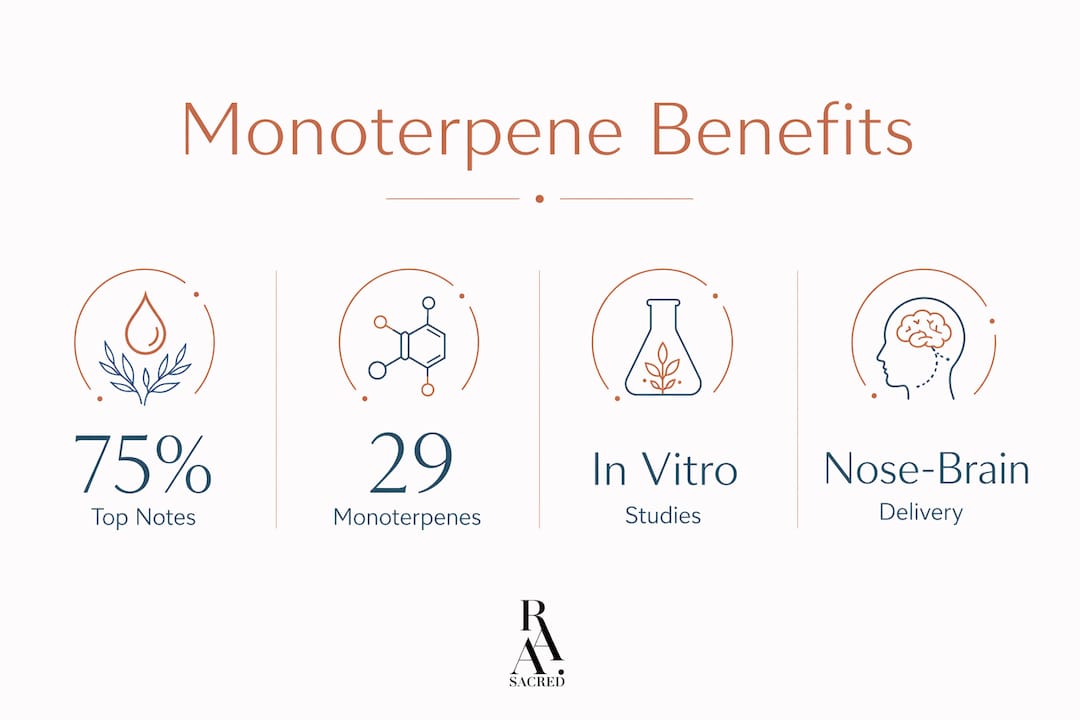
Monoterpenes are responsible for the top notes in essential oil fragrance. Top notes are the first scents you detect because they evaporate fastest. Limonene gives citrus oils their bright, clean smell. Alpha-pinene creates the sharp, forest-like quality of pine and rosemary. Menthol delivers the cooling sensation and sharp freshness of peppermint.

The way monoterpenes interact with other oil constituents shapes the full fragrance experience. Sesquiterpenes and esters in the same oil slow evaporation and add depth, which is why a well-blended oil smells complex rather than one-dimensional. The synergistic effects of monoterpenes with other essential oil compounds do more than enhance aroma. They also lower the doses needed for antimicrobial and therapeutic activity.
Here is how the most common monoterpenes map to their sensory profiles:
- Limonene (citrus peel oils): bright, sweet, citrusy
- Alpha-pinene (pine, rosemary, eucalyptus): sharp, fresh, woody
- Menthol (peppermint, spearmint): cool, minty, slightly medicinal
- Linalool (lavender, coriander): soft, floral, slightly spicy
- Geraniol (rose, geranium, palmarosa): sweet, rosy, fruity
Pro Tip: When blending oils for fragrance, anchor your monoterpene-heavy top notes with a carrier oil or a base note oil. This slows evaporation and extends the scent on your skin for hours longer than applying a single oil neat.
What therapeutic properties do monoterpenes exhibit?
Monoterpenes are not just aromatic molecules. They are biologically active compounds with a growing body of research behind them. At least 29 specific monoterpenes show antidepressant effects by influencing dopaminergic and serotonergic neurological pathways. That number is significant because it suggests the mood-lifting effects of citrus and lavender oils are not placebo. They reflect real neurochemical activity.
The key biological activities documented in current research include:
- Antidepressant effects: Monoterpenes like linalool and limonene interact with serotonin and dopamine pathways, producing measurable mood-lifting effects in preclinical models.
- Antimicrobial activity: Citral, menthol, and linalool show significant antifungal activity, though phenolic-rich oils tend to outperform them at lower concentrations.
- Anti-inflammatory properties: Several monoterpenes suppress inflammatory markers, making them relevant for skin care and topical applications.
- Pathogen inhibition: Monoterpene-rich oils from Lamiaceae plants, which include thyme, oregano, and mint, act as natural immunity inducers and show significant pathogen inhibition within 24 hours.
One of the most promising delivery mechanisms is nose-to-brain transport. Monoterpenes’ low molecular weight allows them to travel directly from the nasal cavity to the central nervous system, bypassing the metabolic barriers that reduce the effectiveness of many oral compounds. Nose-to-brain delivery of monoterpenes enables efficient central nervous system access, which explains why inhalation often produces faster mood effects than topical application.
Monoterpenes serve as molecular scaffolds for drug discovery due to their low molecular weight, bioavailability, and ability to cross the blood-brain barrier. This positions them not just as wellness ingredients but as templates for next-generation pharmaceutical compounds.
One important caveat: most clinical evidence remains in vitro, meaning the results come from lab studies rather than large-scale human trials. The findings are promising and mechanistically sound, but you should treat them as strong supporting evidence rather than confirmed clinical outcomes.
How are monoterpene-rich oils used in aromatherapy?
Aromatherapy practice centers on monoterpene-rich oils because these compounds are the most accessible and well-studied. The plants and oils with the highest monoterpene content include:
- Citrus oils (lemon, orange, grapefruit): dominated by limonene, used for mood support and focus
- Peppermint: high in menthol, used for alertness and cooling sensation on skin
- Lavender: rich in linalool, the standard reference for relaxation and sleep support
- Rosemary and eucalyptus: high in alpha-pinene and 1,8-cineole, used for respiratory support and mental clarity
- Thyme: rich in thymol and monoterpene hydrocarbons, used for antimicrobial applications
The two primary application methods are inhalation and topical use. Inhalation through a diffuser or direct palm inhalation delivers monoterpenes to the olfactory system and, through nose-to-brain pathways, to the central nervous system. Topical application in a carrier oil allows skin absorption and localized effects. For skin use, always dilute essential oils to 1–3% in a carrier such as jojoba, sweet almond, or a botanical body oil. Undiluted monoterpenes can cause skin sensitization, particularly with citrus-derived compounds that also carry photosensitivity risk.
Blending matters more than most people realize. A single monoterpene compound in isolation behaves differently from the same compound inside a whole essential oil. The synergistic interactions within essential oils enhance antimicrobial and therapeutic effects beyond what any single monoterpene delivers alone. This is why whole oils consistently outperform isolated compounds in practice. If you want to learn more about building effective combinations, a solid essential oil blending guide will help you get the ratios right from the start.
Quality verification is non-negotiable. Because GC-MS profiling is advised for quality verification, look for brands that publish gas chromatography-mass spectrometry reports for their oils. These reports confirm the actual monoterpene content and rule out adulteration or mislabeling. An oil labeled “lavender” with no GC-MS data could contain synthetic linalool, a filler carrier, or a cheaper species entirely.
Pro Tip: Store monoterpene-rich oils in dark glass bottles away from heat and light. Limonene and pinene oxidize quickly when exposed to air, and oxidized oils lose therapeutic potency while gaining skin irritation risk.
Key Takeaways
Monoterpenes are the defining bioactive class in essential oils, responsible for both their characteristic aromas and their most documented therapeutic effects.
| Point | Details |
|---|---|
| Monoterpenes define essential oil aroma | Limonene, linalool, and pinene create the top notes that make each oil recognizable. |
| Nose-to-brain delivery amplifies effects | Inhalation sends monoterpenes directly to the central nervous system, bypassing metabolic barriers. |
| Synergy outperforms single compounds | Whole essential oils with mixed monoterpenes consistently show stronger effects than isolated molecules. |
| GC-MS testing confirms quality | Always choose oils backed by gas chromatography reports to verify actual monoterpene content. |
| Clinical evidence is promising but early | Current research is largely in vitro; use monoterpene oils as complementary support, not primary treatment. |
Why I think most people underestimate monoterpene chemistry
Most aromatherapy content treats essential oils as interchangeable mood tools. Pick lavender for sleep, citrus for energy, done. That framing misses the actual science and leads people to buy oils that do not perform as expected.
What I have found after years of working with botanical formulas is that the source and extraction method of an oil matter as much as the plant name on the label. A steam-distilled lemon oil and a cold-pressed lemon oil have different monoterpene profiles. The cold-pressed version retains more intact limonene and fragrant aldehydes. The steam-distilled version is safer for skin because heat removes the furanocoumarins that cause photosensitivity. Neither is universally better. They serve different purposes, and knowing the difference changes how you formulate.
The research on antidepressant monoterpene pathways is the part of this field that genuinely excites me. The idea that 29 distinct monoterpenes influence dopamine and serotonin systems is not fringe science. It is peer-reviewed pharmacology. The gap between that research and what most consumers know is enormous, and closing it is what separates informed wellness choices from expensive guesswork.
My honest recommendation: treat monoterpene-rich oils as daily ritual tools with real biological backing, not as alternative medicine. Use them consistently, dilute them properly, and buy from brands that publish their chemistry. The role of organic ingredients in body care is not marketing language when the compounds are this well-studied.
— Val
Raasacred’s botanical oils put monoterpene science to work
Raasacred formulates its botanical blends around the same monoterpene-rich oils that research consistently highlights for mood, skin, and sensory benefits. Every product combines 100% pure essential oils with carefully selected carrier oils, so the active compounds reach your skin at the right concentration without irritation.

The Sacred Bloom skin layering oil is a strong starting point if you want to experience monoterpene benefits in a daily ritual. It delivers the floral and citrus top notes that make application feel intentional, not clinical. For mood-focused use, Raasacred’s aromatherapy roll-ons put inhalation-ready monoterpene blends in your pocket. Each formula is built for the kind of consistent, low-effort use that actually produces results over time.
FAQ
What are monoterpenes in essential oils?
Monoterpenes are C10 organic compounds built from two isoprene units. They are the most abundant chemical class in plant essential oils and are responsible for characteristic aromas like citrus, pine, and mint.
What are the main health benefits of monoterpenes?
Monoterpenes show antidepressant, antimicrobial, and anti-inflammatory activity in research settings. At least 29 monoterpenes influence dopaminergic and serotonergic pathways, and many exhibit antifungal effects through direct cellular disruption.
How do monoterpenes reach the brain during aromatherapy?
Monoterpenes travel from the nasal cavity directly to the central nervous system through nose-to-brain delivery pathways. Their low molecular weight and lipophilicity allow them to bypass metabolic barriers that limit other compounds.
Why does essential oil quality vary so much between brands?
Monoterpene composition changes with plant species, growing region, harvest time, and extraction method. GC-MS profiling is the standard verification tool for confirming actual monoterpene content and ruling out adulteration.
Are monoterpenes safe for skin use?
Monoterpenes are safe for skin when properly diluted in a carrier oil at 1–3%. Some citrus-derived monoterpenes carry photosensitivity risk when applied before sun exposure, so cold-pressed citrus oils should be used in evening routines or under clothing.