

Beauty oil formulation is defined as the precise scientific process of combining plant-based or synthetic lipids in exact ratios to create stable, functional skincare products. This is not simple mixing. A professional formulation is built on a 100% total ingredient system where every component earns its place through function, not guesswork. Each ingredient either carries, modifies, activates, or stabilizes the final product. Understanding what does beauty oil formulation mean gives you the knowledge to read labels critically, choose products that actually work for your skin, and stop wasting money on oils that feel good in the jar but do nothing on your face.
What does beauty oil formulation mean for skin compatibility?
The most important factor in any oil formulation is its fatty acid profile. Fatty acids are the building blocks of every oil, and their ratio determines how an oil behaves on your skin, how fast it absorbs, and whether it suits your skin type.
Two fatty acids dominate the conversation:
- Linoleic acid (Omega-6): Found in high concentrations in grapeseed oil (over 70%), this fatty acid suits oily and acne-prone skin. It absorbs quickly, feels light, and reduces comedogenicity by keeping pores clear rather than blocking them.
- Oleic acid (Omega-9): Found in marula oil at over 70%, this fatty acid suits dry and mature skin. It penetrates deeper into the skin barrier, delivers lasting softness, and supports the skin’s natural lipid layer.
- Oxidative stability: Oils high in linoleic acid oxidize faster than oleic-rich oils. This means grapeseed oil goes rancid more quickly than marula oil when exposed to air or light. Formulators account for this by adding antioxidants to protect the blend.
Knowing the fatty acid profile of an oil before you buy it is the single most useful skill a skincare enthusiast can develop. It tells you more about compatibility than any marketing claim on the front of the bottle.
Pro Tip: Check the ingredient list for oils listed in the first three positions. Those make up the largest percentage of the formula and will have the greatest effect on your skin.
What are the key ingredients in a professional beauty oil formula?
Professional beauty oil formulations are built from four functional categories. Each category has a defined role, and the balance between them determines the product’s texture, efficacy, and shelf life.

Base oils are the foundation. They make up the largest percentage of the formula, typically 20–40% individually, and act as carriers that deliver other ingredients into the skin. Jojoba, rosehip, and sweet almond oil are common base oils chosen for their skin compatibility and stability.
Texture modifiers control how the oil feels during and after application. Formulators use lighter esters or silicone-free alternatives to reduce the greasy residue that puts many people off facial oils. A “dry touch” formula relies heavily on texture modifiers to achieve rapid absorption without a heavy finish.
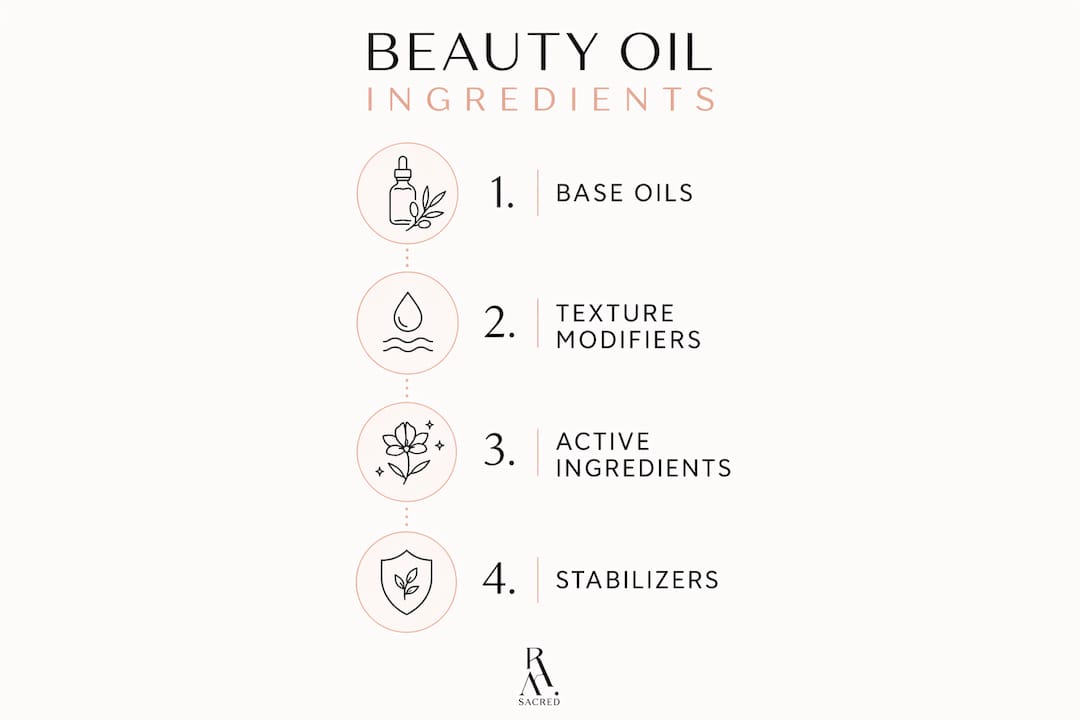
Active ingredients deliver the targeted skin benefits. Vitamins A, C, and E are the most common actives in beauty oils. Vitamins A, C, and E provide antioxidant and reparative properties that address aging, uneven tone, and barrier damage. Actives are typically used at low percentages because their potency means a little goes a long way.
Stabilizers protect the formula from degradation. Tocopheryl Acetate, the ester form of Vitamin E, is the most widely used stabilizer in quality oil formulations. It prevents oxidation, extends shelf life, and keeps the formula performing as intended from the first use to the last drop.
| Ingredient category | Primary function | Common examples |
|---|---|---|
| Base oils | Carrier and skin delivery | Jojoba, rosehip, sweet almond |
| Texture modifiers | Absorption and skin feel | Light esters, dry-touch agents |
| Active ingredients | Targeted skin benefits | Vitamins A, C, E |
| Stabilizers | Oxidative protection | Tocopheryl Acetate (Vitamin E) |
Pro Tip: When reading an ingredient list, look for Tocopheryl Acetate near the end of the formula. Its presence signals that the brand has accounted for oxidative stability, which is a strong indicator of formulation quality.
How do professional formulations differ from DIY oil mixtures?
The difference between a professional beauty oil and a DIY mixture is scientific rigor. A professional formulator calculates every ingredient percentage so the total reaches exactly 100%. Nothing is approximate. That precision controls stability, skin feel, and safety in ways that casual blending cannot replicate.
Here is what professional formulation accounts for that DIY mixing typically misses:
- Oxidative stability planning. Every oil has a different rate of oxidation. Professionals select antioxidants like Tocopheryl Acetate at specific usage levels to match the oxidative risk of the oils in the blend. A DIY mix that skips this step will go rancid faster, often before the bottle is finished.
- Phase control. Some ingredients must be added at specific temperatures or stages of production to remain stable and effective. Professionals follow phase protocols. Home blenders rarely do.
- Comedogenicity management. The fear that oils clog pores is not unfounded, but it is solvable. Formulators choose oils with high linoleic acid content and low comedogenic ratings to create formulas that absorb without blocking pores. This is not luck. It is a calculated decision based on ingredient data.
- Skin-feel balancing. Greasiness is a formulation failure, not an inherent property of oils. Professionals use texture modifiers and lighter carrier oils to achieve a finish that feels comfortable on skin, not heavy or occlusive.
“The main difference between professional beauty oil formulation and DIY mixtures is scientific rigor. A professional formula prioritizes stability, safety, and performance through calculated ingredient ratios, not intuition. Every percentage point matters because skin does not forgive formulation errors the way a salad dressing might.”
Understanding this distinction matters when you shop. A product that lists its formulation principles, names its stabilizers, and explains its fatty acid choices is not just marketing. It is evidence that the brand applied real cosmetic chemistry to the product you are buying.
How to use beauty oil based on formulation knowledge
Choosing and using a beauty oil correctly depends on understanding what the formula is designed to do. Most people apply oils at the wrong step in their routine, which limits the results they see.
- Apply oils after water-based products. Beauty oils act primarily as occlusives. They lock in moisture by forming a barrier that prevents transepidermal water loss. They do not add hydration on their own. Apply your serum or moisturizer first, then seal it with your oil.
- Match the oil to your skin type. Oily or acne-prone skin benefits from high-linoleic formulas like grapeseed-based blends. Dry or mature skin benefits from high-oleic formulas like marula-based blends. The body oil skincare benefits you experience depend directly on this match.
- Check for stabilizers before you buy. An oil without Tocopheryl Acetate or another antioxidant will degrade faster. Rancid oil does not just smell bad. It can irritate skin and cause breakouts.
- Store oils correctly. Keep bottles away from direct sunlight and heat. Dark glass packaging is a sign that the brand understands oxidative stability. Clear plastic packaging is a red flag.
- Support skin from the inside. Topical oils work best when paired with adequate dietary fat intake. Omega-3 and Omega-6 fatty acids consumed through food support the skin barrier from within, making topical formulas more effective.
Pro Tip: Warm two to three drops of oil between your palms before pressing them gently onto your face. This improves absorption and avoids dragging the skin.
Key Takeaways
A beauty oil formulation is only as effective as the science behind its ingredient selection, ratios, and stability planning.
| Point | Details |
|---|---|
| Fatty acid profile determines skin fit | Match linoleic-rich oils to oily skin and oleic-rich oils to dry or mature skin. |
| Four ingredient categories build every formula | Base oils, texture modifiers, actives, and stabilizers each serve a defined role. |
| Professional formulas total exactly 100% | Every percentage is calculated for stability, safety, and skin feel. |
| Oils are occlusives, not hydrators | Apply after water-based products to lock in moisture, not replace it. |
| Stabilizers signal formulation quality | Tocopheryl Acetate prevents rancidity and extends product efficacy over time. |
What I have learned from years of reading oil formulations
The beauty oil market has a credibility problem. Brands pour money into packaging and fragrance while cutting corners on the actual formula. I have seen products with beautiful amber bottles and poetic ingredient stories that contain no stabilizer whatsoever. The oil smells fine in the store and turns rancid within six weeks of opening.
The shift I have noticed in recent years is that educated consumers are forcing better formulations. When people start asking “what is the linoleic to oleic ratio in this?” or “does this contain Tocopheryl Acetate?”, brands have to answer. That pressure produces better products.
My honest view is that the definition of beauty oil formulation should be common knowledge for anyone spending real money on skincare. You would not buy a supplement without reading the active ingredients. The same logic applies to a facial oil. The essential oil blending ratios and fatty acid profiles are not trade secrets. They are the information you need to make a confident purchase.
The best beauty oils I have encountered share three traits: a clearly stated fatty acid rationale, a named stabilizer in the ingredient list, and a texture that proves the formulator understood skin feel. Those three things separate a thoughtful product from an expensive bottle of oil.
— Val
Raasacred’s approach to beauty oil formulation
Raasacred builds every formula around the same principles covered in this article: precise fatty acid selection, named stabilizers, and a skin feel that proves the science works.
The Sacred Bloom skin layering oil is formulated for rapid absorption and targeted nourishment, combining 100% pure essential oils with carefully selected carrier oils chosen for their fatty acid profiles and oxidative stability. For those building a broader routine, the botanical body oil collection offers a range of blends designed for daily skin health. Every Raasacred formula is built to perform from the first drop to the last, not just to smell good in the bottle.
FAQ
What is the definition of beauty oil formulation?
Beauty oil formulation is the scientific process of combining oils and functional ingredients in exact ratios to create a stable, effective skincare product. Every ingredient serves a defined role within a 100% total ingredient system.
How do fatty acids affect which beauty oil I should use?
Oils high in linoleic acid suit oily and acne-prone skin, while oils high in oleic acid suit dry or mature skin. Matching the fatty acid profile to your skin type is the most reliable way to choose an effective oil.
Do beauty oils hydrate skin or just seal moisture in?
Beauty oils act as occlusives, meaning they prevent transepidermal water loss rather than adding hydration directly. Apply a water-based serum or moisturizer first, then layer your oil on top to lock that moisture in.
What makes a beauty oil formula go rancid?
Oxidation causes rancidity. Oils high in linoleic acid oxidize faster than oleic-rich oils, which is why quality formulations include antioxidants like Tocopheryl Acetate to slow degradation and extend shelf life.
How can I tell if a beauty oil is professionally formulated?
Look for a named stabilizer such as Tocopheryl Acetate in the ingredient list, a clear fatty acid rationale, and a texture that absorbs without greasiness. These three markers indicate that a formulator applied real cosmetic chemistry to the product.