

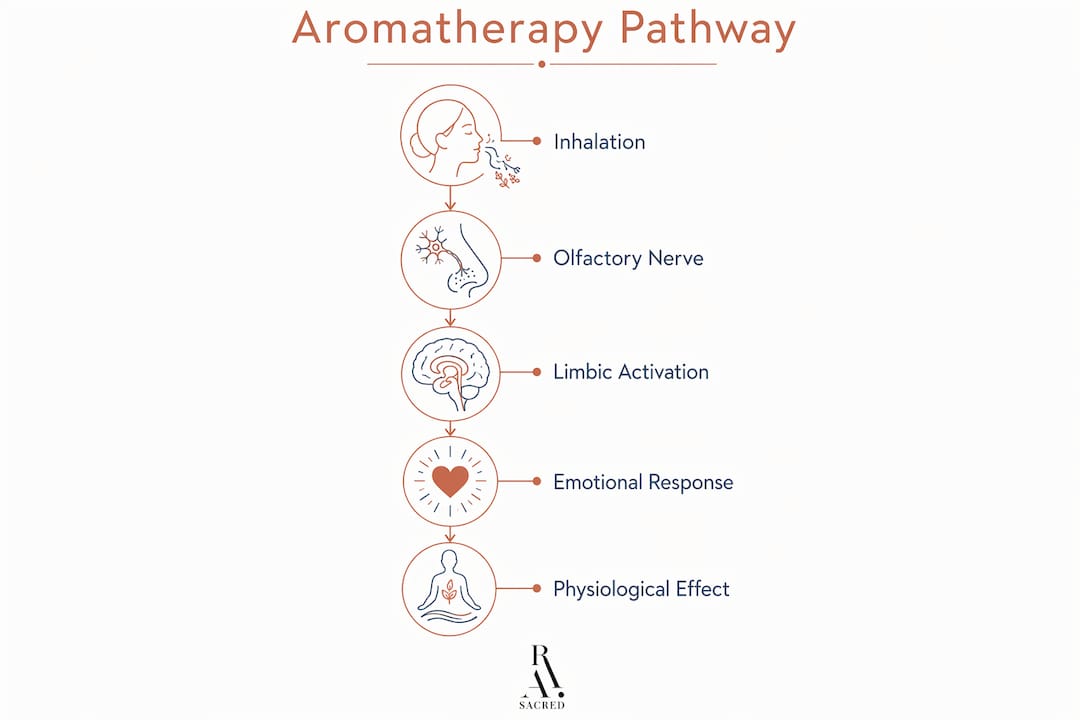
Aromatherapy works because of a direct neurological shortcut. When you inhale an essential oil, scent molecules travel through your nasal cavity and stimulate olfactory receptors that connect straight to the limbic system, the brain’s center for emotion, memory, and hormonal regulation. No detour through the thalamus. No cognitive filtering. The emotional response begins before you’ve consciously registered the smell.
That anatomical shortcut explains why a single breath of lavender can shift your mood within seconds, and why blended essential oils consistently outperform single oils in clinical settings by activating multiple limbic pathways simultaneously. Clinical studies indicate that inhalation aromatherapy with blended oils produces a meaningful reduction in depressive symptoms. Inhalation was the superior delivery method across all trials reviewed.
Key points at a glance:
- Essential oil molecules stimulate olfactory receptors that feed directly into limbic structures, including the amygdala and hippocampus.
- The thalamus bypass enables emotional responses within milliseconds, faster than any other sensory pathway.
- Blended essential oils show stronger clinical outcomes than single oils like lavender alone.
- Limbic activation triggers the release of dopamine, endorphins, and hormones that regulate mood and stress.
- Clinical evidence supports aromatherapy as a meaningful complement to conventional care for anxiety and depression.
What is the limbic system, and why does scent reach it so directly?
The limbic system is a network of interconnected brain structures sitting beneath the cerebral cortex, governing your emotional life, memory formation, and hormonal responses. It is not a single organ but a functional circuit, and its proximity to the olfactory bulb is what makes scent uniquely powerful among the senses.

The olfactory bulb sends signals directly to limbic regions via monosynaptic connections, meaning the signal travels in a single neural step. Harvard neurobiologist Venkatesh Murthy has described this as olfactory signals getting to the limbic system “very quickly.” No other sensory modality has this kind of direct access.
Key limbic structures involved in scent processing:
- Amygdala: Processes the emotional valence of a scent, triggering fear, pleasure, or calm almost instantly.
- Hippocampus: Links scent to autobiographical memory, which is why a familiar smell can pull up a vivid, decades-old recollection.
- Hypothalamus: Receives input from olfactory cortex and coordinates hormonal release through the pituitary gland.
- Olfactory bulb: The entry point for scent signals into the brain, projecting directly to amygdala and hippocampus via mitral and tufted cell pathways.
- Piriform cortex: Processes and encodes scent identity before relaying information deeper into limbic circuits.
- Entorhinal cortex: Acts as a relay hub, passing olfactory information to the hippocampus and amygdala simultaneously.
The cribriform plate, a thin bone at the skull base, is where olfactory nerve fibers pass from the nasal cavity into the brain. Damage to this structure can sever these connections entirely, causing anosmia and stripping away scent-driven emotional responses. That vulnerability underscores how anatomically specific and irreplaceable this pathway is.
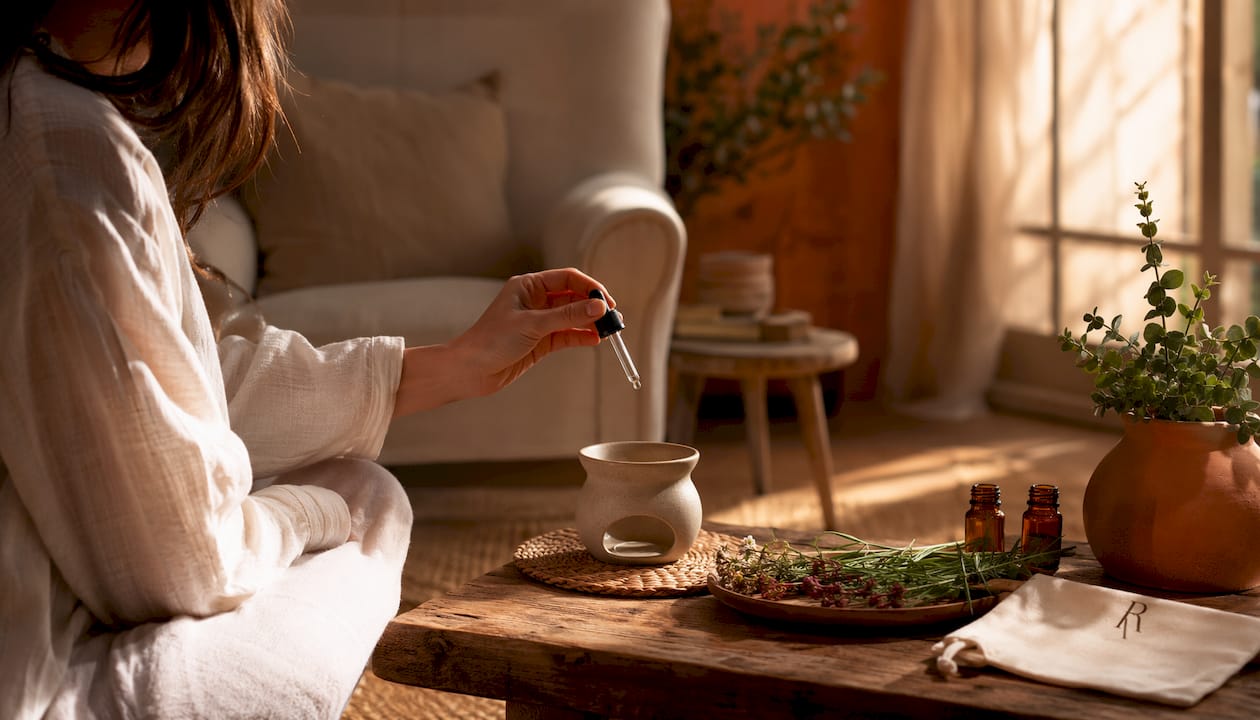
How the limbic system responds to inhaled essential oils
The nasal-brain pathway is the mechanism that makes the role of limbic system aromatherapy so neurologically distinct from other wellness practices. When you inhale an essential oil, volatile molecules bind to olfactory receptor neurons lining the nasal epithelium. Those neurons fire signals to the olfactory bulb, which then projects directly to the amygdala, hippocampus, and piriform cortex without passing through the thalamus first.
| Stage | Structure involved | What happens |
|---|---|---|
| Inhalation | Nasal epithelium | Volatile molecules bind to olfactory receptor neurons |
| Signal transmission | Olfactory nerve (CN I) | Electrical signals travel to the olfactory bulb |
| Limbic entry | Olfactory bulb | Mitral and tufted cells project to amygdala and hippocampus |
| Emotional processing | Amygdala | Emotional tone of the scent is assigned |
| Memory encoding | Hippocampus | Scent is linked to stored emotional memories |
| Hormonal response | Hypothalamus | Triggers pituitary signaling, affecting cortisol and other hormones |
The thalamus normally acts as a relay and filter for sensory input, moderating signals before they reach emotional processing centers. Because olfactory signals skip this step, the emotional impact of a scent arrives before conscious awareness catches up. Different essential oil molecules also appear to preferentially activate distinct limbic regions. Lavender’s linalool, for instance, has documented calming effects tied to amygdala modulation, while citrus compounds tend to produce more activating, mood-lifting responses through dopaminergic pathways.
Pro Tip: Diffusing an essential oil blend during a consistent activity, like morning journaling or pre-sleep stretching, trains the hippocampus to associate that scent with the emotional state you’re building. Over time, the scent alone can cue the response.
What the science says about aromatherapy’s effects on emotions and memory
The clinical evidence for aromatherapy’s emotional effects is strongest when inhalation is the delivery method and when blended oils are used. Clinical evidence from multiple randomized controlled trials supports depressive symptom reduction with inhaled blended essential oils. That is a moderate effect size by clinical standards, comparable to some low-dose pharmacological interventions.
Effect size (SMD = -0.56, 95% CI: -0.69 to -0.43) from a 2023 meta-analysis of 27 randomized controlled trials on inhalation aromatherapy and depression.
Lavender essential oil has the most consistent physiological evidence behind it. Inhalation of lavender reduces respiratory rate and blood pressure during acute stress events across multiple age groups, effects that trace directly to limbic-mediated autonomic regulation. The hippocampus’s role in emotional memory means that repeated aromatherapy sessions can reinforce positive emotional associations, gradually shifting baseline mood states.
Documented clinical benefits linked to limbic stimulation:
- Reduced anxiety and perceived stress in clinical and pre-surgical settings.
- Lower cortisol levels and slower heart rate following lavender inhalation.
- Improved mood and reduced depressive symptoms with consistent blended oil use.
- Enhanced sleep quality through hypothalamic regulation of melatonin pathways.
- Modulated pain perception via endorphin release triggered by limbic activation.
The olfactory bulb’s mitral and tufted cells encode scent features that directly regulate these emotional and memory responses. This is not a placebo-only phenomenon. The neurochemical changes are measurable, and the pathway is anatomically established.
How the limbic system connects your emotions to your body
Limbic activation through aromatherapy does not stay in the brain. The hypothalamus, once triggered by olfactory input, coordinates the autonomic nervous system and the endocrine system, producing measurable changes throughout the body. Heart rate slows. Breathing deepens. Digestion can ease. Sleep onset improves.
This bidirectional relationship is what makes aromatherapy genuinely useful rather than just pleasant. Bodily changes feed back into emotional experience. Slower breathing signals safety to the amygdala, which reduces threat-response activity. That cycle, scent triggering calm, calm triggering physiological ease, physiological ease reinforcing calm, is the mind-body loop that aromatherapy application methods are designed to engage.
Mind-body pathways activated through limbic engagement:
- Autonomic regulation: Parasympathetic activation lowers heart rate and blood pressure.
- Respiratory modulation: Limbic signals alter breathing rhythm, which in turn affects emotional state.
- Hormonal shifts: Hypothalamic signaling reduces cortisol and can increase serotonin and dopamine.
- Pain modulation: Endorphin release through limbic pathways raises the pain threshold.
- Sleep architecture: Melatonin pathway regulation improves both sleep onset and depth.
Physiological breathing variations caused by limbic activation are themselves a driver of emotional states, not just a byproduct. Aromatherapy modulates this loop from the top down, starting with scent and ending with a calmer, more regulated body. For a structured approach to building these rituals into daily life, a luxury body care ritual can anchor the practice in consistent sensory cues.
What recent research reveals about blends, pathways, and clinical potential
The most clinically meaningful finding from recent research is the superiority of blended essential oils over single oils. Blended oils invoke broader limbic network activation than single oil inhalation, facilitating more robust neurochemical modulation. Lavender alone is effective, but a well-formulated blend engages multiple receptor types and multiple limbic regions in parallel.
Key findings from recent scientific work:
- Blended essential oils outperform single oils in depression symptom reduction, per the 2023 meta-analysis of 27 trials.
- The thalamus bypass is the anatomical reason scent produces faster emotional responses than visual or auditory stimuli.
- Inhalation is consistently the most effective delivery method across clinical trials, outperforming topical and oral routes.
- Hormonal and neurochemical pathways, including cortisol suppression and dopamine release, are measurable outcomes of limbic activation.
- Aromatherapy functions best as a complementary wellness practice, integrated with other therapies rather than used as a standalone treatment.
- Future research is moving toward isolating the specific molecular components within blends that drive the strongest limbic responses.
Understanding which compounds within a blend drive which limbic effects is the next frontier. For now, the evidence supports using thoughtfully formulated blends, and personalizing your essential oil blend based on your emotional goals is a practical application of this science.
Risks and contraindications worth knowing before you start
Aromatherapy is generally safe when used correctly, but the same neurological potency that makes it effective also creates real risks if it’s misused or used without awareness of individual sensitivities.
Skin sensitization and irritation are the most common issues with topical application. Undiluted essential oils applied directly to skin can cause chemical burns, allergic contact dermatitis, or photosensitivity reactions, particularly with citrus oils. Always dilute in a carrier oil before skin contact.
Respiratory sensitivity matters for inhalation. People with asthma, chronic obstructive pulmonary disease, or other respiratory conditions may experience bronchospasm or worsened symptoms when exposed to concentrated diffused oils, especially eucalyptus, peppermint, or camphor-containing blends.
Pregnancy and infants require extra caution. Several essential oils, including clary sage, rosemary, and high-dose lavender, are contraindicated during pregnancy due to potential hormonal effects mediated through the very limbic-hypothalamic pathways that make aromatherapy effective. Infants have underdeveloped detoxification pathways and should not be exposed to concentrated diffusion.
Drug interactions are underreported but real. Lavender has mild sedative properties that can potentiate the effects of benzodiazepines or other CNS depressants. Citrus oils can affect cytochrome P450 enzyme activity, potentially altering how certain medications are metabolized.
Overexposure and olfactory fatigue can paradoxically blunt the limbic response over time. Continuous diffusion for hours reduces receptor sensitivity. Shorter, intentional sessions, typically 30–60 minutes, preserve the pathway’s responsiveness.
How aromatherapy compares to other sensory therapies for limbic engagement
Aromatherapy is not the only sensory modality that reaches the limbic system, but it is the only one with a direct, thalamus-bypassing neural route. That anatomical advantage gives it a speed and subconscious reach that other therapies cannot replicate through the same mechanism.
Music therapy activates the limbic system through auditory pathways, but those signals pass through the thalamus and auditory cortex before reaching the amygdala and hippocampus. The emotional response is real and well-documented, but it involves more cognitive processing than scent-based stimulation. Music therapy tends to be stronger for mood elevation and social bonding, while aromatherapy is more consistently effective for acute stress reduction and sleep.
Touch-based therapies such as massage stimulate the limbic system indirectly through skin mechanoreceptors, vagal nerve activation, and oxytocin release. The effect on the amygdala is meaningful, particularly for anxiety reduction, but the pathway is slower and more diffuse than olfactory stimulation. Combining massage with aromatherapy, as in many clinical protocols, produces additive effects because both pathways converge on limbic structures.
Light therapy targets the hypothalamus directly through retinal photoreceptors, making it highly effective for circadian rhythm regulation and seasonal mood disorders. Its limbic reach is more specific than aromatherapy’s, focused primarily on the hypothalamic-pituitary axis rather than the amygdala or hippocampus.
Taste-based therapies, including adaptogenic herbs and functional foods, affect mood through gut-brain axis signaling and systemic neurochemical changes. The timeline is longer, typically hours rather than seconds, and the mechanism bypasses the olfactory-limbic shortcut entirely.
Aromatherapy’s edge is speed and accessibility. You can shift your emotional state in under a minute, without equipment, without a practitioner, and without cognitive effort. The floral essential oil benefits that come from well-formulated blends extend this advantage further by engaging multiple limbic nodes at once.
Blended essential oils, inhaled directly, produce clinically supported limbic system responses associated with depressive symptom reduction shown in multiple controlled trials.
| Point | Details |
|---|---|
| Thalamus bypass is the key mechanism | Olfactory signals reach the amygdala and hippocampus directly, enabling emotional responses faster than any other sense. |
| Blends outperform single oils | Blended essential oils activate broader limbic networks than lavender alone, producing stronger clinical outcomes. |
| Inhalation is the most effective method | Direct inhalation delivers volatile molecules to olfactory receptors most efficiently, outperforming topical and oral routes. |
| Mind-body effects are measurable | Limbic activation reduces heart rate, blood pressure, and cortisol through hypothalamic and autonomic pathways. |
| Aromatherapy works best as a complement | Clinical evidence supports it as an adjunct to conventional care, not a standalone treatment for mood disorders. |
Experience the science in your daily ritual
Raasacred formulates every blend with this neurobiological pathway in mind. The Sacred Bloom skin layering oil combines 100% pure essential oils in a non-greasy carrier base designed for both skin nourishment and consistent olfactory ritual. For targeted mood and wellness support, the aromatherapy roll-ons deliver blended essential oils directly to pulse points, where body heat enhances diffusion and keeps the limbic pathway engaged throughout your day.