

Aromatherapy supports mindfulness because scent molecules reach the brain’s emotional centers faster than any conscious thought can. When you inhale lavender or frankincense, those volatile compounds travel through the olfactory nerves directly to the limbic system, including the amygdala and hypothalamus, triggering shifts in mood, stress hormones, and nervous system tone before you’ve even settled into your breath. Meta-analyses of over 2,300 participants show aromatherapy significantly reduces anxiety (standardized mean difference for anxiety: -0.46) and pain (SMD for pain: -1.29, p < 0.00001), supporting a grounded mental state for mindfulness. That’s the foundation: scent creates the neurological conditions that make genuine mindfulness easier to reach.
Why this matters for your practice:
- Scent molecules bypass slower cognitive processing and act directly on the amygdala, enabling rapid emotional regulation
- The limbic system, activated by olfactory input, governs memory, emotion, and stress response
- Aromatherapy prompts the release of serotonin and endorphins, shifting mood before meditation begins
- A 2023 systematic review of 76 studies found over 70% reported positive effects on anxiety during stress interventions
- A grounded, low-anxiety state is precisely what mindfulness practice requires to move past mental resistance
Table of Contents
- How aromatherapy works to enhance mindfulness and meditation
- What does the science actually say about aromatherapy and stress reduction?
- Which essential oils work best for mindfulness, and how do you use them?
- What emotional and physical benefits does aromatherapy bring to mindfulness?
- How does aromatherapy compare to other complementary mindfulness techniques?
- How to build aromatherapy rituals into your daily mindfulness routine
- Raasacred brings mindfulness-ready aromatherapy into your daily ritual
- Key Takeaways
How aromatherapy works to enhance mindfulness and meditation
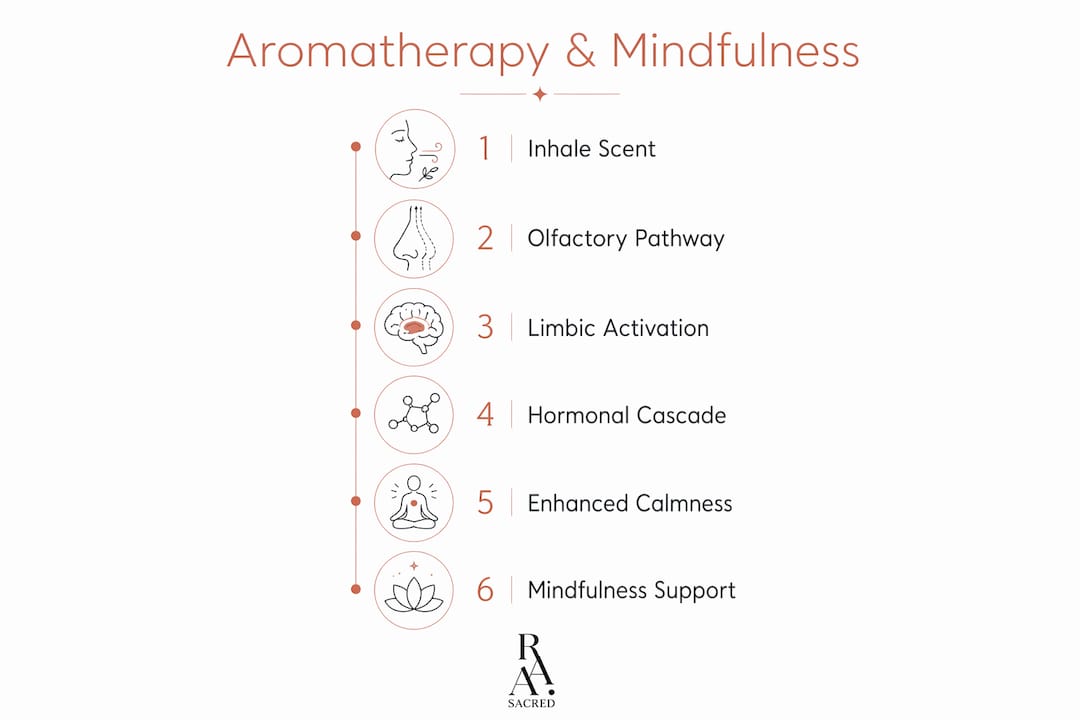
The olfactory pathway is the most direct sensory route to the brain. Scent molecules inhaled through the nose bind to receptors in the olfactory epithelium, which sends signals almost instantly to the limbic system. No relay through the thalamus, no detour through the cortex first. The amygdala processes the emotional charge of the scent; the hypothalamus responds by regulating the autonomic nervous system and triggering hormonal release.
That hormonal cascade is where the mindfulness connection gets concrete. Aromatherapy stimulates the hypothalamus to prompt the release of serotonin and endorphins, both of which reduce perceived stress and improve emotional tone. Cortisol, the primary stress hormone, tends to drop. The result is a physiological environment that mirrors what experienced meditators cultivate through years of practice.
| Brain region | Role in mindfulness | How aromatherapy interacts |
|---|---|---|
| Amygdala | Processes fear and emotional reactivity | Scent molecules modulate amygdala activation directly via olfactory nerves |
| Hypothalamus | Regulates autonomic nervous system and hormones | Triggers serotonin and endorphin release in response to aromatic compounds |
| Hippocampus | Encodes memory and contextual associations | Links specific scents to calm states, reinforcing conditioned relaxation |
| Prefrontal cortex | Supports focused attention and self-regulation | Benefits from reduced amygdala reactivity, allowing clearer attentional control |
| Insula | Integrates body awareness and interoception | Enhanced by parasympathetic tone that aromatherapy promotes |
Pro Tip: Diffuse your chosen oil for five minutes before sitting down to meditate. The limbic system begins responding to scent before you consciously notice it, so the neurological groundwork is already laid by the time you close your eyes.
What does the science actually say about aromatherapy and stress reduction?
The evidence base has grown considerably. A 2026 laboratory EEG study with 24 participants found that both lavender and blended essential oils reversed neural abnormalities caused by stress. Blended oils outperformed lavender alone by improving theta-band functional connectivity across brain regions, which corresponds to deeper states of relaxed awareness and better neural integration. Theta-band activity is the same brainwave pattern associated with meditation and creative flow states.
Research signal: Meta-analyses report aromatherapy interventions significantly reduce anxiety (SMD for anxiety: -0.46) and pain (SMD for pain: -1.29, p < 0.00001), creating the internal conditions mindfulness requires.
Key findings worth knowing:
- Blended oils enhance theta-band connectivity beyond what single oils like lavender achieve alone, suggesting formulation matters
- Meta-analyses show aromatherapy significantly reduces anxiety and pain but does not consistently change pulse or respiratory rates, pointing to an emotional rather than purely physical mechanism
- Hopkins Medicine confirms that scent molecules impact the amygdala directly via olfactory nerves, enabling emotional regulation that bypasses slower cognitive routes
- The NCCIH notes aromatherapy is incorporated into massage therapy for anxiety, pain, and other symptoms, reflecting its recognized role as a complementary health approach
Which essential oils work best for mindfulness, and how do you use them?
Lavender is the most studied, but it’s far from the only option. Frankincense has a long history in contemplative traditions and is associated with grounding and deepened breathing. Bergamot and lemon impact serotonin and dopamine release when inhaled, lifting mood before a session. Rose supports emotional openness. The floral essential oils category covers several of these and offers a useful starting point for building a personal practice.
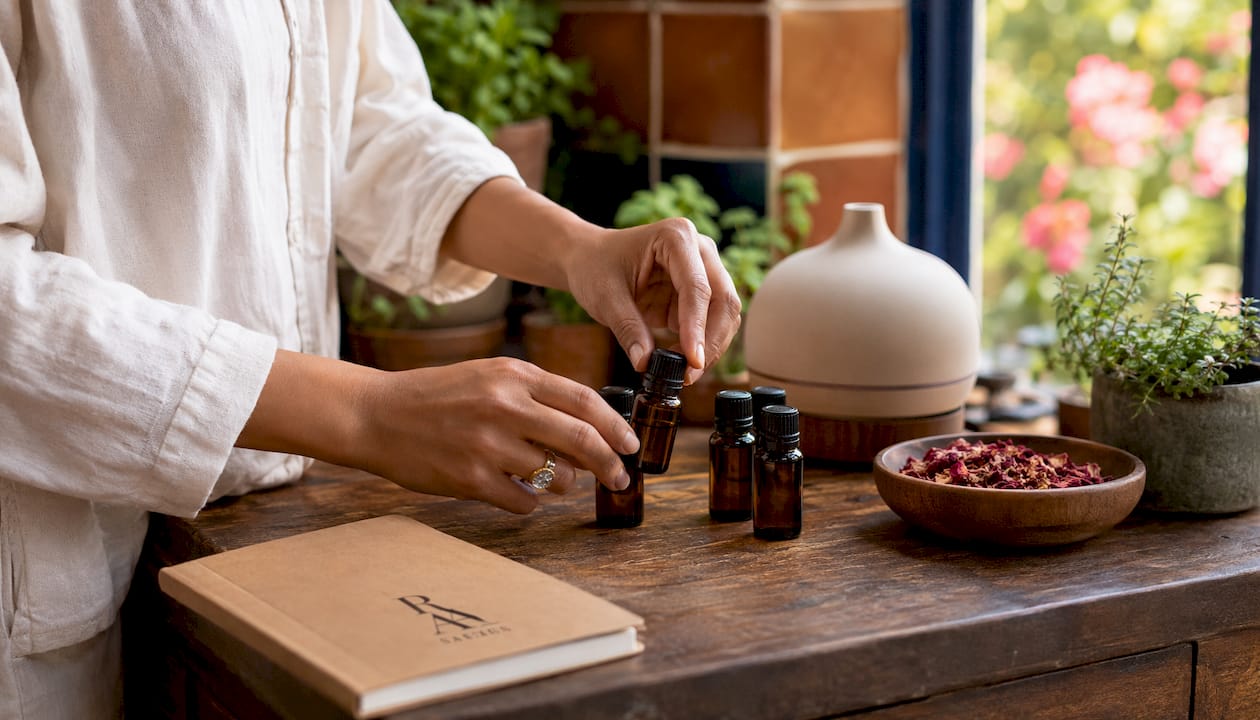
Application method shapes the experience. Diffusing fills a room with a consistent aromatic environment, ideal for longer meditation sessions. A roll-on applied to the wrists or temples gives you a portable, on-demand anchor you can return to mid-session. Inhaling directly from a tissue works well for travel or office-based mindfulness breaks.
Practical tips for weaving scent into your practice:
- Choose one oil or blend per session type and use it consistently to build a conditioned response
- Apply a topical roll-on to pulse points two to three minutes before sitting, not after
- Pair the scent with a specific breath pattern, such as a 4-7-8 inhale-hold-exhale, to deepen the association
- Keep the same oil for your morning practice and a different one for evening wind-down to signal time of day to your nervous system
- When distracted mid-meditation, a slow deliberate inhale of your chosen scent can reset attention faster than a mental instruction to refocus
Pro Tip: Scent consistency is the mechanism, not just a preference. Repeated pairing of a scent with calm meditation creates a conditioned response, so the same oil eventually triggers relaxation even during stressful moments outside of formal practice.
What emotional and physical benefits does aromatherapy bring to mindfulness?
The emotional benefits are the most documented. Reduced anxiety, lower perceived pain, and improved mood all create the internal conditions that mindfulness requires. When the amygdala is less reactive, the prefrontal cortex can sustain attention more easily. That’s not metaphor; it’s the neurological sequence that meditation research at institutions like Harvard and Yale has mapped across multiple studies.
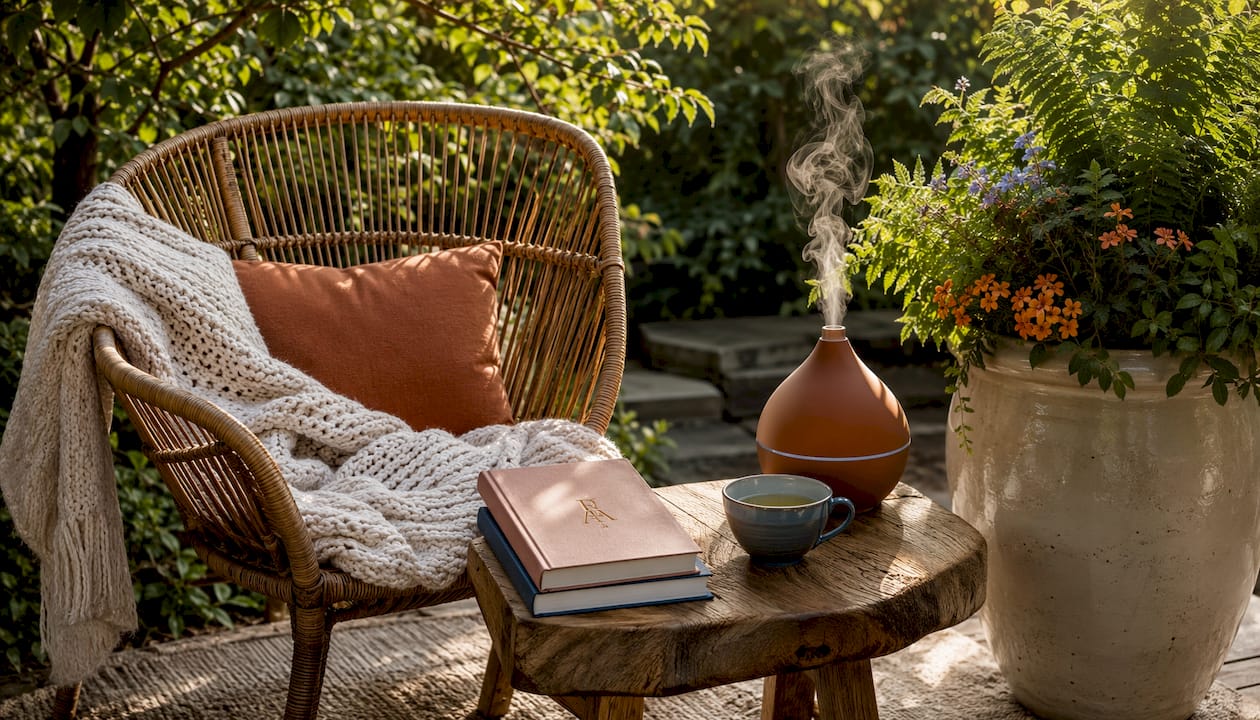
On the physiological side, aromatherapy reduces sympathetic “fight or flight” responses and enhances parasympathetic tone, the state associated with rest, digestion, and recovery. Mindfulness practice aims for exactly this shift. Aromatherapy doesn’t replace the practice; it lowers the threshold for getting there.
Specific benefits that support a regular mindfulness routine:
- Reduced anxiety and emotional reactivity, making it easier to observe thoughts without being pulled into them
- Improved mood through serotonin and endorphin release, setting a positive baseline before practice
- Enhanced parasympathetic activation, which slows heart rate and deepens breathing naturally
- Regular scent exposure supports cognitive function and brain health, relevant for practitioners seeking mental clarity
- Better sleep quality, which directly affects the quality of next-day mindfulness sessions
- Emotional resilience over time, built through consistent conditioned associations between scent and calm
How does aromatherapy compare to other complementary mindfulness techniques?
Breath work, body scanning, sound therapy, and movement practices like yoga all support mindfulness through different entry points. Breath work operates through the same autonomic nervous system pathway as aromatherapy but requires active technique. Sound therapy, using singing bowls or binaural beats, influences brainwave states through auditory input rather than olfactory. Body scanning builds interoceptive awareness without any external stimulus at all.
Aromatherapy’s advantage is speed and passivity. You don’t have to do anything correctly. The olfactory-limbic connection fires whether or not you’re concentrating, which makes it particularly useful for beginners who struggle with the initial resistance that formal meditation often triggers. Practitioners describe it as a sensory anchor that helps people connect with the present moment before they’ve developed the attentional muscle to do it through breath alone.
Where aromatherapy is weaker: it doesn’t train attention the way breath-focused meditation does, and it can’t substitute for the cognitive restructuring that body scanning or mindfulness-based cognitive therapy provides. The most effective approach pairs aromatherapy with a structured practice rather than using it as a standalone. Think of it as reducing the friction at the start of a session, not as the session itself.
How to build aromatherapy rituals into your daily mindfulness routine
Consistency is what converts a pleasant scent into a genuine mindfulness tool. The goal is to link a specific oil to a specific practice until the association becomes automatic. Start with one session type, your morning sit or your pre-sleep wind-down, and use the same oil every time for at least three weeks.
A practical daily structure:
- Morning: Diffuse bergamot or lemon while journaling or during a five-minute breath awareness practice. These oils support alertness and positive mood, making them better suited to daytime use than sedating oils like vetiver.
- Midday reset: Keep a roll-on in your bag or desk drawer. One slow inhale from the wrist during a stressful moment at work activates the conditioned calm response you’ve built in formal practice.
- Evening: Lavender or frankincense diffused 20 minutes before bed signals the nervous system to downshift. Pair with a body scan or progressive muscle relaxation for compounding effect.
For people who want to go deeper into personalizing an essential oil blend for their specific emotional needs, starting with a single-note oil and layering in complementary notes over time is more effective than beginning with a complex formula. You learn what each oil does for you individually before combining them.
Raasacred brings mindfulness-ready aromatherapy into your daily ritual
Raasacred formulates premium essential oil blends specifically for the kind of everyday ritual this article describes. The Sacred Bloom skin layering oil combines 100% pure essential oils with carefully selected carrier oils, delivering a non-greasy, sensory-rich experience designed to calm the mind and nourish the body at the same time. It’s built for the moment between your day and your practice, the two minutes of intentional application that prime your nervous system before you sit down to meditate.
What sets Raasacred apart from generic wellness products is the formulation philosophy: botanical blends rather than single-note oils, because the EEG research on theta-band connectivity shows blended oils outperform single oils for stress recovery. Every product is crafted to be used daily, not saved for special occasions. Browse the full botanical body oil collection to find the blend that fits your practice, and start building the conditioned scent-to-calm response that makes mindfulness easier every time you return to it.
Key Takeaways
Aromatherapy supports mindfulness by directly activating the limbic system through the olfactory pathway, reducing anxiety, and creating conditioned calm responses that lower the threshold for reaching a meditative state.
| Point | Details |
|---|---|
| Olfactory-limbic pathway | Scent molecules reach the amygdala faster than conscious thought, enabling rapid emotional regulation. |
| Meta-analysis evidence | Meta-analyses report aromatherapy interventions significantly reduce anxiety (SMD for anxiety: -0.46) and pain (SMD for pain: -1.29, p < 0.00001), creating the internal conditions mindfulness requires. |
| Blended oils outperform singles | A 2026 EEG study found blended oils improve theta-band brain connectivity beyond what lavender alone achieves. |
| Conditioned scent response | Consistent pairing of a scent with calm practice creates automatic relaxation triggers over time. |
| Raasacred Sacred Bloom | A botanical blend formulated for daily pre-meditation use, combining pure essential oils with nourishing carrier oils. |